Key Takeaway
The SpaceX $2.2 trillion milestone marks the transition of space from a government-led frontier to a commercial asset class. For Indian investors, this validates the 'NewSpace' policy, forcing a re-rating of domestic precision engineering and satellite component manufacturers.
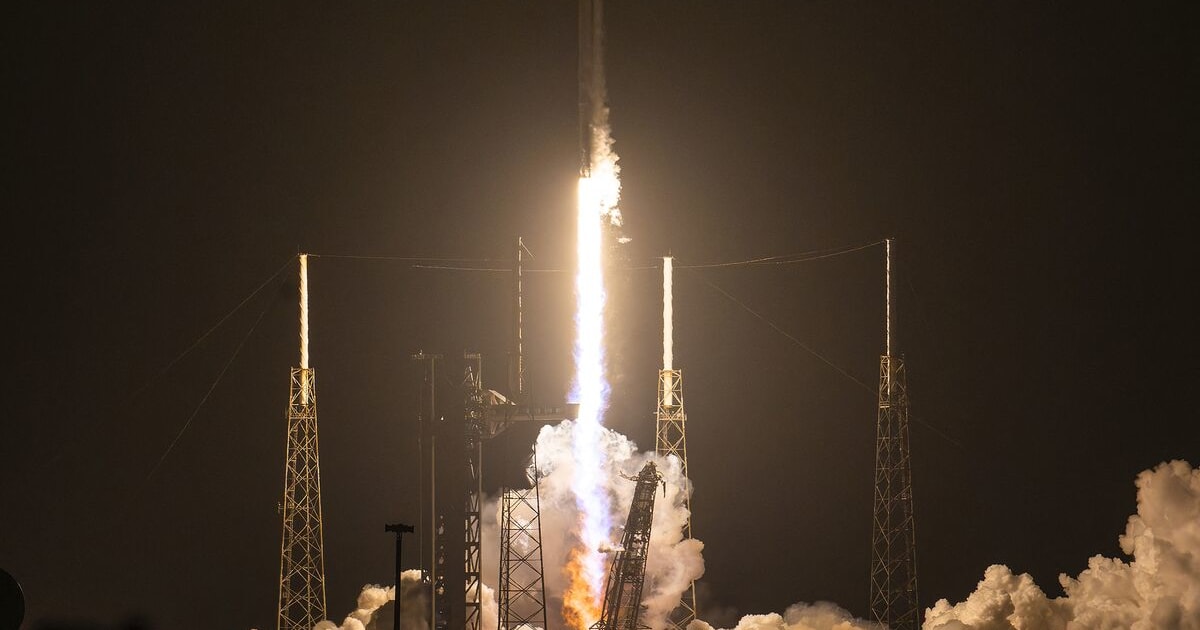
SpaceX’s record-breaking IPO has fundamentally altered the global aerospace valuation landscape. This article explores why India’s domestic space-tech ecosystem is the primary beneficiary and provides a tactical playbook for navigating the coming market volatility.
The New Space Age: Decoding the SpaceX $2.2 Trillion Paradigm Shift
When SpaceX crossed the $2.2 trillion valuation threshold, it did more than create a new financial titan; it officially ended the era of space exploration as a purely sovereign endeavor. By commoditizing low-earth orbit (LEO) access, the firm has turned aerospace into a high-margin service sector. For the Indian markets, this serves as a massive validation of the 'NewSpace' policy, which has been quietly fostering a robust private aerospace ecosystem since 2020.
Why does the SpaceX valuation matter for Indian retail investors?
The global space economy is projected to reach $1.8 trillion by 2035. Historically, when a sector reaches this level of capital intensity, we see a 'multiplier effect' in the supply chain. Much like the IT services boom of the early 2000s, the Indian space-tech sector is currently positioned as the 'back-office' and 'manufacturing hub' for global aerospace giants. With SpaceX setting the valuation benchmark, Indian firms integrated into the global supply chain are now seeing their P/E multiples expand as investors price in long-term contracts rather than one-off project revenues.
The SpaceX valuation isn't just about rockets; it's about the democratization of data and connectivity. Indian firms that have mastered high-precision manufacturing are now the primary targets for global tier-1 aerospace integrators.
Stock-by-Stock Breakdown: Which Indian Firms Win the Space Race?
As the sector undergoes a massive re-rating, we have identified five key stocks that stand to benefit from the spillover effect of the global space-tech surge:
- MTAR Technologies (NSE: MTARTECH): As a critical supplier of precision components for liquid propulsion engines, MTAR is the closest proxy to the SpaceX model in India. Their ability to manufacture complex assemblies with micron-level tolerances makes them irreplaceable in the current supply chain.
- Data Patterns (NSE: DATAPAT): Focused on defence electronics and satellite subsystems, Data Patterns is poised to capture the 'smart' side of the space race. As satellite constellations grow, demand for their signal processing and communication hardware will see exponential growth.
- Hindustan Aeronautics Ltd (NSE: HAL): The 'anchor' of Indian aerospace. While HAL is legacy, its transition toward modular manufacturing and partnerships with international space agencies makes it a defensive play in a high-growth sector.
- Bharat Electronics Ltd (NSE: BEL): With a dominant share in satellite communication (SatCom) hardware, BEL is the infrastructure play. As broadband providers face pressure from satellite-based competitors, BEL’s ground-station equipment will be in high demand.
- Zen Technologies (NSE: ZENTECH): A wildcard play. As space-tech integrates with drone and anti-drone technology, Zen’s expertise in simulation and AI-driven defense systems will become increasingly relevant for space-based situational awareness.
The Contrarian Perspective: Are we in a Space Bubble?
Bulls vs. Bears: The Debate
The Bull Case: Proponents argue that the $2.2 trillion valuation is justified by the recurring revenue model of Starlink and the massive untapped market in sovereign defense and commercial satellite imagery. They view current P/E ratios in Indian space-tech (often ranging from 60x to 100x) as 'growth premiums' rather than overvaluations.
The Bear Case: Skeptics point to the 2022 tech correction, where high-growth, high-multiple stocks shed 40% of their value in months. They argue that regulatory hurdles—specifically regarding orbital debris and international space traffic management—could lead to a 'Space Tax' that compresses margins for all players.
Actionable Investor Playbook: How to Position Your Portfolio
Investors should avoid chasing parabolic rallies. Instead, adopt a 'Core-Satellite' strategy:
- Core (60%): Allocate to established players like HAL and BEL for stable, government-backed revenue streams.
- Satellite (40%): Allocate to high-beta, specialized manufacturers like MTAR and Data Patterns. These should be bought on 10-15% corrections rather than at market peaks.
- Time Horizon: This is a 5-to-10-year play. Do not look for quarterly gains. The real value realization will occur as these companies transition from 'suppliers' to 'partners' in global mission-critical projects.
Risk Matrix: Assessing the Threats to the Space Rally
| Risk Factor | Probability | Impact |
|---|---|---|
| Regulatory/Orbital Debris Legislation | High | High |
| High Valuation Volatility | High | Medium |
| Geopolitical Satellite Sabotage | Medium | Very High |
What to watch next: Catalysts that will move the market
Watch for the upcoming ISRO commercial launch schedules and Q3/Q4 earnings reports for the aforementioned firms. Specifically, look for the 'Revenue from Exports' line item. If Indian firms can prove they are exporting more to global private space players than they are selling to the domestic defense sector, the current bull run will have legs for the next three to five years.
Disclaimer: This content is generated by WelthWest Research Desk based on publicly available reports and is for informational purposes only. It does not constitute financial advice, investment recommendations, or an offer to buy or sell securities. Always consult a qualified financial advisor before making investment decisions.