Key Takeaway
The arrival of a SpaceX IPO will likely trigger a massive 'Musk-themed' capital rotation, forcing retail investors to choose between Tesla’s EV growth and SpaceX’s space-tech dominance, potentially triggering a sell-off in EV-linked Indian auto-ancillary stocks.
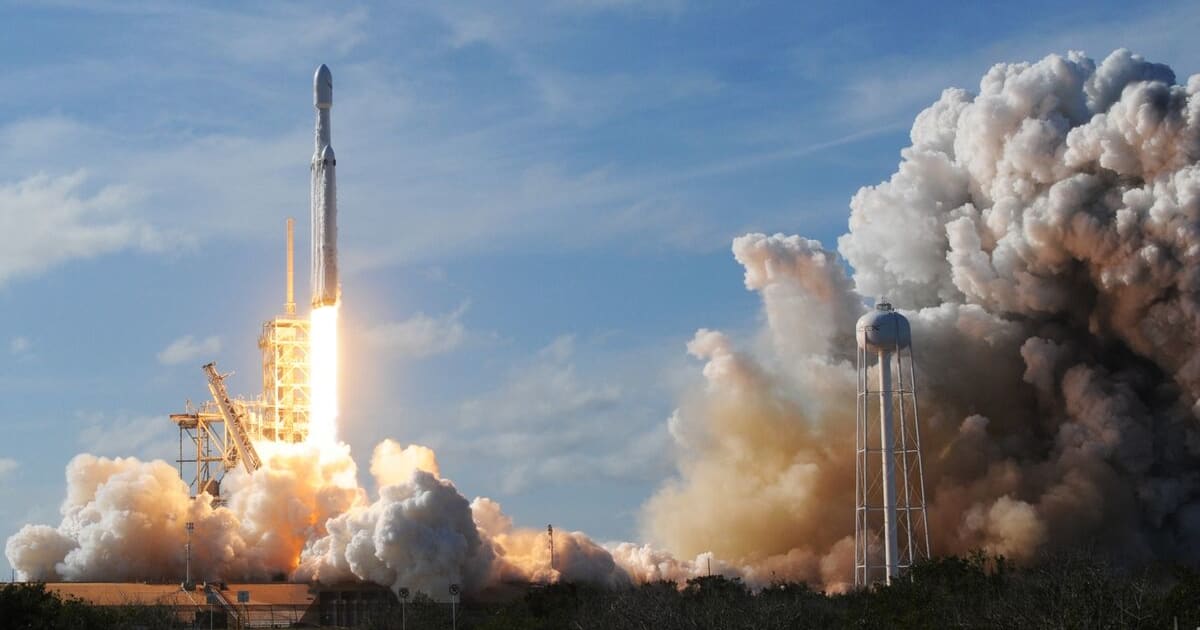
As rumors of a SpaceX public offering intensify, the financial landscape faces a seismic shift. We analyze how this potential IPO will drain liquidity from Tesla and create a ripple effect that threatens the valuations of Indian EV-supply chain leaders.
The End of Tesla’s Monopoly on 'Musk-Beta'
For over a decade, Tesla (TSLA) has served as the primary, and often exclusive, proxy for retail investors seeking exposure to Elon Musk’s entrepreneurial vision. This unique position has consistently inflated Tesla’s P/E ratio, often decoupling the stock from fundamental automotive metrics. However, the shadow of a potential SpaceX IPO looms large, threatening to fracture this concentration of capital. When a new, high-growth 'Musk-themed' asset enters the public markets, institutional and retail portfolios will inevitably undergo a rebalancing process that prioritizes diversification, putting Tesla’s premium valuation under unprecedented pressure.
Why does a SpaceX IPO matter to the Indian Stock Market?
The Indian equity market, specifically the auto-ancillary and EV-supply chain sectors, has become increasingly sensitive to global risk-on sentiment. Many Indian firms have secured lucrative contracts with global EV manufacturers, effectively pegging their growth to the success of companies like Tesla. A liquidity drain from Tesla, prompted by a flight to SpaceX, would likely trigger a contraction in the EV-sector multiple. Historically, when global tech-proxies falter—such as the 2022 Nasdaq correction which saw the Nifty Auto index shed nearly 12% in quarterly value—Indian suppliers faced a synchronized cooling in valuations. The correlation between Tesla’s stock performance and Indian precision-engineering firms is no longer coincidental; it is a structural dependency.
How will the SpaceX IPO impact Indian EV-supply chain stocks?
The impact will be felt most acutely in the mid-to-large-cap auto-ancillary space, where margins are tightly linked to the volume of global EV production. If Tesla’s capital base erodes, the resultant slowdown in R&D spending or aggressive expansion could force a downward revision in revenue guidance for Indian suppliers. We are looking at a potential compression in valuation multiples for companies that have priced in exponential growth based on global EV adoption rates that may now face a capital-constrained reality.
Stock-by-Stock Exposure Analysis
- Motherson Sumi Wiring India (MSWIL): As a critical provider of wiring harnesses, MSWIL is highly sensitive to global vehicle production cycles. A liquidity-driven slowdown in the EV sector would directly hit their order book volume.
- Sona BLW Precision Forgings (SONACOMS): A pure-play EV component manufacturer. Their high P/E ratio is predicated on a premium for 'EV-readiness.' A correction in global EV sentiment would likely lead to a 10-15% contraction in their valuation multiple.
- Tata Motors (TATAMOTORS): While diversified, their JLR and domestic EV segments are benchmarks for the sector. Increased volatility in global tech-linked stocks often leads to institutional outflows from Tata Motors as a defensive measure.
- Bharat Forge (BHARATFORG): Their exposure to the aerospace and e-mobility sectors makes them a dual-threat. While aerospace might gain from a 'SpaceX-led' market, the immediate hit to their automotive EV-component revenue would likely dominate short-term price action.
The Expert Perspective: Bull vs. Bear
The Bearish Case: Critics argue that a SpaceX IPO would be the largest 'liquidity vacuum' in tech history. By offering investors a direct stake in space exploration—a sector with higher long-term growth potential than the saturated EV market—SpaceX could fundamentally de-rate Tesla from a high-growth tech stock to a stagnant legacy auto manufacturer.
The Bullish Case: Contrarians suggest that a SpaceX IPO would actually broaden the 'Musk Ecosystem,' creating a rising tide that lifts all Musk-affiliated assets. They argue that institutional capital would simply increase its total allocation to the 'Musk trade' rather than rotating out of Tesla, thereby protecting valuations across the board.
Actionable Investor Playbook
Investors should adopt a defensive posture until the IPO’s structure and valuation are confirmed. 1. Reduce exposure to high-beta auto-ancillary stocks that are currently trading at 50x+ P/E ratios. 2. Hedge existing positions using long-dated put options on ETFs that track global EV components. 3. Watch for the 'SpaceX Premium'—if the IPO is priced at a valuation exceeding $150 billion, expect immediate capital flight from Tesla as institutional desks normalize their sector weightings.
Risk Matrix: Assessing the Fallout
| Risk Factor | Impact | Probability |
|---|---|---|
| Liquidity Drain from Tesla | High | 70% |
| Sector-wide EV De-rating | Medium | 60% |
| Supply Chain Margin Compression | Medium | 50% |
What to Watch Next
Monitor the upcoming Q3 earnings calls for Tesla, specifically looking for commentary on capital expenditure and R&D budgets. Furthermore, keep an eye on private equity secondary market transactions involving SpaceX; any sudden spike in volume in these private markets is often a precursor to an S-1 filing with the SEC, which will be the official starting gun for this market shift.
Disclaimer: This content is generated by WelthWest Research Desk based on publicly available reports and is for informational purposes only. It does not constitute financial advice, investment recommendations, or an offer to buy or sell securities. Always consult a qualified financial advisor before making investment decisions.