Key Takeaway
The Strait of Hormuz conflict is an 'Inflation Tax' on India. Investors must pivot from consumer discretionaries to upstream energy and defense as a $10 rise in crude adds $12.5B to India's trade deficit.
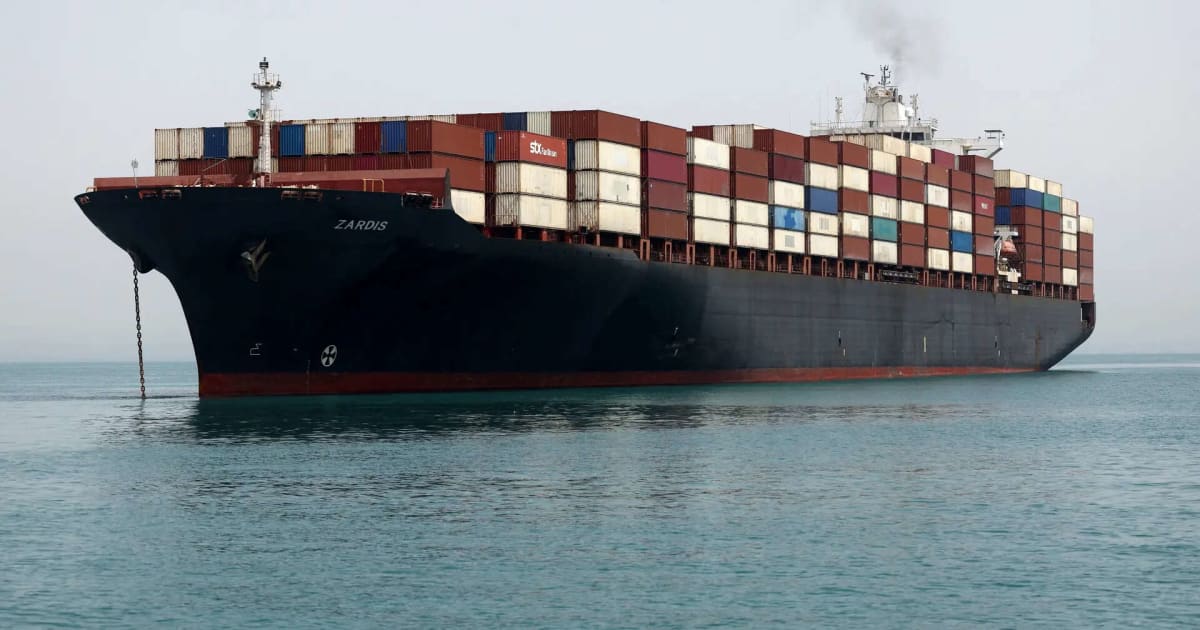
Iranian forces firing on vessels in the Strait of Hormuz has sent shockwaves through global energy markets, threatening 20% of the world's oil supply. For the Indian market, this geopolitical escalation risks a 'twin deficit' problem, weakening the Rupee and squeezing margins for OMCs and paint companies. This report breaks down the specific NSE/BSE stocks that will thrive and those that will face significant headwinds.
The Geopolitical Powderkeg: Why the Strait of Hormuz Dictates Dalal Street
In the early hours of trading, reports emerged that Iranian forces fired upon four commercial vessels attempting to transit the Strait of Hormuz. This narrow strip of water, separating the Persian Gulf from the Gulf of Oman, is arguably the most vital artery in the global economy. Approximately 21 million barrels of oil pass through this chokepoint daily—representing nearly 21% of global petroleum liquids consumption. When the Strait sneezes, the global energy market catches a cold; when shots are fired, the Indian market risks a fever.
For the Indian stock market (NSE/BSE), the timing could not be more precarious. With the Nifty 50 trading at premium valuations, any exogenous shock to input costs acts as a sharp de-rating catalyst. India imports over 85% of its crude oil requirements. A disruption in the Middle East doesn't just raise the price of petrol at the pump; it destabilizes the fundamental macro-economic thesis of India’s growth story. As a senior analyst at WelthWest Research, we view this not merely as a 'news event' but as a structural shift in risk premium for the coming quarter.
How will the Strait of Hormuz conflict affect Indian oil prices?
The immediate reaction to the hostilities was a 3.5% spike in Brent Crude futures. Historically, the 'War Risk Premium' adds between $5 and $15 to the price of a barrel depending on the perceived duration of the threat. In 2019, following the drone attacks on Saudi Aramco’s facilities, Brent surged nearly 20% in a single day. While the current event is localized to shipping, the threat of a full blockade—which Iran has historically used as a bargaining chip—could push oil toward the $100-$110 range.
"Every $10 increase in the price of crude oil typically widens India's Current Account Deficit (CAD) by approximately 0.5% of GDP and adds 30-40 basis points to CPI inflation." — WelthWest Macro Strategy Note.
Deep Market Impact: Connecting Geopolitics to the Nifty 50
The correlation between the USD/INR exchange rate and Brent crude is historically high (above 0.75). As oil prices rise, the demand for Dollars by Indian oil marketing companies (OMCs) intensifies, putting downward pressure on the Rupee. A weaker Rupee, in turn, makes all imports more expensive, leading to 'imported inflation.' This forces the Reserve Bank of India (RBI) to maintain a hawkish stance, delaying much-anticipated interest rate cuts which are critical for the banking and real estate sectors.
Historical Parallel: The 2022 Energy Shock
Looking back at the Russia-Ukraine escalation in February 2022, the Nifty 50 corrected by nearly 8% within weeks as crude crossed $100. However, the impact was uneven. While the broader market bled, Upstream Oil & Gas and Defense stocks provided a natural hedge. We expect a similar divergence in the current scenario. The 'Fear Gauge' or India VIX is likely to spike toward the 18-22 range, signaling heightened volatility for retail investors.
Stock-by-Stock Breakdown: The Winners and the Wounded
1. ONGC (NSE: ONGC) & Oil India (NSE: OIL) - The Natural Beneficiaries
Impact: Positive. As upstream producers, these companies sell crude at international benchmark prices. While the Government of India may impose a 'Windfall Tax' (SAED) to capture super-normal profits, the net realization for ONGC typically remains robust when Brent is above $75.
Data Point: ONGC currently trades at a P/E of roughly 7.5x, significantly lower than its global peers like ExxonMobil or Shell, offering a margin of safety. A sustained price above $85/barrel adds directly to their bottom line.
2. Shipping Corporation of India (NSE: SCI) - The Volatility Play
Impact: Mixed to Positive. While physical danger to ships is a risk, SCI and other global shipping firms often benefit from skyrocketing Freight Rates and 'War Risk Surcharges.' If vessels are forced to reroute around the Cape of Good Hope, the ton-mile demand increases, tightening the global fleet supply and boosting spot rates.
Data Point: Watch for the Baltic Dry Index and Tanker Rates; SCI’s earnings are highly sensitive to these global benchmarks.
3. Bharat Petroleum (NSE: BPCL) & Hindustan Petroleum (NSE: HPCL) - The Margin Squeeze
Impact: Highly Negative. OMCs are in the crosshairs. While international crude prices rise, the ability of these companies to pass on costs to Indian consumers is limited by political sensitivity, especially in an election-heavy cycle. Their Gross Refining Margins (GRMs) might look healthy, but the marketing margins turn negative, leading to massive under-recoveries.
Data Point: HPCL, with its higher marketing-to-refining ratio, is more vulnerable than IOCL or BPCL.
4. Asian Paints (NSE: ASIANPAINT) & Berger Paints (NSE: BERGEPAINT)
Impact: Negative. Crude oil derivatives (like monomers and phthalic anhydride) constitute nearly 30-35% of the raw material costs for the paint industry. Rising oil prices lead to immediate margin contraction.
Data Point: Asian Paints has historically seen a 200-300 bps margin compression during sustained oil rallies unless they implement aggressive price hikes, which could dampen volume growth.
5. InterGlobe Aviation (NSE: INDIGO) - The Fuel Burden
Impact: Bearish. Aviation Turbine Fuel (ATF) accounts for nearly 40% of the operating expenses for IndiGo. With no immediate way to hedge the entire fuel requirement, a spike in oil is a direct hit to profitability.
Data Point: For every 10% rise in ATF, the EBITDA margin of airlines can drop by 3-5% if ticket prices remain stagnant.
Expert Perspective: The Bull vs. Bear Argument
The Bear Case: Analysts at WelthWest argue that a prolonged conflict will lead to a 'Risk-Off' sentiment globally. Foreign Institutional Investors (FIIs) tend to pull out of emerging markets like India during geopolitical instability, seeking the safety of US Treasuries and Gold. This capital flight, combined with high energy costs, could lead to a 10-12% correction in mid-cap and small-cap indices which are currently overextended.
The Bull Case: Contrarians argue that India is better prepared than in 1990 or 2013. With record-high Foreign Exchange Reserves (over $640 billion) and a diversifying energy mix (increasing Russian oil share which trades at a discount to Brent), the 'crude shock' may be more muted than historical precedents suggest. They see any dip as a 'generational buying opportunity' in high-quality domestic cyclicals.
Actionable Investor Playbook: How to Position Your Portfolio
- Tactical Buy: Accumulate Gold (via Gold ETFs or SGBs) as a geopolitical hedge. Historically, Gold has a negative correlation with equities during Middle East crises.
- Sector Rotation: Reduce exposure to 'Crude Sensitives' like Paints, Tires (CEAT, MRF), and Logistics. Shift towards Defense Stocks (HAL, Bharat Electronics) as regional instability often leads to accelerated procurement cycles.
- The 'Wait and Watch' Zone: Avoid catching the falling knife in OMCs (BPCL, HPCL) until there is clarity on government subsidies or price revision mechanisms.
- Entry Points: For long-term investors, look for Nifty levels around 21,500 - 21,800 to start nibbling into blue-chip IT and Banking stocks, which may be unfairly beaten down due to general market sentiment.
Risk Matrix: Assessing the Escalation
- Scenario 1: Total Blockade of Hormuz (Probability: 10%). Impact: Catastrophic. Crude $150+. Nifty could drop 15-20%.
- Scenario 2: Continued Skirmishes/Tanker War (Probability: 50%). Impact: Moderate. Crude stays between $85-$95. Sectoral churning continues.
- Scenario 3: US-Iran De-escalation via Diplomacy (Probability: 40%). Impact: Positive. Quick recovery of losses; crude settles at $75.
What to watch next?
Investors should keep a close eye on the Weekly Crude Inventory Reports from the EIA and any official statements from the U.S. Fifth Fleet based in Bahrain. Furthermore, the OPEC+ meeting scheduled for next month will be crucial; will they increase production to stabilize prices, or will they maintain cuts to capitalize on the higher price environment? On the domestic front, monitor the USD/INR pair—if it breaches the 83.50 level decisively, expect further selling pressure on the Nifty.
Disclaimer: This content is generated by WelthWest Research Desk based on publicly available reports and is for informational purposes only. It does not constitute financial advice, investment recommendations, or an offer to buy or sell securities. Always consult a qualified financial advisor before making investment decisions.


