Key Takeaway
The diplomatic rift over the Strait of Hormuz creates a 'Double-Squeeze' for India: higher crude import costs (bearish for OMCs) and rising maritime insurance, while providing a tactical hedge for upstream giants like ONGC.
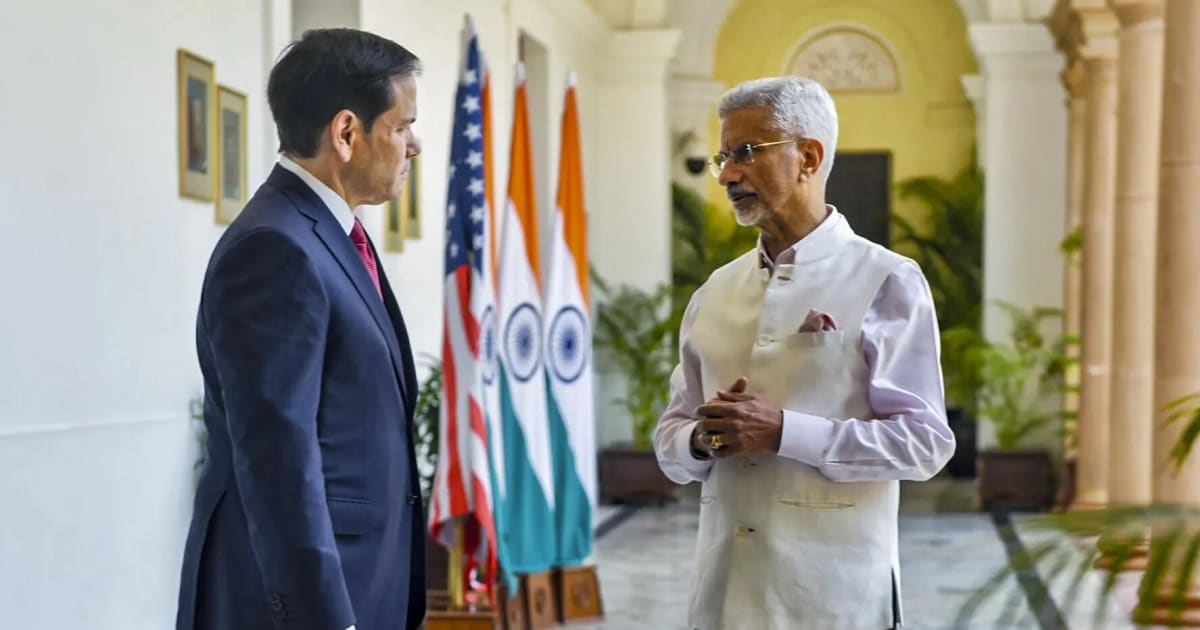
As US-India relations face a litmus test over the Strait of Hormuz blockade and Indian mariner fatalities, the energy sector braces for a supply-side shock. This investigative report breaks down the winners and losers in the NSE/BSE energy and logistics space, offering a strategic playbook for navigating the volatility.
The Geopolitical Fault Line: Why the Strait of Hormuz is India’s Economic Jugular
The Strait of Hormuz is not merely a maritime passage; it is the world's most sensitive economic carotid artery. Approximately 21 million barrels of oil per day—roughly 21% of global petroleum liquid consumption—pass through this narrow chokepoint. For India, which imports nearly 85% of its crude oil requirements, any friction here translates directly into a fiscal nightmare. The recent diplomatic escalation, marked by US Senator Marco Rubio’s stern directives to External Affairs Minister S. Jaishankar following the tragic death of three Indian sailors, signals a shift from localized maritime tension to a systemic geopolitical risk.
The core of the issue lies in the US-led blockade and the demand for Indian vessels to comply with Western naval protocols. For the Indian government, this is a precarious balancing act between protecting its citizens (the mariners) and maintaining its strategic autonomy in energy procurement. Historically, when the Strait of Hormuz faces a blockade or 'tanker war' scenario, global crude prices have seen a 15-25% 'risk premium' added within days. For the Indian stock market, specifically the Nifty Energy Index, this creates a bifurcated reality: a windfall for producers and a margin erosion for refiners.
How will the US-India diplomatic row affect crude oil prices?
When diplomatic channels between a major consumer (India) and a security guarantor (the US) fray, markets price in uncertainty. If India resists compliance with US naval mandates, insurance premiums for Indian-flagged vessels could skyrocket by 300-500%, as seen during the 2019-2020 Gulf tensions. This 'War Risk Surcharge' is often passed down the value chain, leading to domestic inflationary pressure. In 2022, following the initial shock of the Russia-Ukraine conflict, the Nifty 50 corrected by nearly 8% in a month as Brent crude crossed $110. A similar Hormuz-driven spike could see the USD/INR pair breach the 84.50 mark, further inflating the landed cost of oil.
Deep Market Impact: Connecting Geopolitics to the NSE/BSE Floor
The impact of a Hormuz blockade is three-dimensional: Currency, Cost, and Capex.
- Currency Depreciation: As oil prices rise, India’s Current Account Deficit (CAD) widens. For every $10 increase in the price of a barrel of crude, India’s trade deficit widens by approximately $12-15 billion annually. This puts the Rupee under pressure, making all imports—from electronics to fertilizers—more expensive.
- Gross Refining Margins (GRMs): While high oil prices are generally good for producers, the speed of the rise matters. If Oil Marketing Companies (OMCs) like BPCL and HPCL cannot pass on the costs to consumers due to government intervention or upcoming elections, their marketing margins turn negative, potentially wiping out quarterly profits.
- Logistics and Freight: The Baltic Dirty Tanker Index tends to spike during Middle Eastern instability. Indian shipping companies with aging fleets may struggle with increased compliance costs and higher insurance 'P&I' (Protection and Indemnity) club entries.
"The Strait of Hormuz is the ultimate 'Black Swan' location for the Indian energy sector. Unlike the Red Sea disruptions, which primarily affect transit time, a Hormuz blockade affects the very existence of supply for Asian refineries." - WelthWest Research Desk
Stock-by-Stock Breakdown: The Winners and Losers
In this high-stakes environment, investors must distinguish between companies that benefit from higher commodity prices and those that are crushed by input costs.
1. ONGC (NSE: ONGC) | Sentiment: Bullish
As India’s largest upstream producer, ONGC is a natural hedge against rising oil prices. With a market capitalization exceeding ₹3.5 lakh crore and a relatively low P/E ratio of ~8x, it remains an attractive play. Every $1 increase in Brent crude realization typically adds ₹1,000-1,200 crore to ONGC’s bottom line. However, investors must watch for the Special Additional Excise Duty (SAED) or 'windfall tax,' which the Indian government adjusts fortnightly to capture excess profits.
2. Oil India Ltd (NSE: OIL) | Sentiment: Bullish
Similar to ONGC, Oil India benefits from higher realizations. With its significant presence in the Northeast and its stake in the Numaligarh Refinery, it offers a diversified upstream-downstream mix. Historically, OIL has shown lower volatility than ONGC during geopolitical crises, making it a preferred pick for conservative energy investors.
3. Bharat Petroleum (NSE: BPCL) & Hindustan Petroleum (NSE: HPCL) | Sentiment: Bearish
The OMCs are in the crosshairs. BPCL (P/E ~11x) and HPCL (P/E ~9x) are highly sensitive to 'under-recoveries.' If Brent crude stays above $90 for a prolonged period and retail prices remain frozen, their marketing margins—which ideally should be ₹3-4 per liter—could turn into losses of ₹2-5 per liter. This was evident in H1 FY23 when OMCs reported massive losses despite high refining margins.
4. Shipping Corporation of India (NSE: SCI) | Sentiment: Volatile/Neutral
SCI is the primary carrier for Indian crude. While freight rates increase during crises, the operational risk of navigating a blockade zone and the surge in insurance costs act as a drag. Furthermore, the delay in SCI's disinvestment process adds a layer of bureaucratic uncertainty. Investors should look at Great Eastern Shipping (NSE: GESHIP) as a more agile alternative with a younger fleet and better risk management protocols.
5. Reliance Industries (NSE: RELIANCE) | Sentiment: Neutral/Positive
The Jamnagar refinery is one of the most complex in the world, allowing RIL to process 'sour' and 'heavy' crudes that others cannot. While high oil prices increase working capital requirements, RIL’s ability to pivot its export strategy often allows it to capture higher global GRMs, acting as a structural hedge for the broader Nifty 50.
Expert Perspective: The Bull vs. Bear Case
The Bear Case: Analysts argue that a prolonged US-India rift over the Strait will lead to a 'risk-off' sentiment among Foreign Portfolio Investors (FPIs). If the US imposes secondary sanctions or if maritime insurance becomes prohibitively expensive, India’s energy security is compromised, leading to a de-rating of the entire manufacturing sector due to high power and fuel costs.
The Bull Case: Contrarians believe this friction will accelerate India's strategic shift toward alternative energy and diversified sourcing (e.g., increasing imports from Brazil, Guyana, and the US). Furthermore, any dip in OMCs or upstream majors is viewed as a 'generational buying opportunity' given India's long-term energy demand trajectory, which is expected to grow at 4-5% CAGR through 2030.
Is it time to buy the dip in Indian Oil Marketing Companies (OMCs)?
The short answer is: Wait for the stabilization of the 'Risk Premium.' OMCs are currently a 'value trap' if the Brent crude trajectory remains parabolic. Strategic entry points for BPCL would be near its 200-day Moving Average (DMA), provided there is clarity on the government's stance on retail fuel price hikes. For ONGC, any price below ₹260 represents a strong accumulation zone based on historical dividend yields and cash flow projections.
Actionable Investor Playbook: Navigating the Blockade
- Short-term (0-3 months): Overweight on Upstream (ONGC, Oil India). Hedge long positions with Nifty Put options to protect against a broader market correction driven by a Rupee crash.
- Medium-term (3-12 months): Monitor the Baltic Dry Index and ClarkSea Index. If shipping rates plateau, look for entries in GE Shipping. Avoid OMCs until Brent stabilizes below $80.
- Long-term (1-3 years): Use the volatility to accumulate Reliance Industries and NTPC, as the shift toward green hydrogen and renewables will be the ultimate solution to Hormuz-related vulnerabilities.
Risk Matrix: Probability vs. Impact
| Risk Factor | Probability | Market Impact |
|---|---|---|
| Full-scale Naval Conflict in Hormuz | Low (15%) | Extreme (Nifty correction >15%) |
| US Sanctions on Indian Shipping Lines | Medium (35%) | High (Shipping sector collapse) |
| Prolonged Insurance Surcharge (>6 months) | High (60%) | Moderate (OMC margin erosion) |
| OPEC+ Supply Increase to Offset Blockade | Medium (40%) | Positive (Price stabilization) |
What to Watch Next: The Catalysts
Investors should keep a close eye on the following dates and data points:
- The 'Rubio-Jaishankar' Follow-up: Any joint statement or further escalatory tweets will move the needle on FPI sentiment.
- EIA Inventory Reports: Every Wednesday at 8:00 PM IST; these reports dictate the immediate direction of Brent crude.
- RBI Monetary Policy Committee (MPC) Minutes: Look for commentary on 'imported inflation'—this will signal if interest rates will stay 'higher for longer.'
- Weekly SAED Revision: Every fortnight, the Indian government revises the windfall tax; a decrease would be a massive tailwind for ONGC and OIL.
The Strait of Hormuz crisis is a reminder that in the world of finance, geography is destiny. For the Indian investor, the path forward requires a cold, data-driven assessment of geopolitical realities over patriotic sentiment. The energy map is shifting; ensure your portfolio shifts with it.
Disclaimer: This content is generated by WelthWest Research Desk based on publicly available reports and is for informational purposes only. It does not constitute financial advice, investment recommendations, or an offer to buy or sell securities. Always consult a qualified financial advisor before making investment decisions.


