Key Takeaway
While the Supreme Court ruling is a legal victory for athlete rights, it signals a maturing sports ecosystem in India, reinforcing the 'Sports-Industrial Complex' that underpins multi-billion dollar sponsorship and broadcasting valuations for NSE-listed giants.
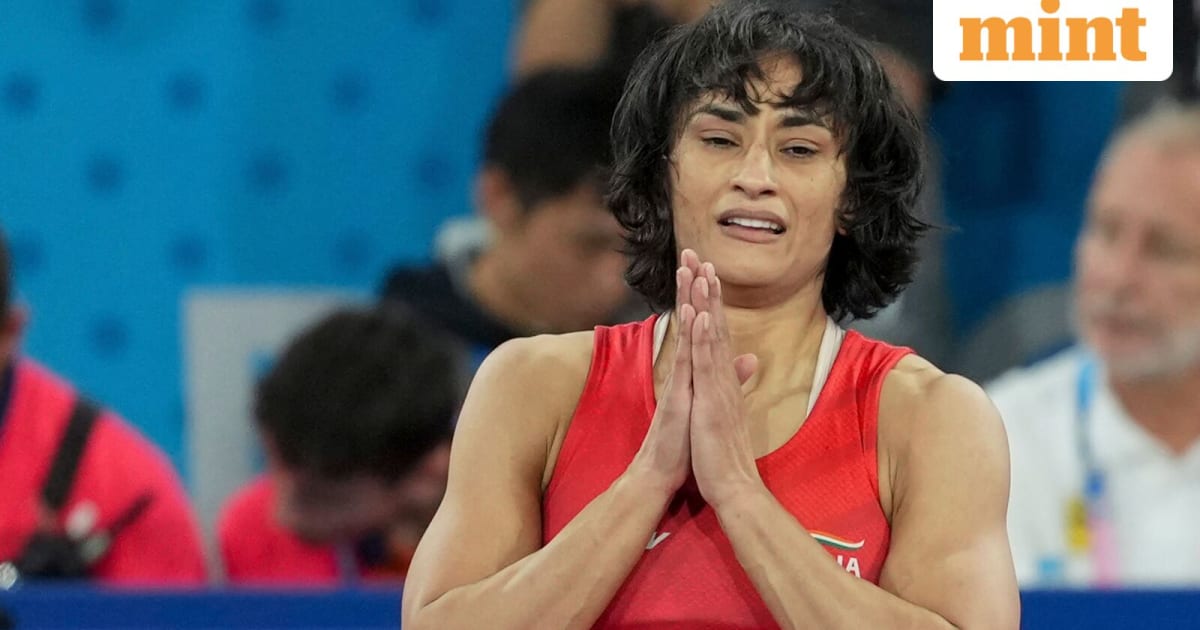
The Supreme Court's decision to allow Vinesh Phogat to participate in the 2026 Asian Games trials marks a pivotal moment in Indian sports governance. This deep dive explores how such high-profile legal precedents stabilize the commercial landscape for sports-adjacent stocks like Reliance Industries and Nazara Technologies, transforming athlete brand equity into institutional value.
The Supreme Court Verdict: A New Precedent for the Indian Sports-Industrial Complex
In a landmark intervention that reverberates far beyond the wrestling mat, the Supreme Court of India has cleared the path for Vinesh Phogat to participate in the selection trials for the 2026 Asian Games. While the bench, led by the Chief Justice, raised pertinent questions regarding missed doping tests, the ultimate decision to prioritize athlete participation over administrative technicalities marks a significant shift in Indian sports jurisprudence. For the astute investor at WelthWest Research Desk, this isn't just a sports headline; it is a case study in the governance of 'Human Capital Assets' within India’s rapidly financializing sports economy.
The ruling comes at a time when the Indian sports industry is no longer a peripheral leisure sector but a ₹15,700 crore ($1.9 billion) juggernaut, growing at a CAGR of 14%. When the highest court in the land intervenes to ensure the participation of a marquee athlete, it provides a layer of 'predictability' for broadcasters, sponsors, and sports-tech firms who have billions of rupees riding on the presence of 'Star Power' in international tournaments.
Why Does This Matter Now for Dalal Street?
Investors often overlook the correlation between sports governance and corporate earnings. However, the Asian Games 2026 represents a massive monetization window for Indian media conglomerates and consumer brands. The presence of a high-visibility athlete like Phogat—who carries significant brand equity—directly influences viewership metrics (TRPs), which in turn dictates the ad-rate cards for listed entities. In the 'Attention Economy,' legal clarity on athlete eligibility is a prerequisite for long-term sponsorship contracts and broadcasting rights valuations.
Deep Market Impact Analysis: The Financialization of Indian Sports
To understand the market impact, we must look at the Sentiment Economy. In 2021, following Neeraj Chopra’s Olympic gold, brand endorsement values for Indian non-cricketing athletes surged by 300%. The Supreme Court’s intervention ensures that the 'Brand Phogat' remains commercially viable leading up to 2026. This prevents a 'valuation write-down' for brands currently associated with her and maintains the momentum for the sports-tech and apparel sectors.
How will the sports governance shift affect Indian media stocks?
The stability of the sports calendar and the guaranteed participation of top-tier athletes are critical for Reliance Industries (RELIANCE) and its media arm, Viacom18. With the merger of Disney-Star and Reliance's media assets creating a $8.5 billion entity, the dominance over sports broadcasting is absolute. Any legal precedent that ensures the best talent reaches the global stage reduces the 'content risk' for these platforms. Historical data suggests that during major multi-sport events like the Asian Games, viewership on platforms like JioCinema spikes by 40-60%, driving digital ad revenues for the parent company.
Stock-by-Stock Breakdown: The Beneficiaries of Sports Stability
While the Phogat ruling has no direct impact on tomorrow's opening bell, the institutional framework it supports affects the following tickers:
- Reliance Industries Ltd (NSE: RELIANCE): As the primary driver of India's sports broadcasting through Sports18 and JioCinema, Reliance is the ultimate play on the 'Indian Sports Boom.' The company has invested over ₹23,000 crore in sports rights. A stable, meritocratic selection process in Indian sports ensures high-quality 'content' for their platforms. P/E Ratio: ~26.5; Market Cap: ₹19.5 Trillion.
- Nazara Technologies (NSE: NAZARA): As a leader in e-sports and sports media (through Sportskeeda), Nazara thrives on the 'fan engagement' ecosystem. High-profile legal battles and the subsequent triumph of star athletes drive massive traffic to their platforms. Nazara’s revenue from the sports media segment grew by 15% YoY in the last fiscal, a trend that scales with the popularity of individual athletes.
- Aditya Birla Fashion and Retail (NSE: ABFRL): Through its association with Reebok and other athleisure brands, ABFRL is betting on the 'fitness-first' Indian consumer. Success stories like Phogat’s drive the consumption of sports apparel in Tier-2 and Tier-3 cities. ABFRL’s activewear segment is projected to grow at a 20% CAGR over the next three years.
- Bata India (NSE: BATAINDIA): Often viewed as a conservative play, Bata’s aggressive push into the 'Power' sports brand category makes it sensitive to the national sporting mood. When Indian athletes are in the news for the right reasons, demand for domestic sports footwear sees a measurable uptick during festive and tournament seasons.
- TVS Motor Company (NSE: TVSMOTOR): A major sponsor of Indian sports, TVS uses athlete narratives to drive brand loyalty in rural markets. The 'resilience' narrative of Vinesh Phogat aligns perfectly with the marketing demographics of mid-segment motorcycles.
"The Supreme Court isn't just protecting an athlete; it is protecting the integrity of the 'Sports Product' that Indian corporations have started to price into their long-term marketing budgets." — WelthWest Senior Analyst
Expert Perspective: The Bull vs. Bear Case for Sports Equities
The Bull View: Optimists argue that the Indian sports ecosystem is undergoing 'Institutionalization.' The judiciary's willingness to step in ensures that administrative incompetence (like missing doping test schedules) does not destroy the commercial value of India's top athletes. This de-risks the sponsorship portfolios of companies like JSW Sports (unlisted but influential) and Reliance.
The Bear View: Contrarians suggest that the continued reliance on the judiciary to solve sports administration issues highlights a 'Systemic Governance Risk.' If selection trials and eligibility are constantly litigated, the uncertainty could lead to higher insurance premiums for sports events and lower 'certainty premiums' in broadcasting contracts. They point to the 2022 volatility in gaming stocks as a precedent for how regulatory/legal uncertainty can wipe out market cap.
Actionable Investor Playbook: Navigating the Sports Economy
How should a sophisticated investor play this? We suggest a three-pronged approach:
- The Core Holding: Maintain exposure to Reliance Industries. It is the only stock that captures the entire value chain—from data consumption (Jio) to content (Viacom18) to retail (Reliance Retail).
- The Growth Play: Accumulate Nazara Technologies on dips. As the 'gamification' of sports viewership increases, Nazara's role as a sports-media aggregator becomes more valuable. Look for entry points near the 200-day EMA.
- The Peripheral Play: Watch Celebrity Management and PR firms. While mostly private, their health is a leading indicator for the ad-spend of listed FMCG companies like HUL or ITC, who are pivoting towards 'performance-based' endorsements.
Risk Matrix: Assessing the Downside
| Risk Factor | Probability | Market Impact |
|---|---|---|
| Governance Overhaul (WFI/IOA) | High | Neutral - Positive (Long term) |
| Doping Allegations/Sanctions | Medium | Negative for Brand Endorsements |
| Broadcasting Rights Inflation | High | Margin Pressure on Media Stocks |
How will the 2026 Asian Games affect the Nifty Media Index?
Historically, the Nifty Media Index shows a 5-8% outperformance in the six months leading up to major international sporting events. This is driven by anticipatory ad-buying and the launch of new sports-centric subscription models. The inclusion of high-profile athletes like Phogat ensures that the 'narrative' remains strong, attracting retail participation in media stocks.
What to Watch Next: The Catalysts
The story doesn't end with the Supreme Court. Investors should keep a close eye on these upcoming triggers:
- Selection Trial Dates (Early 2026): The actual performance of Phogat will determine her brand trajectory for the next Olympic cycle.
- WFI Governance Updates: Any move by the Sports Ministry to formalize selection criteria will reduce the 'litigation risk' in this sector.
- Viacom18-Disney Merger Completion: This will be the single largest event in the Indian sports-business landscape, creating a monopoly on sports eyeballs.
In conclusion, while the Supreme Court's decision is a win for Vinesh Phogat, its true value lies in the institutional de-risking of the Indian sports economy. For the forward-looking investor, the message is clear: Sports in India is no longer just a game; it is a sophisticated asset class where legal clarity is as important as a company's balance sheet.
Disclaimer: This content is generated by WelthWest Research Desk based on publicly available reports and is for informational purposes only. It does not constitute financial advice, investment recommendations, or an offer to buy or sell securities. Always consult a qualified financial advisor before making investment decisions.


