Key Takeaway
The decoupling of tech valuations from macroeconomic headwinds signals a fundamental shift in investor sentiment toward AI-driven growth. For Indian IT, this suggests a 'growth premium' recovery, provided currency volatility remains contained.
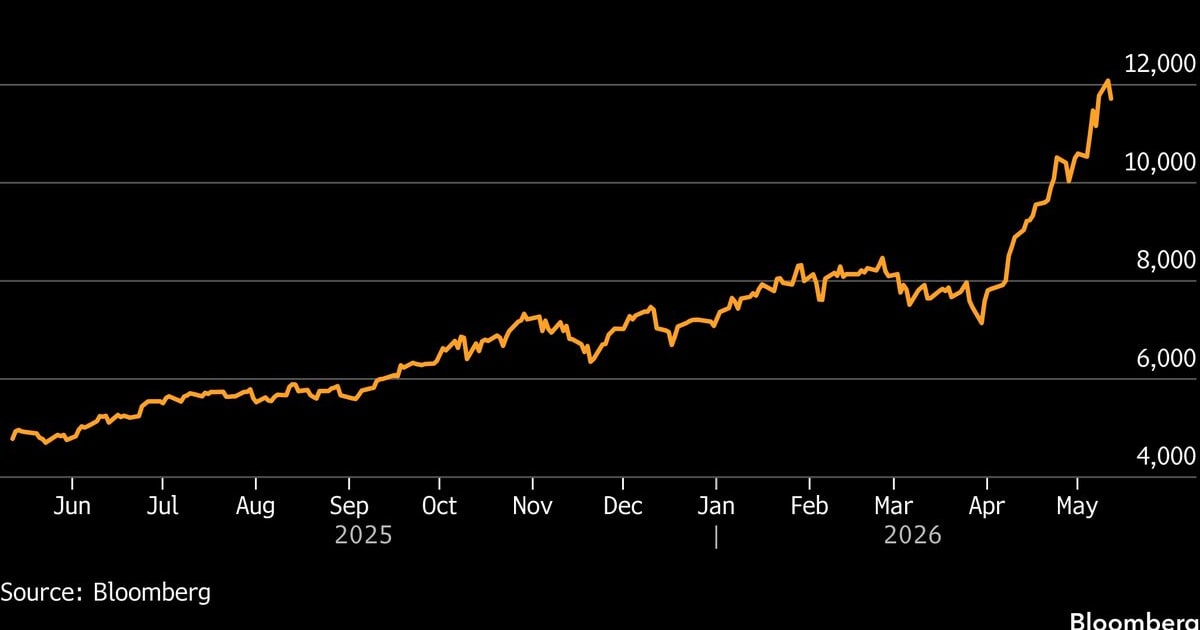
Global tech markets are hitting record highs despite persistent inflation, creating a paradox for investors. We analyze why Indian IT giants like TCS and Infosys are uniquely positioned to benefit from this liquidity shift and what risks remain for your portfolio.
The Great Decoupling: Why Tech is Ignoring the Fed
For the past eighteen months, the market narrative has been dominated by the 'higher-for-longer' mantra. Conventional wisdom dictates that when the Federal Reserve maintains high interest rates, growth-heavy sectors—specifically technology—should suffer due to the discounting of future cash flows. Yet, the current market cycle has shattered this correlation. Global tech indices are scaling all-time highs, fueled by an insatiable appetite for AI infrastructure and cloud transformation, effectively neutralizing the drag of sticky inflation.
This phenomenon matters now because it indicates that enterprise spending on digital transformation has become non-discretionary. Companies are no longer viewing IT budgets as line items to be slashed during macro downturns; they are viewing them as essential capital expenditure to survive the AI revolution. For the Indian markets, this serves as a critical tailwind, potentially pulling FII (Foreign Institutional Investor) liquidity back into the Nifty IT index.
How will the US Fed interest rate trajectory impact Indian IT stocks?
The relationship between US rates and Indian IT is nuanced. While high rates theoretically lower the present value of future earnings, the reality for Indian IT majors is tied to client spending cycles. When US corporate balance sheets are flush with cash—even if borrowing costs are high—the demand for cost-optimization through outsourcing remains robust. Historically, during the 2022 rate hike cycle, the Nifty IT index saw a sharp correction of nearly 25% as valuations compressed. However, today’s landscape is different: the 'AI premium' is acting as a valuation floor that didn't exist two years ago.
The Sector-Level Breakdown: Winners vs. Losers
The current market environment creates a distinct bifurcation. We are seeing a flight to quality. Companies with low debt-to-equity ratios and high free cash flow conversion are seeing their P/E multiples expand, while interest-rate sensitive sectors—specifically Indian Real Estate and NBFCs—are facing margin pressure. High-debt firms are finding it increasingly difficult to roll over credit, leading to a rotation of capital into the cash-rich balance sheets of the IT sector.
Stock-by-Stock Analysis: Navigating the NSE/BSE IT Giants
- TCS (TATA CONSULTANCY SERVICES): Trading at a forward P/E of ~28x, TCS remains the defensive bedrock of the sector. Its ability to maintain operating margins above 24% despite wage inflation makes it the primary beneficiary of institutional 'safety' inflows.
- Infosys (INFY): With a renewed focus on AI-led service delivery, Infosys is currently capturing a larger share of large-deal wins. Watch for revenue growth guidance shifts; if they maintain double-digit growth, the stock is likely to break out of its current consolidation range.
- HCL Technologies: HCL’s aggressive pivot toward engineering and R&D services positions it perfectly for the AI infrastructure boom. It is currently the most 'beta-heavy' play on the global tech infrastructure surge.
- Wipro: Currently in a restructuring phase, Wipro offers a contrarian value play. Trading at a significant discount to peers, any improvement in its consulting vertical could trigger a mean-reversion trade.
- Tech Mahindra: Highly sensitive to the telecommunications cycle. As 5G capital expenditure stabilizes globally, their margins are expected to see a structural tailwind through 2025.
The Expert Perspective: Bulls vs. Bears
The Bull Case: Proponents argue that we are in the early stages of an 'AI Supercycle.' They contend that productivity gains from AI will offset high interest costs, allowing tech firms to grow earnings even in a stagnant macro environment. The argument is that the 'higher-for-longer' risk is already priced into the current valuations.
The Bear Case: Skeptics, meanwhile, point to the valuation expansion. If the Fed is forced to hike further—or keep rates elevated through 2025—the cost of equity will rise, and the P/E multiples of 30x+ currently seen in some tech stocks will become unsustainable. A contraction in liquidity could trigger a sharp, 10-15% correction in growth-heavy tech stocks as investors rotate back into 'value' sectors.
Actionable Investor Playbook: How to Position Your Portfolio
Investors should adopt a 'Barbell Strategy'. Maintain core holdings in high-cash-flow IT majors (TCS, Infosys) to hedge against market volatility, while allocating a smaller satellite portion to high-growth tech infrastructure plays (HCL Tech). Avoid over-leveraged Real Estate or NBFC stocks until the RBI signals a clear pivot in rate policy.
Entry Points: Look for pullbacks to the 200-day moving average on Nifty IT. Avoid chasing breakouts in overheated small-cap IT stocks that lack a clear AI moat.
Risk Matrix: What Could Derail the Rally?
| Risk Factor | Probability | Impact |
|---|---|---|
| Persistent CPI Inflation | Medium | High (Liquidity crunch) |
| Currency Depreciation (INR/USD) | Low | Medium (Margins benefit, but FII outflow risk) |
| Geopolitical Supply Chain Disruption | Medium | Medium (IT project delays) |
What to Watch Next
The primary catalyst for the next 90 days will be the US PCE Price Index releases and the subsequent FOMC minutes. Domestically, monitor the quarterly commentary from Indian IT management regarding the 'deal pipeline.' If the conversion rate of large deals remains steady, the current bullish sentiment in the IT sector is likely to hold, regardless of short-term interest rate volatility.
Disclaimer: This content is generated by WelthWest Research Desk based on publicly available reports and is for informational purposes only. It does not constitute financial advice, investment recommendations, or an offer to buy or sell securities. Always consult a qualified financial advisor before making investment decisions.


