Key Takeaway
The structural migration from unorganized to organized jewelry retail has reached a tipping point, where brand trust and transparent pricing are overriding gold price sensitivity. Investors should view this as a multi-year luxury consumption play rather than a cyclical commodity trade.
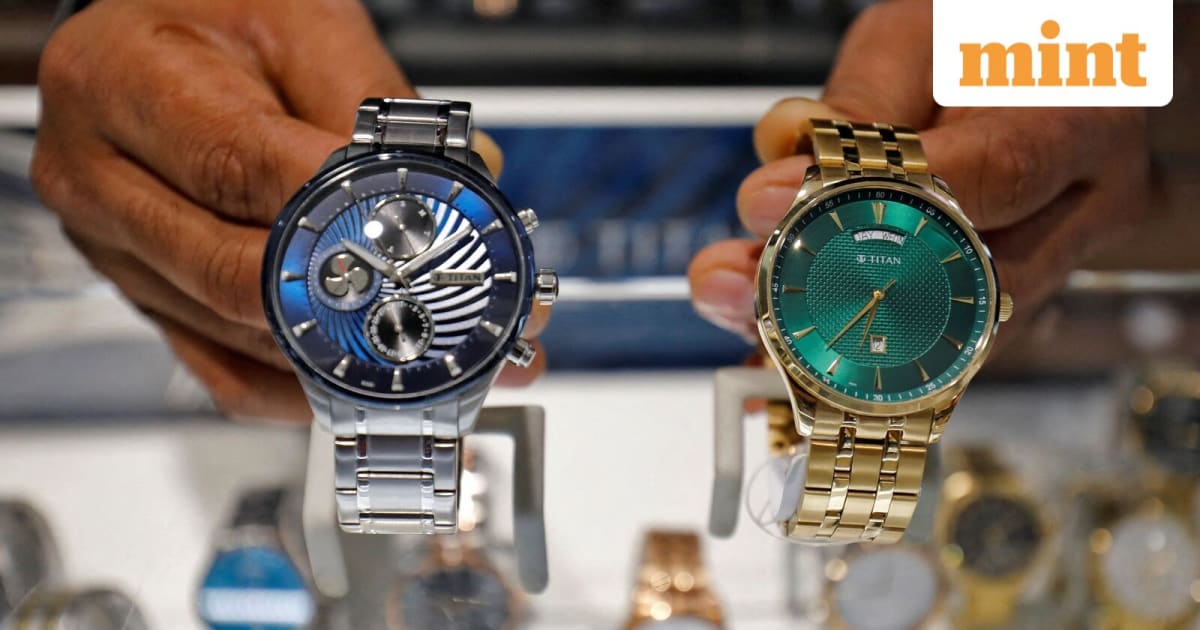
Titan and Kalyan Jewellers have reported blockbuster Q4 FY26 earnings, defying fears that record-high gold prices would dampen consumer demand. With net profits surging by 35% and 118% respectively, the jewelry sector is emerging as the primary beneficiary of India's 'Big Fat Wedding' economy and a massive shift in consumer wallet share from value-segment FMCG to high-end discretionary goods.
The Great Indian Jewelry Pivot: Beyond the Glitter
The fourth quarter of FY26 will be remembered as the moment the Indian jewelry sector decoupled from the traditional constraints of gold price volatility. While the yellow metal scaled historic peaks, the financial results from industry bellwethers Titan Company Limited (NSE: TITAN) and Kalyan Jewellers India Limited (NSE: KALYANKJIL) revealed a startling truth: the Indian consumer is no longer just buying gold; they are investing in brands. Titan’s net profit jumped 35.4% YoY to ₹1,179 crore, while Kalyan Jewellers delivered a staggering 118% YoY profit growth to ₹409.5 crore.
This isn't merely a seasonal spike. We are witnessing a fundamental realignment of the Indian retail landscape. For decades, the jewelry market was dominated by the 'family jeweler'—unorganized players who thrived on cash transactions and opaque pricing. Today, regulatory tightening through GST and e-invoicing, combined with a generational shift toward hallmarked purity and design-led retail, has created a massive moat for organized players. This 'organized' segment, which accounted for barely 25% of the market five years ago, is rapidly charging toward a 45% market share, leaving local incumbents in the dust.
How will high gold prices affect jewelry stock margins in 2026?
A common misconception among retail investors is that rising gold prices hurt jewelry retailers. In reality, for organized players with robust hedging mechanisms, rising prices often lead to inventory gains and higher ticket sizes. In Q4 FY26, both Titan and Kalyan demonstrated 'operating leverage'—where revenue growth outpaces cost growth. As gold prices rose, the average transaction value (ATV) increased significantly. Consumers, anticipating further price hikes during the peak wedding season, accelerated their purchases, treating jewelry as both a matrimonial necessity and a strategic hedge against inflation.
Furthermore, the shift toward studded jewelry (diamonds and precious stones) has been the secret weapon for margin expansion. Studded jewelry carries significantly higher gross margins (often 30-35%) compared to plain gold jewelry (12-14%). Titan’s Tanishq and Kalyan’s Candere and Muhurat collections have aggressively pushed this segment, effectively insulating their bottom lines from the fluctuations of the bullion market.
Deep Market Impact: The Death of Value FMCG and the Rise of Luxury
The stellar performance of the jewelry sector provides a stark contrast to the sluggishness seen in the value-segment Fast-Moving Consumer Goods (FMCG) sector. This suggests a 'K-shaped' consumption pattern in India. While rural demand for entry-level soaps and biscuits remains tepid, the urban and semi-urban 'aspirational class' is redirecting its surplus liquidity into hard assets and luxury experiences. Historical parallels can be drawn to the 2022 post-pandemic recovery, where Nifty's discretionary index outperformed the staples index by nearly 18% within six months.
The 'Wealth Effect' is also in full play. With the Nifty 50 and Sensex hitting record highs in FY26, the perceived wealth of the Indian middle class has expanded. This paper wealth is being liquidated into physical luxury. For the Indian stock market, this signals a long-term bullish trend for the Consumer Discretionary sector, specifically for companies that can command a brand premium. Mall developers like Phoenix Mills (NSE: PHOENIXLTD) are also beneficiaries, as organized jewelry stores serve as high-rent anchor tenants that drive footfall.
Stock-by-Stock Breakdown: The Winners of the FY26 Boom
- Titan Company Limited (NSE: TITAN): The undisputed king of the sector. With a market cap exceeding ₹3.5 lakh crore, Titan continues to trade at a premium P/E (historically 70x-85x). The Q4 results, driven by Tanishq and the integration of CaratLane, prove that Titan is no longer just a jewelry shop but a lifestyle conglomerate. Their dividend declaration of ₹15/share reflects a healthy cash flow position.
- Kalyan Jewellers India Limited (NSE: KALYANKJIL): The dark horse that has become a thoroughbred. Kalyan’s shift to an asset-light franchising model (FOCO) has allowed it to scale rapidly without bloating its balance sheet. A 118% jump in profit is a testament to this strategy. Trading at a more modest P/E than Titan, it offers a compelling growth-at-reasonable-price (GARP) play.
- Senco Gold Limited (NSE: SENCO): A dominant player in the East, Senco is successfully replicating its model in North India. Their focus on lightweight and 'daily wear' jewelry makes them less sensitive to the massive wedding cycles and more aligned with millennial spending habits.
- Thangamayil Jewellery (NSE: THANGAMAYL): A regional powerhouse in Tamil Nadu. As the organized shift penetrates Tier-2 and Tier-3 cities in the South, Thangamayil is perfectly positioned to capture the rural-to-urban transition of wealth.
Is the jewelry sector overvalued after the recent rally?
Bears argue that the sector is 'priced to perfection.' With Titan trading at nearly 80 times earnings, any slight miss in volume growth could lead to a sharp correction. However, the bull case rests on the 'India Decade' thesis. As per-capita GDP crosses the $3,000 threshold, discretionary spending typically enters a non-linear growth phase. When compared to global luxury giants like LVMH or Richemont, Indian jewelry stocks are growing at 3x the rate, justifying their higher valuation multiples. The entry of new players like Aditya Birla Group into the jewelry space further validates the sector's long-term attractiveness.
Actionable Investor Playbook: How to Position Your Portfolio
"In a gold rush, don't just buy the gold; buy the company that has the most trusted scales."
For investors looking to capitalize on this boom, a tiered approach is recommended:
- The Core Holding: TITAN remains a 'buy on dips' stock. It is a foundational portfolio constituent that offers stability and consistent compounding. Target entry points should be during any 5-7% market-wide corrections.
- The Growth Aggressor: KALYANKJIL is the play for those seeking alpha. Its aggressive expansion into non-South markets provides a massive runway for growth. Monitor their debt-to-equity ratio as they continue to scale.
- The Mid-Cap Gem: SENCO offers a niche entry point into the high-growth Eastern market. Its lower valuation compared to Titan makes it an attractive target for institutional investors (FIIs/DIIs) looking for the next big jewelry play.
- Time Horizon: This is a 3-5 year structural play. Short-term volatility due to gold price spikes should be ignored in favor of the larger 'organized retail' narrative.
Risk Matrix: What Could Stop the Gilded Run?
While the sentiment is overwhelmingly bullish, three specific risks must be monitored:
- Extreme Gold Volatility (Probability: Medium, Impact: High): While consumers absorb gradual price rises, a sudden 20% spike in a single month could lead to a 'sticker shock,' causing a temporary collapse in volume growth.
- Regulatory Intervention (Probability: Low, Impact: High): Any increase in gold import duties or stringent PMLA (Prevention of Money Laundering Act) norms for smaller transactions could dampen demand and squeeze margins.
- Lab-Grown Diamonds (LGDs) (Probability: Medium, Impact: Moderate): While still a small segment, the rapid adoption of LGDs for fashion jewelry could eventually eat into the high-margin natural diamond business of established players.
What to Watch Next: Upcoming Catalysts
The next major data point will be the Akshaya Tritiya sales figures in Q1 FY27. Historically, this single day accounts for a significant portion of annual volumes. Additionally, investors should keep a close eye on the RBI’s stance on interest rates; a potential rate cut in late 2026 would further boost discretionary liquidity. Finally, the Union Budget announcements regarding gold import duties will be the ultimate 'make-or-break' event for short-term sentiment in the jewelry sector.
Disclaimer: This content is generated by WelthWest Research Desk based on publicly available reports and is for informational purposes only. It does not constitute financial advice, investment recommendations, or an offer to buy or sell securities. Always consult a qualified financial advisor before making investment decisions.