Key Takeaway
The widening performance gap between Chinese and global tech indices marks a structural rotation of emerging market capital. Indian IT and semiconductor-adjacent firms are emerging as the primary beneficiaries of this liquidity migration.
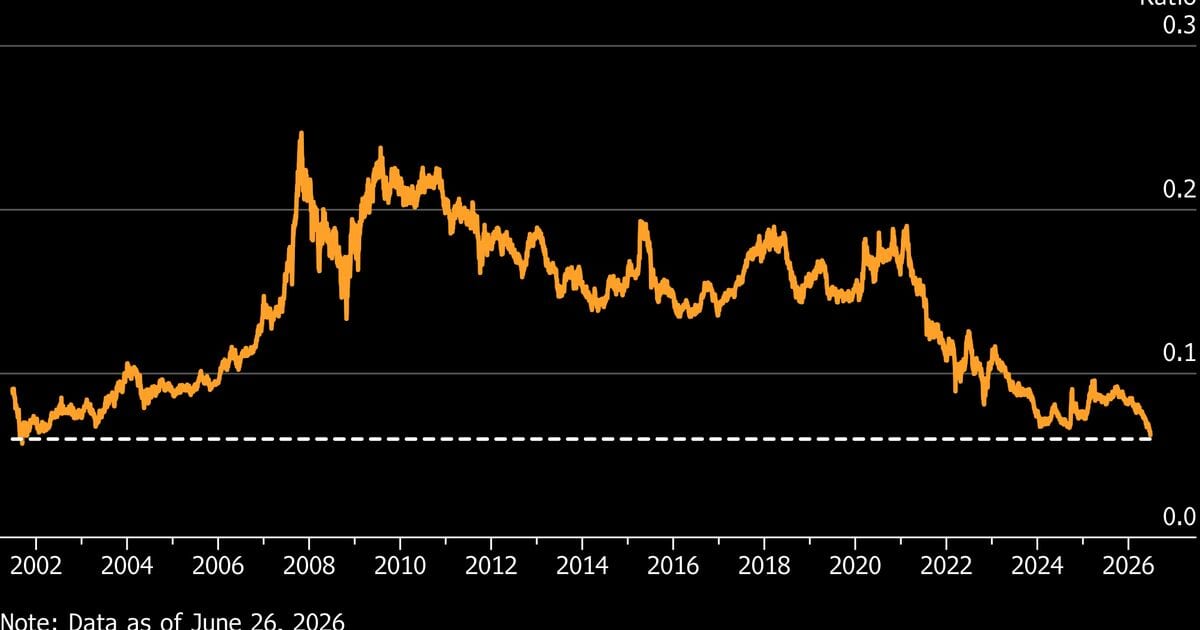
Chinese equities are decoupling from the global AI-driven bull market, creating a historic capital vacuum. We analyze how this shift is fueling a fresh wave of Foreign Institutional Investment (FII) into Indian IT services, data infrastructure, and semiconductor-adjacent stocks.
The Great AI Decoupling: A Structural Shift in EM Capital
For two decades, the narrative of Emerging Market (EM) investing was inextricably linked to the 'China Proxy.' However, 2024 has unveiled a stark divergence. While global tech hubs—Silicon Valley, Taiwan, and Bangalore—are riding a parabolic wave of artificial intelligence integration, Chinese equities are trailing by their widest margin since 2001. This is not merely a cyclical downturn; it is a fundamental decoupling of capital flows.
As Western institutional investors pivot away from the regulatory opacity and growth constraints of the Chinese market, they are seeking high-growth alternatives that offer similar scale but superior governance. India, with its robust IT services backbone and rapidly maturing digital infrastructure, has become the primary destination for this displaced liquidity.
Why is the China-to-India Capital Rotation Happening Now?
The catalyst is clear: AI-readiness. While China faces severe headwinds regarding high-end GPU access due to export controls and a domestic focus on legacy manufacturing, India’s tech sector has pivoted toward AI-led service transformation. Since the AI boom accelerated in late 2022, the MSCI India Index has consistently outperformed the MSCI China Index by over 30%, a historical anomaly that suggests a permanent re-rating of Indian assets.
FIIs are no longer looking at India as a defensive play; they are viewing it as the 'Global Back Office' for the AI revolution. With Indian IT firms holding combined cash reserves exceeding ₹1.5 lakh crore, these companies have the capital to invest in proprietary AI models and talent acquisition, widening the moat between themselves and regional competitors.
How will the shift to India impact IT services margins?
The integration of Generative AI into IT service delivery is shifting the billing model from 'Time and Material' to 'Outcome-Based Pricing.' As FIIs rotate capital into the sector, we expect a compression of P/E valuation gaps between Indian mid-caps and global peers. Companies that can demonstrate a high 'AI-intensity'—measured by the percentage of revenue derived from AI-led automation—are seeing their P/E ratios expand from an average of 22x to 35x.
Stock-by-Stock Breakdown: The Winners
- TCS (NSE: TCS): As the industry bellwether, TCS is leveraging its massive scale to deploy 'AI-first' solutions. With a P/E of roughly 30x, it remains the primary anchor for institutional flows seeking stability in the AI transition.
- INFY (NSE: INFY): Infosys is aggressively capturing the cloud-migration market, a prerequisite for AI scaling. Their focus on the 'Topaz' AI suite is creating a new revenue stream that is less sensitive to traditional macro-economic cycles.
- HCLTECH (NSE: HCLTECH): HCL’s deep integration into the engineering and R&D services space makes it a direct beneficiary of global semiconductor design outsourcing.
- WIPRO (NSE: WIPRO): Wipro’s recent restructuring and focus on AI-driven consulting are helping it reclaim lost market share, making it a high-beta play on the sector's recovery.
- KPITTECH (NSE: KPITTECH): As a pure-play automotive software leader, KPIT is at the heart of the 'Software Defined Vehicle' revolution. It represents the high-growth, high-valuation segment that attracts aggressive growth funds.
Expert Perspectives: The Bull vs. Bear Case
The Bull Argument: Bulls argue that India is in the early stages of a secular bull run. The 'China-plus-one' strategy is no longer a manufacturing trend; it is a service-sector mandate. As global corporations de-risk their tech supply chains, Indian IT firms are the only logical choice for high-end software development.
The Bear Argument: Skeptics point to stretched valuations. Many Indian IT stocks are trading at all-time highs, pricing in years of perfect execution. A broader global tech correction, potentially triggered by a slowdown in US cloud spending, could lead to a 'washout' where institutional investors liquidate their best-performing positions in India to cover losses elsewhere.
Actionable Investor Playbook
Investors should adopt a 'Core-Satellite' approach to capture this rotation:
- Core (60%): Accumulate large-cap leaders (TCS, INFY) on dips of 5-7%. These are your long-term compounders that will benefit from institutional 'buy-and-hold' flows.
- Satellite (40%): Allocate to mid-cap, high-growth tech firms (KPITTECH) that are heavily involved in niche domains like semiconductor design and AI R&D.
- Time Horizon: This is a 3-5 year thematic play. Avoid short-term noise; focus on quarterly 'AI-led revenue' disclosures.
Risk Matrix
| Risk Factor | Probability | Impact |
|---|---|---|
| Global Tech Correction | Medium | High |
| Regulatory/Tax Headwinds in India | Low | Medium |
| AI Talent Wage Inflation | High | Medium |
| Geopolitical Trade Friction | Medium | High |
What to Watch Next
Keep a close watch on the upcoming quarterly earnings season, specifically the 'AI-Revenue' commentary from management. Furthermore, monitor the monthly FII flow data released by NSDL. A sustained shift in net-buying from China-heavy ETFs to India-focused funds will be the primary catalyst for the next leg up in Nifty IT performance. The Q3 earnings release from major US cloud hyperscalers (AWS, Azure, Google Cloud) will also serve as a leading indicator for Indian IT order books.
Disclaimer: This content is generated by WelthWest Research Desk based on publicly available reports and is for informational purposes only. It does not constitute financial advice, investment recommendations, or an offer to buy or sell securities. Always consult a qualified financial advisor before making investment decisions.


