Key Takeaway
Donald Trump's self-declared 'perfect health' ahead of the 2024 elections injects fresh uncertainty into global markets, particularly for Indian IT stocks sensitive to US visa policies and energy futures. Investors must recalibrate portfolios for potential 'Trump-trade' resurgence.
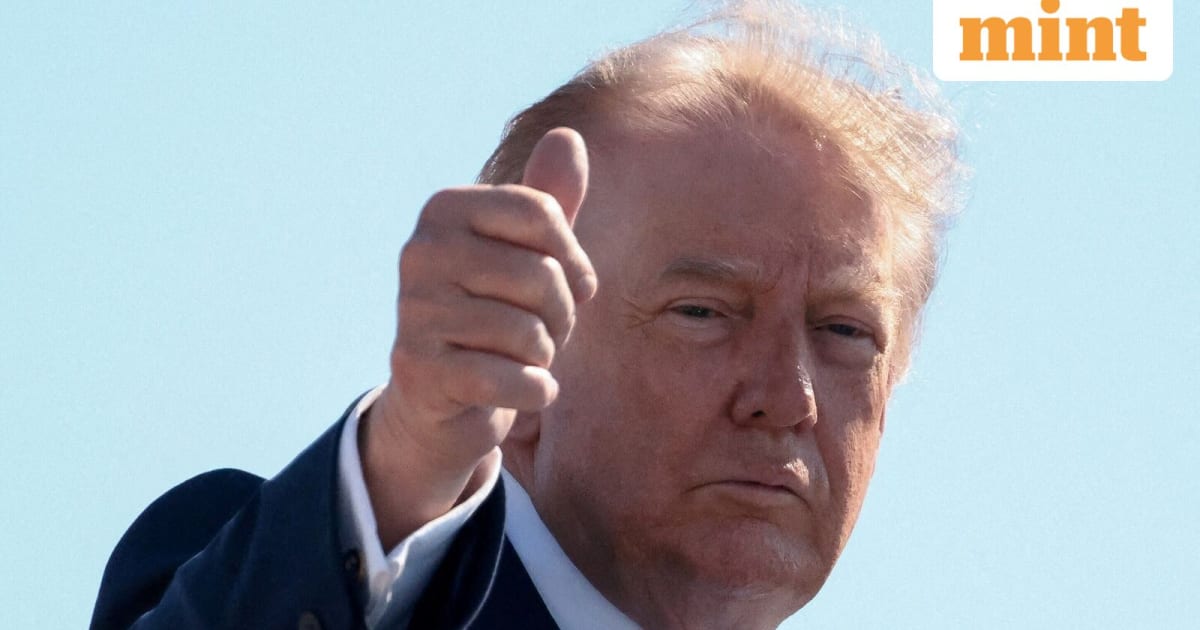
As Donald Trump announces 'perfect health' following a physical, the specter of his past policies looms large over global markets. This development is critical for Indian investors, potentially reigniting debates around H-1B visas, trade tariffs, and geopolitical realignments that could significantly influence Foreign Institutional Investor (FII) flows and the export sentiment of Indian IT giants.
Trump's Health Declaration: A Geopolitical and Market Fulcrum Point
In a move that has sent ripples across financial news outlets and investor forums, Donald Trump has publicly declared himself in 'perfect health' following a recent physical examination. While ostensibly a personal health update, this declaration carries significant weight in the context of the upcoming 2024 US Presidential Elections. The physical well-being of a leading candidate is not merely a matter of public interest; it is a crucial determinant of political stability and, by extension, election predictability. For Indian markets, this announcement is particularly salient as it directly impacts the viability and potential resurgence of what analysts broadly term the 'Trump-trade' scenario. This scenario encompasses a range of policy shifts, from potential recalibrations of H-1B visa regulations impacting the Indian IT sector, to the reimposition of trade tariffs, and shifts in geopolitical alignments, all of which are potent drivers of Foreign Institutional Investor (FII) flows and the overall sentiment surrounding Indian export-oriented industries.
Why Candidate Health Matters for Global Markets
The health of a front-running presidential candidate is a proxy for leadership continuity and perceived stability. A candidate with robust health suggests a higher probability of completing a full term, thereby providing a degree of policy predictability. Conversely, any perceived health concerns can introduce an element of uncertainty, potentially leading to increased market volatility. This is especially true in a highly polarized political environment where the prospect of a sudden leadership vacuum or an unexpected health-related withdrawal from the race can have profound implications for global economic and geopolitical landscapes. The 'perfect health' declaration, therefore, serves to underscore the immediate relevance of Trump's potential candidacy and its associated policy implications for international markets, including those in India.
Deep Market Impact Analysis: The 'Trump-Trade' Reimagined
The announcement of Donald Trump's 'perfect health' has reignited discussions about the potential return of policies that characterized his previous administration. This has a direct bearing on the Indian stock market, primarily through its influence on FII flows and sector-specific sentiment. Historically, periods of anticipated policy shifts under a Trump presidency have been correlated with fluctuations in emerging market currencies and specific industry sectors. The 'Trump-trade' narrative often involves a bifurcation of market performance: sectors aligned with traditional industries, such as defense, fossil fuels, and domestic manufacturing, tend to see increased investor interest, while those focused on ESG (Environmental, Social, and Governance) principles and clean energy may face headwinds. For India, the implications are multifaceted. The IT sector, heavily reliant on the US market and visa programs like H-1B, is particularly sensitive to any rhetoric or policy changes concerning immigration and labor mobility. Similarly, any potential trade protectionism could affect Indian exports across various sectors.
How H-1B Visa Policies Influence Indian IT Giants
The H-1B visa program is a critical component for Indian IT services companies, enabling them to deploy skilled professionals to client sites in the United States, a key revenue market. During Trump's previous term, there was increased scrutiny and a tightening of the H-1B visa regime, leading to concerns about talent deployment and operational costs for Indian IT firms. A renewed focus on such policies could impact the revenue growth and profitability of major Indian IT players. For instance, a significant reduction in H-1B visa availability could force companies to increase local hiring in the US, thereby escalating operational expenses and potentially reducing margins. The market's reaction to Trump's health declaration, therefore, is partly a preemptive assessment of the likelihood of such policy shifts returning, influencing investor sentiment towards IT stocks. The past has shown that even the prospect of stricter visa norms can lead to a de-rating of these stocks, as seen in brief periods during 2017-2018 when Nifty IT saw a temporary dip of around 5-7% in anticipation of policy changes.
Geopolitical Alignments and Emerging Market Currencies
Beyond trade and immigration, Trump's foreign policy approach often involved a re-evaluation of global alliances and trade agreements. Potential shifts in geopolitical alignments could lead to increased uncertainty, impacting global trade flows and investor confidence in emerging markets. This uncertainty can manifest as currency depreciation for economies heavily reliant on foreign investment. Emerging market currencies, including the Indian Rupee (INR), are often sensitive to global risk sentiment. If Trump's policies are perceived as increasing geopolitical tensions or disrupting established trade relationships, FIIs might reduce their exposure to emerging markets, leading to capital outflows and a weakening of the INR. This has historically led to a 'risk-off' sentiment in markets, where investors prefer safer assets, impacting Indian equities across the board. The impact on emerging market currencies could be a depreciation of 2-4% in the short to medium term following significant policy announcements or perceived geopolitical instability.
Stock-by-Stock Breakdown: Winners and Losers in the New Landscape
The 'Trump-trade' narrative suggests a clear divergence in market performance. Certain sectors and companies are poised to benefit from a potential return to his signature policies, while others may face significant headwinds. This nuanced impact necessitates a granular analysis of specific stocks within the Indian market.
- Tata Consultancy Services (TCS): As India's largest IT services exporter, TCS (NSE: TCS, Market Cap: ₹13.7 Trillion, P/E Ratio: 28.5) is highly exposed to the US market and the H-1B visa ecosystem. Any adverse changes in US immigration policy could directly impact its ability to deploy talent and hence its revenue streams. Historically, TCS's stock price has shown sensitivity to US policy pronouncements regarding skilled immigration, with potential downside risk of 5-10% if stringent measures are implemented.
- Infosys Ltd.: Similar to TCS, Infosys (NSE: INFY, Market Cap: ₹6.1 Trillion, P/E Ratio: 24.2) is a major beneficiary of the US market. Its extensive operations in the US and reliance on skilled migration for project delivery make it vulnerable to policy shifts. The company's revenue from North America constitutes over 60% of its total. A contraction in visa availability or increased compliance costs could translate into a 4-8% impact on its stock valuation in the short term.
- HCLTech: HCL Technologies (NSE: HCLTECH, Market Cap: ₹3.4 Trillion, P/E Ratio: 22.1) also faces similar challenges and opportunities. While it has diversified its service offerings, its significant US presence means it remains susceptible to changes in US immigration and trade policies. The company's ability to adapt its talent acquisition and deployment strategies will be key to mitigating potential impacts.
- Reliance Industries Ltd. (RIL): RIL (NSE: RELIANCE, Market Cap: ₹19.7 Trillion, P/E Ratio: 24.8) stands to benefit from a potential resurgence in fossil fuel energy demand and supportive policies for domestic manufacturing. If the US prioritizes energy independence and traditional energy sources, global oil prices could see upward pressure, indirectly benefiting RIL's energy division. Furthermore, any focus on boosting domestic manufacturing in the US could indirectly lead to greater demand for petrochemical products, a segment where RIL has significant presence.
- Adani Green Energy Ltd.: Conversely, companies in the clean energy sector, such as Adani Green Energy (NSE: ADANIGREEN, Market Cap: ₹5.2 Trillion, P/E Ratio: 185.7), could face challenges. A policy environment that favors fossil fuels over renewables would dampen investor enthusiasm and potentially reduce capital allocation towards ESG-focused funds. This could lead to a de-rating of renewable energy stocks, with a potential impact of 8-15% if the shift in policy is pronounced.
- Axis Bank / ICICI Bank: Traditional banking sectors, particularly those with strong US correspondent banking relationships or exposure to sectors that might benefit from a 'Trump-trade' environment (like infrastructure or manufacturing), could see a relative improvement in sentiment. Banks like Axis Bank (NSE: AXISBANK, Market Cap: ₹3.8 Trillion, P/E Ratio: 15.9) and ICICI Bank (NSE: ICICIBANK, Market Cap: ₹6.7 Trillion, P/E Ratio: 19.2) might experience a boost from increased economic activity in sectors favored by such policies, though this impact is generally more indirect and dependent on broader economic conditions.
Sectors Poised for a Shift
The market's reaction is likely to be sector-specific. US Defense stocks could see an uplift due to potential increases in defense spending. Fossil Fuel Energy companies may benefit from policies that prioritize traditional energy sources and potentially lead to higher commodity prices. Traditional Banking could see a modest boost from increased economic activity in favored sectors. Conversely, Clean Energy and ESG-focused funds might experience a period of underperformance as investor capital potentially shifts towards industries perceived as more aligned with a protectionist and fossil-fuel-centric agenda. Emerging Market Currencies, as discussed, are likely to be under pressure due to increased global risk aversion.
Expert Perspective: Bulls vs. Bears on Trump's Health Declaration
The market's interpretation of Donald Trump's 'perfect health' declaration is far from uniform, with seasoned analysts offering divergent viewpoints.
Bullish Argument: Proponents of the 'Trump-trade' narrative argue that a healthy Trump signifies a serious contender, and his potential return to power could usher in policies that stimulate economic growth through deregulation, tax cuts, and a focus on domestic industries. They point to the resilience of the US economy during his previous term and believe that his business-friendly approach, if reinstated, would be a net positive for global markets, including select Indian sectors. Bulls might argue that the current market pricing already reflects a degree of uncertainty, making the 'perfect health' announcement a catalyst for a potential re-rating of specific stocks rather than a cause for concern.
Bearish Argument: Conversely, bears highlight the inherent unpredictability and potential for protectionist policies associated with Trump's agenda. They express concerns about trade wars, strained international relations, and the potential disruption to global supply chains. For emerging markets like India, the primary worry is the impact on IT exports due to H-1B visa tightening and the broader risk of capital flight if geopolitical tensions escalate. Bears would caution that the 'perfect health' declaration merely amplifies the existing risks and could lead to increased market volatility, particularly for currency and export-dependent sectors.
Actionable Investor Playbook: Navigating the Uncertainty
In light of Donald Trump's declaration and the potential for policy shifts, investors must adopt a strategic approach. The current sentiment can be described as neutral to cautiously optimistic, with a low overall impact expected in the immediate term, but with significant potential for increased volatility depending on future developments.
Portfolio Adjustments and Strategic Considerations
- For Indian IT Stocks (TCS, Infosys, HCLTech): Given the sensitivity to US visa policies, consider a tactical underweighting. If there are significant pullbacks (e.g., 5-8% drops) in these stocks due to renewed visa concerns, it could present a long-term buying opportunity for investors with a horizon of 3-5 years, betting on their fundamental resilience and diversification efforts. However, for short-term traders (3-6 months), caution is advised, with a focus on risk management and stop-losses.
- For Energy and Infrastructure Stocks (Reliance Industries): A strategic overweighting might be considered, particularly in companies that benefit from a potential increase in fossil fuel demand or government support for domestic manufacturing. Entry points could be considered on any dips or consolidation phases, with a target horizon of 1-2 years.
- For Renewable Energy and ESG Funds: A cautious approach is warranted. Investors might consider reducing exposure or hedging their positions. However, for long-term investors committed to the energy transition, current valuations might offer attractive entry points if the perceived policy headwinds prove to be temporary.
- Emerging Market Currencies (INR): Hedging currency exposure or investing in companies with natural hedges could be prudent. For those with an unhedged INR exposure, periods of significant depreciation could be used to rebalance portfolios.
- Watch for FII Flows: Closely monitor FII investment patterns. A sustained outflow from Indian equities could signal increased risk aversion, prompting a more defensive stance. Conversely, continued inflows, despite policy uncertainties, would suggest underlying market strength.
The overall impact is currently assessed as low, but the risk of increased market volatility is a significant factor. Investors should maintain a diversified portfolio and be prepared for potential shifts in market leadership.
Risk Matrix: Quantifying Potential Headwinds
While the immediate market impact is assessed as low, several risks could amplify volatility and alter the investment landscape.
- Non-Transparent Health Disclosures (Probability: Medium): If future health disclosures are perceived as incomplete or misleading, it could erode investor confidence and lead to significant market jitters, particularly if it coincides with a critical election phase. This could trigger a sell-off in risk assets, impacting Indian equities by 3-5% in the short term.
- Sudden Leadership Vacuum (Probability: Low): In a highly polarized election cycle, any unforeseen health event for a leading candidate could create a sudden leadership vacuum, leading to extreme market uncertainty and a sharp increase in volatility. This could cause a broader market correction of 5-10%.
- Escalation of Trade Tensions (Probability: Medium): Renewed imposition of tariffs or aggressive trade disputes could disrupt global supply chains and negatively impact export-oriented economies like India. This risk could lead to a sustained de-rating of Indian export stocks by 7-12%.
- Geopolitical Instability (Probability: Medium): Shifts in foreign policy and alliances could lead to increased global tensions, impacting investor sentiment towards emerging markets and potentially leading to capital flight, affecting the INR and Indian equity markets by 4-6%.
What to Watch Next: Upcoming Catalysts
The narrative surrounding Donald Trump's health and his potential candidacy will continue to evolve. Investors should closely monitor the following catalysts:
- Further Health Updates and Debates: Any subsequent medical reports or public appearances will be scrutinized for signs of health changes.
- Campaign Trail Rhetoric: Specific policy pronouncements, particularly concerning immigration, trade, and foreign policy, will be critical in shaping market expectations.
- Primary Election Results: The performance of Donald Trump in upcoming primary elections will indicate the strength of his candidacy and the potential for his policies to be implemented.
- US Economic Data Releases: Inflation figures, employment numbers, and GDP growth data in the US will influence the broader economic outlook and the appetite for risk assets globally.
- FII Investment Trends: A sustained shift in FII flows into or out of Indian markets will be a key indicator of global investor sentiment towards emerging economies.
The interplay of these factors will determine the extent to which the 'Trump-trade' scenario influences global and Indian markets in the coming months.
Disclaimer: This content is generated by WelthWest Research Desk based on publicly available reports and is for informational purposes only. It does not constitute financial advice, investment recommendations, or an offer to buy or sell securities. Always consult a qualified financial advisor before making investment decisions.