Key Takeaway
Congressional gridlock in Washington is signaling a shift toward fiscal caution, directly threatening the liquidity flows that fuel Indian equity premiums. Investors should brace for a 'risk-off' environment as US treasury yields act as a gravitational pull against emerging market assets.
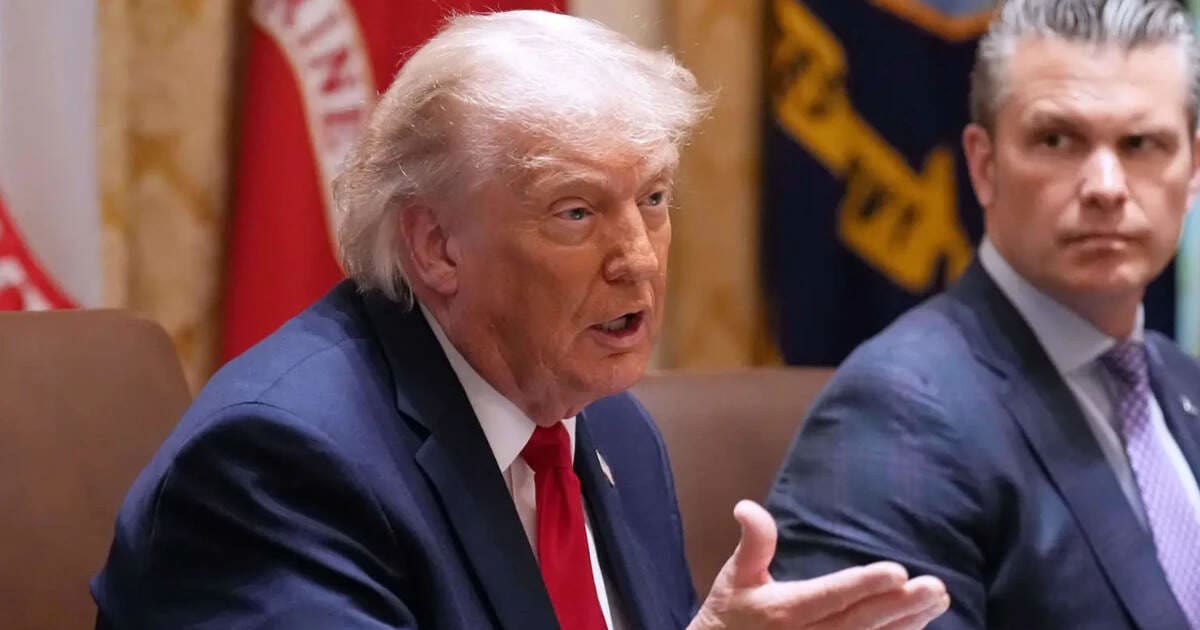
The rejection of a $1.8 billion executive compensation fund marks a pivotal shift in US fiscal policy stability. As political friction rises in Washington, global investors are reconsidering their exposure to emerging markets like India. We analyze the ripple effects on Nifty50, the rupee, and key sectoral performance.
The Washington Impasse: Why $1.8 Billion is Shaking Global Markets
The legislative deadlock surrounding the Trump administration's $1.8 billion 'weaponization' compensation fund is more than a mere partisan squabble; it is a barometer for US fiscal health. By denying the executive branch this specific allocation, Congress has inadvertently signaled a return to aggressive fiscal oversight, effectively putting a ceiling on discretionary spending. For the global investor, this creates a 'policy vacuum' that historically precedes periods of heightened volatility in emerging markets.
How Will US Political Gridlock Affect Indian Stock Markets?
When the US encounters domestic policy paralysis, the immediate reflex of global capital is to retreat to safety. Historically, during the 2022 US budget standoff, the Nifty50 saw a drawdown of approximately 4.2% over a three-week period as Foreign Institutional Investors (FIIs) liquidated positions to bolster liquidity in USD-denominated assets. This current $1.8 billion blockade suggests that the 'Trump Trade'—characterized by expectations of massive fiscal stimulus—is now facing a reality check. As US Treasury bonds gain favor as a safe-haven, the resulting 'yield vacuum' risks pulling capital away from the Indian subcontinent, placing downward pressure on the USDINR exchange rate.
The Mechanics of FII Outflows
Indian markets are particularly sensitive to US fiscal sentiment. Because a significant portion of Indian equity market capitalization is held by foreign entities, any disruption in US policy creates a 'beta risk.' When the US faces uncertainty, the correlation between the S&P 500 and the Nifty50 spikes, meaning Indian stocks often mirror the sell-off in US tech and financial sectors, regardless of domestic fundamentals.
Stock-by-Stock Breakdown: Who is Most at Risk?
- Reliance Industries (RELIANCE): As a proxy for the Indian economy, Reliance faces high sensitivity to FII sentiment. If capital exits Indian ETFs, Reliance is often the first to see institutional sell-offs due to its high liquidity.
- HDFC Bank (HDFCBANK): With a high percentage of foreign shareholding, HDFC Bank is a primary target for FIIs rebalancing portfolios during periods of global uncertainty.
- Infosys (INFY): As an export-heavy IT firm, Infosys is vulnerable to both global spending cuts and currency fluctuations. A strengthening USD against the INR might provide a temporary revenue boost, but the overarching 'risk-off' sentiment typically outweighs this benefit.
- State Bank of India (SBIN): Often used as a beta play on the Indian economy, SBIN is susceptible to volatility spikes if the broader banking sector experiences a liquidity crunch linked to global interest rate movements.
The Contrarian View: Bulls vs. Bears
The Bear Case: Bears argue that this gridlock is a precursor to a wider government shutdown. If the US cannot pass critical appropriations, the global risk-off sentiment could trigger a prolonged correction in the Nifty50, potentially pushing it toward the 200-day moving average support level.
The Bull Case: Bulls contend that the Indian domestic economy is 'decoupled' from US political drama. With strong GST collections and robust domestic retail participation (SIP flows), the Indian market has a 'cushion' that wasn't present a decade ago. They argue that any dip in Nifty50 blue-chips should be viewed as a long-term entry point.
Actionable Investor Playbook
Investors should adopt a defensive posture until the legislative path becomes clearer. Reduce exposure to high-beta midcaps and rotate into low-volatility, dividend-paying stocks. Watch the USDINR closely; if the pair breaches the 84.50 level, it could signal a more aggressive FII withdrawal. Consider increasing exposure to Gold ETFs as a hedge against the inevitable market swings caused by Washington's policy uncertainty.
Risk Matrix: Assessing the Political Fallout
| Risk Factor | Probability | Impact |
|---|---|---|
| US Gov Shutdown | Moderate (40%) | High (Negative) |
| FII Capital Flight | High (65%) | Moderate (Negative) |
| USDINR Volatility | High (70%) | Moderate (Positive for Exports) |
What to Watch Next
The next major catalyst is the upcoming US Treasury report and any subsequent announcements from the Congressional budget committees. Investors should monitor the CBOE Volatility Index (VIX); if it remains elevated above 20, expect continued choppiness in BANKNIFTY. Keep a close eye on the RBI’s next policy meeting, as they may be forced to intervene if the rupee faces excessive volatility due to external US political shocks.
Disclaimer: This content is generated by WelthWest Research Desk based on publicly available reports and is for informational purposes only. It does not constitute financial advice, investment recommendations, or an offer to buy or sell securities. Always consult a qualified financial advisor before making investment decisions.