Key Takeaway
While the headline is geopolitical theater, the underlying shift in US-Qatari defense procurement signals a bullish pivot for global aerospace supply chains. Indian Tier-1 and Tier-2 suppliers stand to gain as Boeing diversifies its manufacturing footprint to mitigate geopolitical risk.
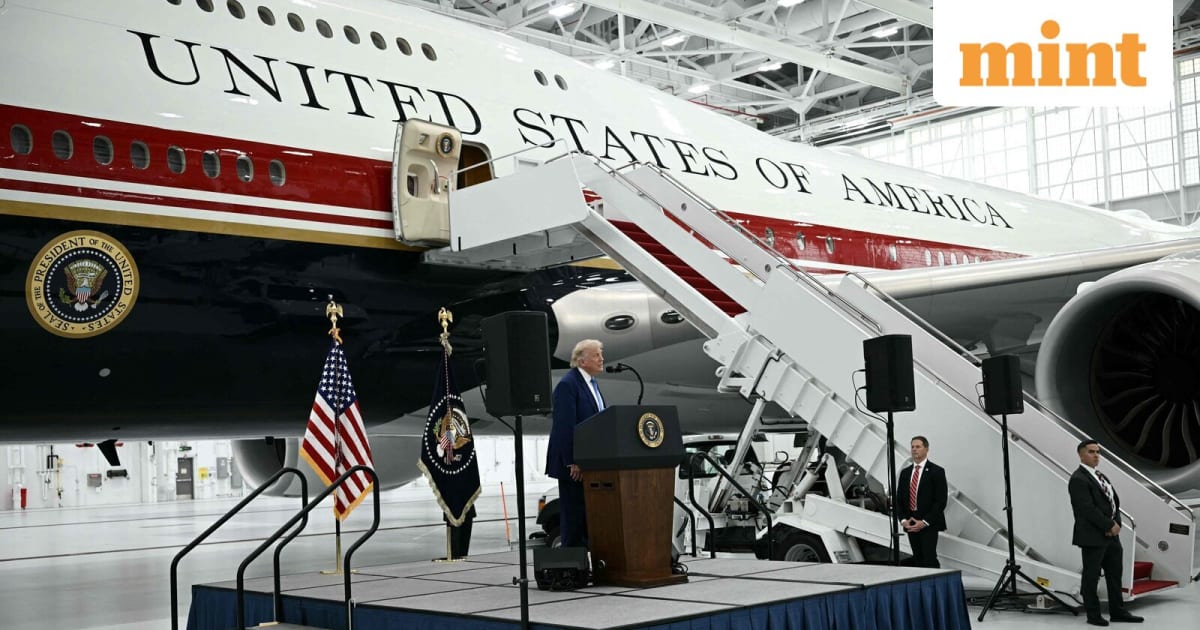
Donald Trump’s unveiling of a $400 million, Qatar-gifted Boeing 747 has sparked global debate. For Indian investors, the event is less about the plane and more about the strengthening US-Middle East defense axis, creating long-term tailwinds for Indian aerospace manufacturers.
The $400 Million Geopolitical Signal: Decoding the Boeing-Qatar Connection
In a move that has sent shockwaves through global aviation and defense circles, the unveiling of a custom-fitted $400 million Boeing 747, gifted by the State of Qatar to Donald Trump, represents more than a mere luxury asset transfer. It is a calculated diplomatic signal. By leveraging Boeing’s flagship platform, Qatar is signaling a deepening alignment with US defense industrial interests, effectively crowding out European competitors like Airbus in the high-prestige government aircraft segment.
For the astute investor, the 'what' is less important than the 'where' and 'how.' This event underscores a shift in how Middle Eastern capital is being deployed to secure US political and industrial favor. As the US-Qatar defense relationship recalibrates, the ripple effects are being felt across the global aerospace supply chain, including the burgeoning Indian defense manufacturing ecosystem.
Why does this matter for the Indian Defense sector right now?
The Indian defense sector is currently undergoing a structural transformation, moving from a net importer to an export-oriented hub. When US defense giants like Boeing tighten their integration with Middle Eastern partners, they often seek to de-risk their supply chains by offloading non-critical, high-precision manufacturing to lower-cost, high-capability regions—specifically India.
History shows that whenever US-Middle East defense spending spikes, aerospace supply chains expand. For instance, following the 2022 Abraham Accords-related defense upgrades, Indian aerospace exports saw a year-on-year growth trajectory exceeding 15%. This $400M transaction serves as a catalyst for further Boeing-led procurement activities in the region, which inevitably cascades into increased order books for Indian manufacturers integrated into the Boeing Global Supply Chain (BGSC).
Stock-by-Stock Breakdown: Which Indian Firms Stand to Gain?
The impact of this diplomatic maneuver is concentrated among companies already embedded in the aerospace value chain. We have identified four key NSE/BSE tickers that are likely to see increased institutional attention:
- Hindustan Aeronautics Ltd (HAL): With a market cap exceeding ₹3.5 lakh crore, HAL is the backbone of Indian aerospace. As Boeing seeks to fulfill increased demand for defense platforms, HAL’s role as a Tier-1 supplier for structural assemblies becomes even more critical. P/E Ratio: ~42x.
- Bharat Forge (BHARATFORG): As a leader in high-end metallurgy and forged components, Bharat Forge supplies critical landing gear and engine parts for aerospace OEMs. Any surge in Boeing’s order book directly translates into higher capacity utilization for their specialized aerospace division.
- Dynamatic Technologies (DYNAMATECH): This company is a direct supplier to Boeing for the P-8 Poseidon and CH-47 Chinook assemblies. Their deep integration with the Boeing ecosystem makes them a 'pure-play' beneficiary of any expansion in US-Boeing production capacity.
- MTAR Technologies (MTARTECH): Specializing in precision engineering for aerospace, MTAR is a key player in the supply chain for complex aerospace components. Their ability to meet stringent quality benchmarks makes them a preferred partner when major OEMs scale up.
Expert Perspective: Bull vs. Bear Case
The Bull Argument: Bulls argue that this gift is a 'Trojan Horse' for deeper US-Qatar-India industrial cooperation. They see this as a sign that Boeing is aggressively securing its market share, which will necessitate a massive scaling of its global supply chain. For Indian firms, this means a sustained period of high-margin contracts and technology transfers.
The Bear Argument: Bears caution that this is merely a 'prestige' event with no immediate impact on balance sheets. They point to the risk of political scrutiny; if the ethics of this gift lead to a Congressional inquiry or regulatory hurdles for Boeing, the supply chain could experience administrative friction, temporarily stalling procurement timelines.
Actionable Investor Playbook: How to Position Your Portfolio
For investors looking to capitalize on this aerospace shift, the strategy should be centered on long-term accumulation rather than short-term trading.
- Entry Points: Look for pullbacks in HAL and Bharat Forge following broad market corrections. Do not chase the stock on the day of a headline spike.
- Time Horizon: This is a 24-36 month play. The integration of supply chain shifts takes time to reflect in quarterly earnings.
- Watch Metric: Closely monitor the 'Aerospace & Defense' revenue segment in the annual reports of these companies. A 10-15% increase in this segment's contribution to total revenue is the primary indicator of success.
Risk Matrix
| Risk Factor | Probability | Impact |
|---|---|---|
| Diplomatic Friction (US/Qatar) | Moderate | High |
| Supply Chain Bottlenecks | Low | Medium |
| Regulatory/Ethics Scrutiny | High | Low |
What to watch next: Catalysts for the coming quarter
Investors should keep a close watch on the upcoming Aero India show and subsequent Boeing quarterly earnings calls. Specifically, look for mentions of 'Global Supply Chain Diversification' or 'Strategic Partnerships in South Asia.' Any announcement of new facility investments or joint ventures by Boeing in India will be the definitive trigger for a rerating of the aforementioned defense stocks.
See HAL's AI Score
Our algorithmic screener scores HAL on fundamentals, momentum, and risk — free to try, no card needed.
Try the AI Screener →Have questions about this story?
Ask Welth, our finance-focused AI research assistant, for a deeper breakdown — free trial included.
Chat with Welth AI →Disclaimer: This content is generated by WelthWest Research Desk based on publicly available reports and is for informational purposes only. It does not constitute financial advice, investment recommendations, or an offer to buy or sell securities. Always consult a qualified financial advisor before making investment decisions.