Key Takeaway
Uber’s potential acquisition of Delivery Hero marks the end of the 'growth-at-all-costs' era in food tech. For Indian investors, this signals a shift toward margin-accretive operations and sets a valuation floor for domestic incumbents like Zomato.
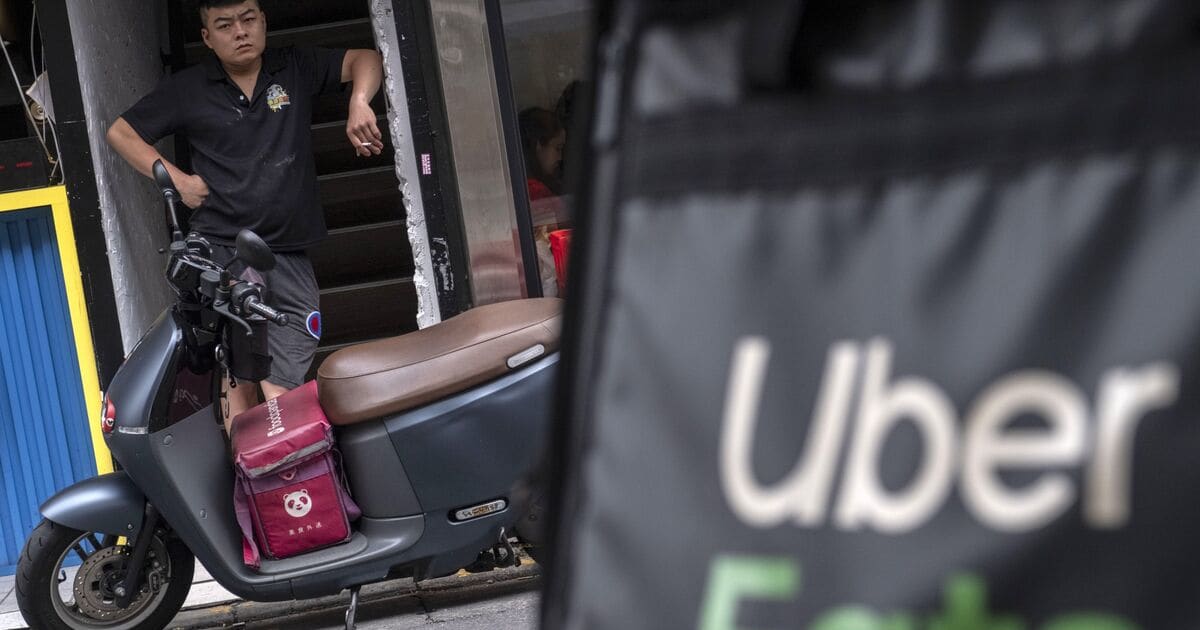
As Uber eyes a global takeover of Delivery Hero, the food delivery landscape is undergoing a structural reset. This article examines the ripple effects on Indian markets, the competitive pressure on Zomato, and the broader implications for the consumer services sector in an era of high-interest rates.
The End of the Hyper-Growth Era: Why Uber’s Bid Changes Everything
The global food delivery sector has long been defined by a 'blitzscaling' mentality, where customer acquisition costs (CAC) were subsidized by infinite venture capital. Uber’s reported €33-per-share offer for Delivery Hero signifies a fundamental pivot: the transition from land-grabbing to margin-optimization. For the Indian investor, this is not merely a European corporate event; it is a bellwether for the future of the domestic quick-commerce and food-tech duopoly.
How will the Uber-Delivery Hero deal impact Indian food delivery stocks?
The convergence of global food delivery assets into a single, dominant player changes the competitive calculus for regional giants like Zomato (NSE: ZOMATO). When global players consolidate, they move toward pricing power—a luxury that was previously impossible in a fragmented market. In India, the Zomato-Swiggy rivalry has evolved into a disciplined duopoly. Uber’s move validates the thesis that food delivery is a scale game where only the last two standing—with deep operational efficiency—can thrive.
The Valuation Benchmark
Historically, when international peers consolidate, valuation multiples undergo a mean reversion. With Zomato trading at a significant premium due to its dominance in the Blinkit quick-commerce vertical, the Uber-Delivery Hero transaction provides a global yardstick for investors to judge whether Indian food-tech is currently overextended or correctly priced.
Stock-by-Stock Breakdown: Who Wins and Who Loses?
- Zomato (NSE: ZOMATO): As the primary proxy for the Indian food-tech sector, Zomato stands to benefit from a positive sentiment shift. If global consolidation leads to higher industry profitability, Zomato’s valuation floor firms up. However, watch for potential dilution if they are forced to engage in a defensive M&A strategy.
- PB Fintech (NSE: PBFINTECH): While not a direct food-tech player, PolicyBazaar’s parent company shares the 'digital-first' ecosystem profile. Increased scrutiny on high-burn, high-growth tech stocks globally often leads to a sympathetic sell-off in domestic fintech stocks.
- Info Edge (NSE: NAUKRI): As a major backer of Zomato, Info Edge’s NAV is directly tied to the success of the food-tech sector. Any global consolidation trend that forces Zomato to defend its market share will be reflected in Info Edge’s quarterly portfolio valuations.
- Devyani International (NSE: DEVYANI): A major QSR franchisee, Devyani is a downstream beneficiary. If delivery platforms consolidate and stabilize their commission structures, QSR margins—which have been squeezed by aggregator fees—may finally see breathing room.
Expert Perspective: The Bull vs. Bear Case
The Bull Case: Proponents argue that consolidation is the ultimate catalyst for profitability. By eliminating price wars and optimizing logistics, the remaining players (like Zomato) can finally extract meaningful EBITDA margins. The Uber-Delivery Hero deal proves that even the largest players recognize the need for a consolidated, efficient ecosystem.
The Bear Case: Skeptics, however, point to the 'integration trap.' Merging massive, legacy-heavy platforms often leads to talent churn, service degradation, and regulatory pushback. If Uber stumbles, it could trigger a global 'tech-selloff' that drags down high-beta Indian stocks, regardless of their individual performance.
The Investor Playbook: Navigating the Volatility
Investors should adopt a 'wait-and-watch' stance on fresh entry points. The current market volatility in consumer-facing stocks suggests that the market has not yet priced in the long-term impact of this deal. Entry Strategy: Look for support levels on Zomato at the 200-day moving average. If the deal faces regulatory hurdles, expect a 5-8% short-term dip across the sector—this would represent a tactical buying opportunity for long-term investors.
Risk Matrix: What Could Go Wrong?
| Risk Factor | Probability | Impact |
|---|---|---|
| Regulatory Antitrust Scrutiny | High | High |
| Integration Operational Failure | Medium | Medium |
| Capital Flight from Tech Stocks | Medium | High |
What to Watch Next
Keep a close eye on the CCI (Competition Commission of India) discourse regarding platform dominance. While this deal is international, the regulatory precedent set in Europe will influence how Indian regulators view the Zomato-Swiggy ecosystem. Watch for the next quarterly earnings reports from Zomato, specifically focusing on the 'Contribution Margin per Order'—this metric will be the ultimate test of whether the global consolidation trend is translating into local efficiency.
Disclaimer: This content is generated by WelthWest Research Desk based on publicly available reports and is for informational purposes only. It does not constitute financial advice, investment recommendations, or an offer to buy or sell securities. Always consult a qualified financial advisor before making investment decisions.