Key Takeaway
The UK's 'two-pubs-a-day' closure rate is a structural warning for Indian investors, signaling margin pressure for global spirits majors and potential discretionary spend cuts for Indian IT firms with UK retail exposure.
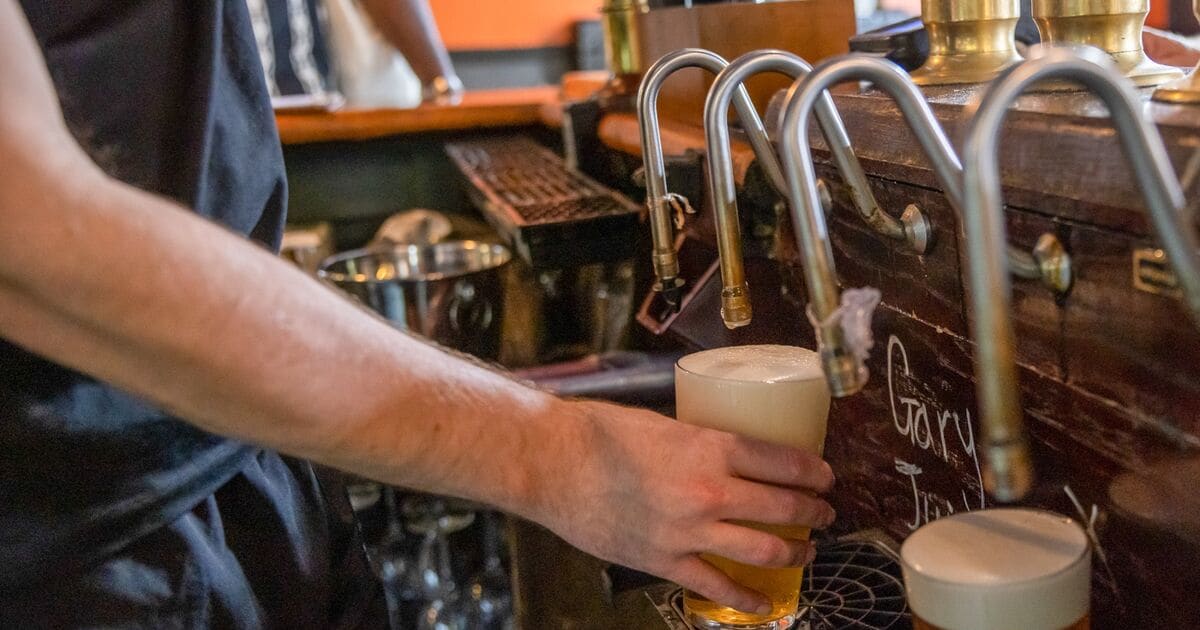
As the UK hospitality sector grapples with a perfect storm of labor costs and energy inflation, the ripples are reaching Dalal Street. This deep dive explores why the decline of the British pub matters for United Spirits, Indian Hotels, and the Nifty IT index, providing an actionable playbook for navigating this cross-border volatility.
The Last Orders: Decoding the Macroeconomic Shift in UK Hospitality
In the heart of London and across the British countryside, a quiet but devastating structural shift is occurring. According to recent industry data, UK pubs are closing at a rate of approximately two per day. While this might seem like a localized issue of British social fabric, for the senior financial analyst, it is a canary in the coal mine for global discretionary spending and operational cost structures. The UK hospitality sector is currently caught in a 'pincer movement': on one side, the National Living Wage increase and sky-high energy costs are bloating overheads; on the other, a cost-of-living crisis is thinning out the customer base.
Why does this matter for the Indian stock market? The financial corridor between London and Mumbai is more integrated than most retail investors realize. From the ownership of iconic spirits brands to the IT infrastructure that runs global retail chains, the health of the UK consumer is a direct driver of revenue for several NSE-listed heavyweights. When British consumers stop ordering that second pint of Guinness or skip a weekend getaway, the impact eventually reflects in the quarterly earnings of companies like United Spirits and TCS.
How will UK inflation affect Indian beverage and IT stocks?
To understand the impact, we must look at the Premiumization Paradox. While mass-market pubs are shuttering, premium venues and specific brands—most notably Diageo’s Guinness—are showing remarkable resilience. This divergence is critical for United Spirits Ltd (UNITDSPR). As a subsidiary of Diageo, United Spirits’ valuation is often tethered to the global parent’s sentiment. If Diageo faces margin compression in its home UK market due to rising hospitality defaults, it may pivot more aggressively toward high-growth emerging markets like India to subsidize global losses.
Historically, when the UK experienced the energy price shocks of late 2022, we saw a lagged effect on Nifty IT. Indian IT firms, including TCS and Infosys, derive significant revenue from the UK’s retail and hospitality verticals. A downturn in UK hospitality often leads to a 'reprioritization' of digital transformation budgets. When a pub chain or a retail REIT (Real Estate Investment Trust) faces insolvency, the first thing to go is the discretionary IT spend on 'experience-enhancing' software, shifting instead to 'cost-saving' maintenance—which carries lower margins for Indian service providers.
Deep Market Impact Analysis: The UK-India Consumption Link
The UK is India’s sixth-largest export destination for services. The hospitality sector’s distress acts as a leading indicator of a broader economic slowdown. In the 2008 financial crisis and the 2016 Brexit referendum, a decline in UK hospitality precedes a 4-6 month lag in Indian service export volatility. Currently, the UK Consumer Price Index (CPI) remains sticky in the services sector, which forces the Bank of England to maintain higher interest rates for longer. This 'higher-for-longer' environment is the primary killer of the traditional British pub, which often operates on thin margins and high debt leverage.
Stock-by-Stock Breakdown: The NSE Impact Map
1. United Spirits Ltd (UNITDSPR) | Sector: Beverages
With a market capitalization of approximately ₹1.15 trillion and a P/E ratio hovering around 62x, UNITDSPR is the most direct proxy for global spirits sentiment. While the UK crisis hurts the parent (Diageo), it reinforces the importance of the Indian market. Investors should watch for 'Premiumization' trends here. If Diageo’s global margins are squeezed by UK pub closures, expect UNITDSPR to accelerate its shift from mass-market 'Popular' brands to 'Prestige' and 'Above' categories to maintain consolidated profitability. Peer to watch: Radico Khaitan.
IHCL owns the iconic St. James' Court and Taj 51 Buckingham Gate in London. These are ultra-premium assets. While the 'two pubs a day' closure rate affects the mass market, the premium luxury segment in London remains a 'Winner'. However, a broader UK recession could dampen the high-spending international traveler sentiment. At a P/E of ~65x, the stock is priced for perfection. Any softness in London RevPAR (Revenue Per Available Room) could trigger a tactical correction. Peer to watch: EIH Ltd (Oberoi Hotels). 3. Tata Consumer Products (TATACONSUM) | Sector: FMCG
Through its ownership of Tetley, Tata Consumer has a massive footprint in UK retail. While tea is a staple (inelastic demand), the 'out-of-home' consumption in cafes and hospitality venues is under threat. If the UK hospitality sector continues to shrink, the institutional sales volume for Tetley will face headwinds. Watch for management commentary on UK margins in upcoming earnings calls. Peer to watch: Hindustan Unilever (HUL). 4. Tata Consultancy Services (TCS) | Sector: IT Services
UK is the second-largest market for TCS. They manage the back-end for several UK retailers and hospitality groups. A wave of insolvencies in the UK mid-market hospitality sector reduces the total addressable market (TAM) for Indian IT. While TCS is a defensive play, a UK-led slowdown in Europe could cap the stock's near-term upside. Peer to watch: Infosys, HCLTech.
Expert Perspective: The Bull vs. Bear Case
"The death of the British pub is not a sign of a dying economy, but a Darwinian evolution toward organized, premium hospitality. For Indian investors, this is a signal to move up the value chain. Buy the premiumizers, sell the mass-market exporters."
The Bull Argument: Bulls argue that the consolidation in the UK hospitality sector favors large, organized players like Diageo, which in turn benefits United Spirits through shared R&D and global branding. They see the UK's labor shortage as a catalyst for Indian IT firms to provide more automation and AI-driven solutions to the hospitality industry.
The Bear Argument: Bears point to the 'Wealth Effect.' If the UK's commercial real estate (REITs) collapses due to hospitality vacancies, it could trigger a wider financial contagion in Europe. This would lead to a 'Risk-Off' sentiment, causing FIIs (Foreign Institutional Investors) to pull capital out of high-P/E Indian stocks like UNITDSPR and INDHOTEL.
Actionable Investor Playbook
- The Tactical Move: For investors holding United Spirits (UNITDSPR), look for entry points near the 200-day EMA if UK macro data worsens. The long-term India story remains intact, and any global-led dip is a buying opportunity.
- The Defensive Play: If you are worried about UK exposure, rotate capital from TCS into more domestic-focused IT firms or those with higher US exposure, as the US economy currently shows more resilience than the UK.
- The Watchlist: Monitor the GBP/INR exchange rate. A weakening Pound reduces the repatriated value of earnings for companies like IHCL and Tata Consumer.
- Time Horizon: This is a 12-18 month structural play. Do not expect immediate volatility, but rather a slow 'margin bleed' in quarterly reports.
Risk Matrix: Assessing the UK-India Fallout
- Risk 1: Persistent UK Wage Inflation (Probability: High) - If the UK continues to hike the minimum wage, the cost of service delivery for Indian IT firms with onsite UK staff will rise, squeezing margins.
- Risk 2: UK Commercial Property Crash (Probability: Medium) - A systemic failure in UK retail REITs could lead to a global credit tightening, impacting Indian firms' ability to raise cheap foreign capital.
- Risk 3: Energy Price Volatility (Probability: Medium) - Another spike in European gas prices would be the final nail for many UK hospitality businesses, leading to a faster-than-expected drop in Indian export demand.
What to watch next: Catalysts for the coming quarter
Investors should circle October 30, 2024, on their calendars—the date for the UK Autumn Budget. Any changes in Business Rates relief for the hospitality sector will be a massive mover for sentiment. Furthermore, keep an eye on the Diageo PLC (DGE.L) earnings updates; as the parent of United Spirits, their outlook on 'Global Travel Retail' and 'European On-Trade' (pubs/bars) will provide the definitive lead for UNITDSPR's price action on the NSE.
Disclaimer: This content is generated by WelthWest Research Desk based on publicly available reports and is for informational purposes only. It does not constitute financial advice, investment recommendations, or an offer to buy or sell securities. Always consult a qualified financial advisor before making investment decisions.