Key Takeaway
The $11.1 billion US farm stimulus cements a protectionist trade era that distorts global commodity benchmarks. For Indian investors, this creates a 'cost-push' inflationary environment for domestic agri-input firms while challenging the export competitiveness of Indian produce.
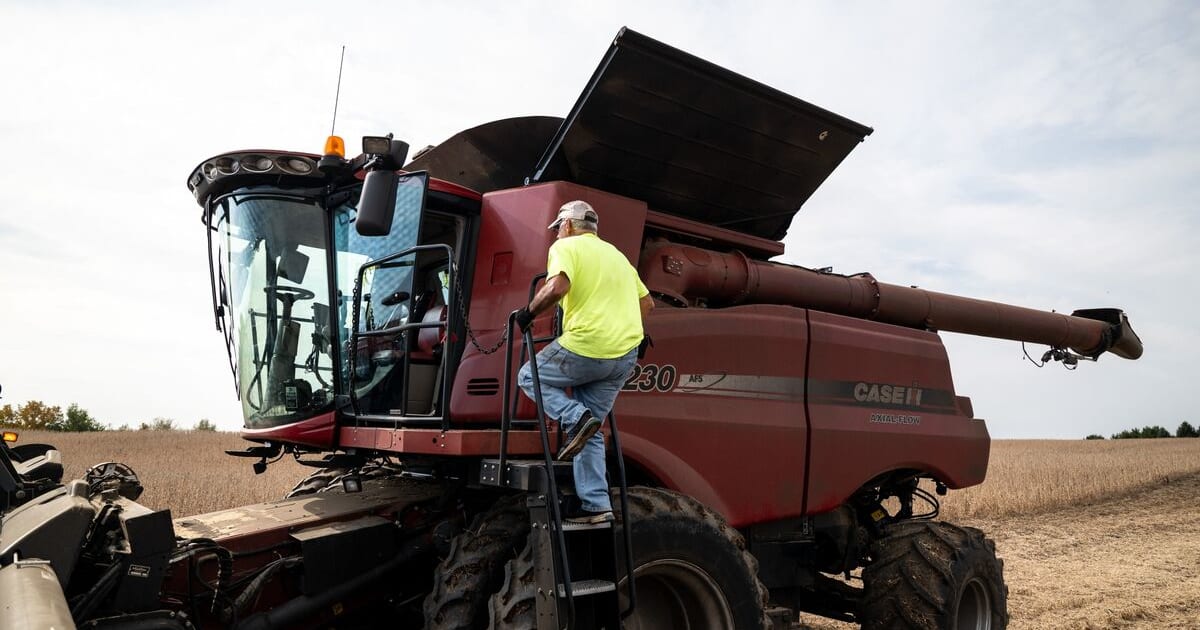
The US administration’s latest $11.1 billion farm aid package signals a structural shift toward fiscal expansionism and trade protectionism. This in-depth analysis evaluates the ripple effects on global food supply chains and provides a strategic outlook for key Indian NSE-listed agri-business players.
The $11.1 Billion Pivot: Why US Farm Policy is a Global Market Catalyst
The announcement of an $11.1 billion bailout package for US agricultural producers is far more than a domestic fiscal measure; it is a signal of deepening trade protectionism that will recalibrate global commodity price floors. As the US moves to insulate its producers from market volatility, the secondary effects are already manifesting in global supply chains, disproportionately impacting emerging market economies, including India.
How does the US farm bailout affect Indian agri-stocks?
For the Indian investor, the primary transmission mechanism is the commodity price benchmark. When the US subsidizes production, it effectively lowers the cost basis for American farmers, allowing them to capture larger market shares in export-sensitive crops like soy, corn, and wheat. This influx of subsidized supply can exert downward pressure on global prices, squeezing the margins of Indian agricultural exporters who operate without comparable government safety nets.
Historically, when the US implemented similar large-scale farm support programs—notably during the 2018-2019 trade frictions—we observed a decoupling in the Nifty Commodities index. While global prices softened, domestic input costs for Indian manufacturers remained rigid, leading to a temporary contraction in operating margins across the sector.
Stock-by-Stock Breakdown: Winners and Losers on the NSE
The impact of this bailout is sector-specific, creating a divergence between input suppliers and downstream processors.
- Coromandel International (COROMANDEL): As a leader in phosphatic fertilizers, Coromandel faces a double-edged sword. While global commodity price volatility may slow demand, their integrated model provides a buffer. With a P/E ratio currently hovering around 22x, the stock remains a defensive play, but watch for margin pressure if global DAP prices soften due to US-led supply gluts.
- Chambal Fertilisers (CHAMBLFERT): Highly sensitive to urea subsidy policy and gas prices. The US bailout could indirectly influence global gas benchmarks, which are critical to Chambal’s cost structure. If the US stimulus drives higher global production, demand for Indian-manufactured inputs may see a volume-driven uptick, offsetting pricing pressure.
- UPL Limited (UPL): With a massive global footprint, UPL is the most exposed to US policy shifts. The company’s focus on post-patent crop protection makes it vulnerable to retaliatory tariffs if trading partners view the US bailout as a market-distorting mechanism. Investors should monitor their debt-to-equity ratio as they navigate potential supply chain re-routing.
- PI Industries (PIIND): PI remains a high-quality player due to its CSM (Custom Synthesis and Manufacturing) model. Unlike pure commodity players, PI’s long-term contracts insulate it from immediate price shocks. Its premium valuation (P/E 40x+) is justified by its resilience, though it remains sensitive to global capital expenditure cycles in the agrochemical space.
Expert Perspective: The Bull vs. Bear Case
The Bull Case: Proponents argue that the $11.1B injection will stabilize global food security, preventing a catastrophic supply-side collapse in the US, which would ironically stabilize global prices and benefit Indian companies by providing a predictable input cost environment.
The Bear Case: Critics contend that this is a classic 'beggar-thy-neighbor' policy. By artificially propping up US producers, the US is inviting retaliatory tariffs from the EU and China, potentially leading to a fragmented global trade landscape where Indian firms face higher logistics costs and increased non-tariff barriers.
Actionable Investor Playbook
Investors should adopt a 'barbell strategy' in the current climate:
- Defensive Positioning: Maintain exposure to companies with strong balance sheets and low leverage, such as PI Industries, which can weather trade-related volatility.
- Monitor Input Costs: Watch the daily movement of the Bloomberg Commodity Agriculture Index. If the index drops >5% over a 30-day window, it signals a glut, negatively impacting fertilizer firms like Coromandel.
- Tactical Entry: Look for entry points in UPL only after a clear resolution of potential trade friction headlines. Avoid 'catching a falling knife' during periods of peak tariff rhetoric.
Risk Matrix: Assessing the Impact
| Risk Factor | Probability | Impact |
|---|---|---|
| Retaliatory Tariffs | High | High |
| Supply Chain Disruption | Medium | Medium |
| Currency Volatility (USD/INR) | High | Low |
What to watch next?
The next major catalyst will be the US Department of Agriculture (USDA) WASDE report, which will provide the first real data on how this bailout is impacting planting intentions. Furthermore, monitor the upcoming G20 trade ministerial meetings; any mention of 'market-distorting subsidies' will be the primary indicator that trade friction is escalating toward a full-blown trade war.
See COROMANDEL's AI Score
Our algorithmic screener scores COROMANDEL on fundamentals, momentum, and risk — free to try, no card needed.
Try the AI Screener →Have questions about this story?
Ask Welth, our finance-focused AI research assistant, for a deeper breakdown — free trial included.
Chat with Welth AI →Disclaimer: This content is generated by WelthWest Research Desk based on publicly available reports and is for informational purposes only. It does not constitute financial advice, investment recommendations, or an offer to buy or sell securities. Always consult a qualified financial advisor before making investment decisions.