Key Takeaway
The proposed 12.5% US tariff on Indian goods marks a structural shift from 'China Plus One' to 'Compliance First,' potentially wiping out the entire operating margin of labor-intensive exporters in the textile and jewelry sectors.
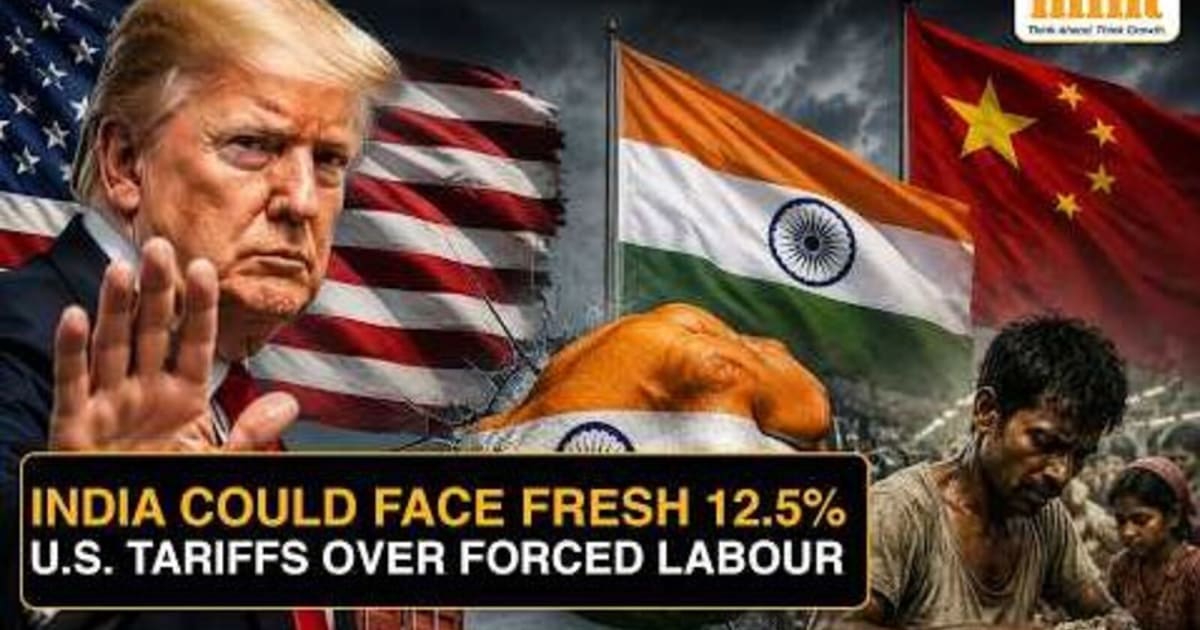
The US proposal for 12.5% forced-labor tariffs targeting Indian exports threatens to disrupt the $77 billion trade relationship. This investigative report analyzes the margin compression for NSE-listed exporters, historical trade war parallels, and the defensive rotation strategies for Indian investors.
The Protectionist Pivot: Understanding the 12.5% Forced-Labor Tariff Proposal
In a move that has sent shockwaves through the corridors of Udyog Bhawan and the trading floors of Dalal Street, the United States has proposed a sweeping 12.5% tariff on specific Indian exports under the umbrella of forced-labor allegations and broader trade levies. While the 'China Plus One' strategy has been the primary tailwind for Indian manufacturing over the last three years, this sudden protectionist pivot by the US—India’s largest trading partner—threatens to turn that tailwind into a structural headwind.
This is not merely a fiscal adjustment; it is a reputational and compliance-driven barrier. By invoking 'forced labor' concerns, the US is utilizing a high-leverage regulatory tool that allows for the detention of goods at the border, similar to the enforcement seen with the Uyghur Forced Labor Prevention Act (UFLPA). For Indian exporters, the 12.5% duty is a direct hit to the bottom line. Given that the average EBITDA margins for Indian garment and leather exporters hover between 10% and 14%, a 12.5% levy effectively neutralizes the profit motive of the entire export cycle to the US market.
Why does the US-India trade dispute matter for investors now?
The timing is critical. India is currently positioning itself as a global manufacturing hub through various PLI (Production Linked Incentive) schemes. However, these schemes are predicated on the assumption of friction-less access to Western markets. If the July deadline for diplomatic negotiations passes without a resolution, we could see an immediate re-rating of export-oriented sectors. Historically, trade friction of this magnitude leads to a 15-20% valuation discount in the affected mid-cap stocks as Foreign Institutional Investors (FIIs) pivot toward domestic-focused defensive plays.
Deep Market Impact: Connecting Macro Tariffs to Micro Margins
The Indian stock market (NSE/BSE) has historically been sensitive to US trade policy. When the US withdrew India’s Generalized System of Preferences (GSP) status in 2019, sectors like chemicals and engineering goods saw a prolonged period of underperformance. However, the current 12.5% proposal is significantly more aggressive than the GSP withdrawal, which largely affected duties in the 1% to 5% range.
1. The Margin Compression Trap: For a company like Gokaldas Exports (GOKEX), which derives a significant portion of its revenue from the US, a 12.5% tariff cannot be easily passed on to American retailers like Gap or Walmart. These retailers operate on fixed price points. Consequently, the Indian exporter must either absorb the cost—decimating their 11-12% margins—or risk losing market share to competitors in Bangladesh or Vietnam, who may not face similar levies.
2. The Compliance Cost Escalation: Beyond the tariff, the 'forced labor' tag necessitates rigorous supply chain audits. Indian firms will have to invest heavily in blockchain-based tracking and third-party certifications to prove their labor practices. This adds an estimated 200-300 basis points to operating costs, further squeezing the net profit margin (NPM).
How will US tariffs on Indian textiles crash garment stocks?
The textile sector is the most vulnerable due to its labor-intensive nature. The Nifty Textile index has already shown signs of fatigue. If these tariffs are codified, we expect a 'flight to quality' where only vertically integrated players with diversified geographic footprints will survive. Investors should look at the revenue geographic mix: any company with >40% US exposure is in the 'High Risk' zone.
Stock-by-Stock Breakdown: The Winners and Losers
1. Gokaldas Exports (NSE: GOKEX) | Status: High Risk
Gokaldas is a pure-play garment exporter with a heavy tilt toward the North American market (~75% of revenue). With a market cap of approximately ₹5,500 crore and a P/E ratio of 32x, the stock is priced for perfection. A 12.5% duty hike could lead to a 40-50% drop in EPS if the company is forced to absorb the costs. Peer Comparison: Compared to Pearl Global, Gokaldas has higher US concentration, making it more volatile in this scenario.
2. KPR Mill (NSE: KPRMILL) | Status: Moderate Risk
KPR Mill is one of India's largest vertically integrated apparel manufacturers. Their strength lies in their internal power generation and yarn production, giving them a margin cushion. While their exports will hit a snag, their domestic innerwear brand 'Faso' provides a partial hedge. However, with a P/E of 40x, any threat to their 20% ROE (Return on Equity) could trigger a sharp de-rating.
3. Titan Company (NSE: TITAN) | Status: Low to Moderate Risk
While Titan is a domestic giant, its international jewelry arm and the recently acquired CaratLane are looking at the US for growth. Gems and jewelry are specifically mentioned in the trade levy discussions. While the impact on Titan’s consolidated revenue (₹47,000+ crore) might be less than 5%, the sentiment impact on its 'growth' multiple could be significant. Peer: Rajesh Exports (RAJESHEXPO) faces much higher risk due to its lower-margin refining business.
4. KRBL Ltd (NSE: KRBL) | Status: High Risk
As the world’s leading basmati rice exporter (India Gate brand), KRBL is highly sensitive to agricultural trade barriers. The US has frequently raised issues regarding pesticide residues and labor in Indian agri-supply chains. With a trailing P/E of 12x, the stock looks cheap, but the 'value trap' risk is high if 12.5% duties are applied to premium rice exports.
The Bull vs. Bear Case: Expert Perspectives
"The bulls argue that this is a classic 'Art of the Deal' negotiation tactic. The US needs India as a strategic counterweight to China, and they are unlikely to jeopardize the relationship over 12.5% duties. They see this as a buying opportunity for high-quality exporters." — Senior Macro Strategist, WelthWest Research
Conversely, the bears point to the hardening of US trade policy across both sides of the political aisle. The 'forced labor' narrative is difficult to walk back once initiated. If the US Department of Labor adds more Indian sectors to its 'List of Goods Produced by Child Labor or Forced Labor,' the impact will be permanent, not transitory. This could lead to a structural shift where FIIs prefer domestic Indian FMCG over exporters for the next 24-36 months.
Actionable Investor Playbook: Navigating the Trade War
- The 'Sell the Rip' Strategy: For stocks like Gokaldas Exports and Raymond, any relief rally based on 'positive talks' should be used to trim positions until a formal treaty or exemption is signed.
- The Defensive Pivot: Rotate capital into domestic-focused sectors. Hindustan Unilever (HUL) and ITC are natural beneficiaries of a weaker rupee (which often accompanies trade tensions) and have zero exposure to US trade levies.
- Watch the 10-Year G-Sec: Trade wars often lead to currency volatility. If the INR breaches 84.50 against the USD, the RBI may tighten liquidity, which would be bearish for high-multiple growth stocks but neutral for Utilities like NTPC or PowerGrid.
- Entry Points: For long-term investors, KPR Mill becomes attractive if the stock corrects 15% from current levels, as its vertical integration allows it to outlast unorganized competitors.
Risk Matrix: Assessing the Fallout
- Geopolitical Escalation (Probability: High): India may retaliate with duties on US almonds, walnuts, or pulses. This could spiral into a broader trade dispute, affecting the Nifty 50 sentiment.
- Margin Erosion (Probability: Certain): Even if the full 12.5% isn't implemented, the threat alone will lead US buyers to demand 'risk discounts' from Indian suppliers.
- FII Outflow (Probability: Medium): If the export-led growth narrative falters, FIIs may reduce their overweight stance on India in favor of cheaper emerging markets like Brazil or Indonesia.
What to Watch Next: The Catalyst Calendar
Investors should mark their calendars for the following key triggers:
- July 15th Deadline: The final date for the initial round of diplomatic submissions regarding the forced-labor allegations.
- Monthly Export Data (Ministry of Commerce): Watch for a slowdown in garment and jewelry shipments to the US starting in the Q2 FY25 data.
- US Trade Representative (USTR) Annual Report: Any specific mention of Indian labor practices here will be a 'Sell' signal for the sector.
- RBI Monetary Policy Committee (MPC) Meeting: To see if the central bank acknowledges trade-related risks to the GDP growth forecast of 7.2%.
Disclaimer: This content is generated by WelthWest Research Desk based on publicly available reports and is for informational purposes only. It does not constitute financial advice, investment recommendations, or an offer to buy or sell securities. Always consult a qualified financial advisor before making investment decisions.