Key Takeaway
A hawkish Fed creates a structural headwind for emerging markets, forcing a rotation from domestic-growth plays into export-oriented hedges. Investors must pivot toward IT and Pharma to insulate portfolios against Rupee depreciation.
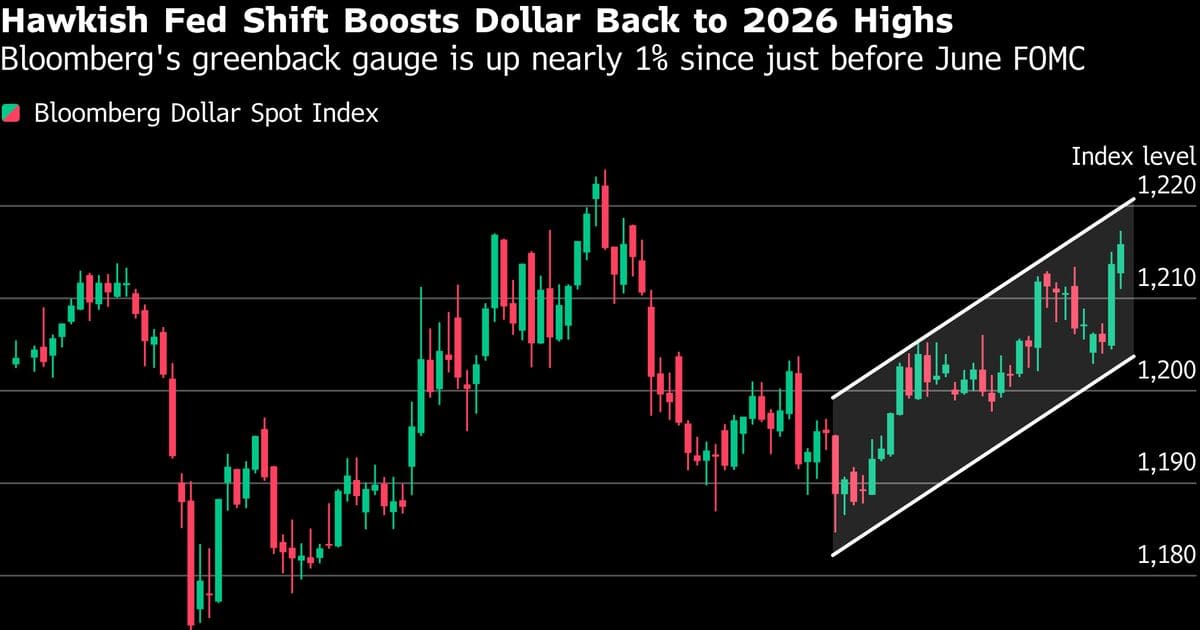
The aggressive US Dollar rally, driven by sustained high interest rate expectations, is reshaping the Indian equity landscape. We analyze the ripple effects on sector performance, corporate debt, and RBI policy to help you navigate this volatile macro environment.
The Great Dollar Squeeze: Decoding the Fed’s Impact on India Inc.
The global financial architecture is currently undergoing a seismic shift. As the US Federal Reserve signals a 'higher-for-longer' interest rate trajectory, the US Dollar Index (DXY) has surged, acting as a gravitational force that is pulling liquidity away from emerging markets. For the Indian investor, this isn't just a currency story—it is a fundamental restructuring of corporate profitability and capital flows.
When the DXY strengthens, the Indian Rupee (INR) faces inevitable downward pressure. Historically, when the DXY crosses the 105 threshold, we observe a distinct 'risk-off' sentiment in the Nifty 50. In 2022, when the Fed initiated its aggressive tightening cycle, the Nifty 50 saw a drawdown of approximately 8-10% in the immediate aftermath as Foreign Institutional Investors (FIIs) liquidated positions to capture higher yields in US Treasury bonds.
Why is the Dollar Rally a Threat to Indian Markets Right Now?
The current environment is uniquely challenging because India’s domestic growth narrative is robust, but its external vulnerability remains pegged to the cost of imported energy and capital. As the Rupee weakens against the Dollar, the cost of importing crude oil—India’s largest import bill—rises, fueling domestic inflation and narrowing the current account deficit (CAD) headroom.
This forces a dilemma for the Reserve Bank of India (RBI). To defend the Rupee, the central bank must either burn foreign exchange reserves or raise domestic rates. Higher domestic rates, while stabilizing the currency, stifle credit growth and compress the P/E multiples of interest-rate-sensitive sectors like Banking and Real Estate.
How will RBI policy shifts affect Indian bank stocks?
If the RBI is forced to maintain a hawkish stance to combat imported inflation, bank stocks will face a dual-impact scenario. While Net Interest Margins (NIMs) may stay elevated in the short term, the long-term risk of a credit slowdown and higher Non-Performing Assets (NPAs) as borrowing costs rise for SMEs could lead to a valuation derating. Investors should watch for credit growth data; any deceleration below 12% YoY is a bearish indicator for private sector lenders.
Sectoral Winners and Losers: The Divergence
In a strong-dollar regime, the Indian stock market bifurcates sharply. Export-oriented sectors become the 'safe harbor,' while import-heavy or debt-laden sectors bear the brunt of the volatility.
The Winners: Export-Oriented Resilience
- IT Services: With revenue primarily denominated in USD, companies like TCS and INFY benefit from a translation gain. As their costs are largely in INR, an appreciating dollar directly boosts their operating margins.
- Pharmaceuticals: SUNPHARMA and its peers derive a significant portion of their revenue from the US market. A stronger dollar provides a natural hedge against domestic cost inflation.
The Losers: Import-Dependent & Debt-Heavy
- Oil & Gas: RELIANCE (RELIANCE.NS) faces margin pressure on its refining business as the cost of crude oil imports surges, potentially impacting its GRMs (Gross Refining Margins).
- Aviation: Companies like InterGlobe Aviation face a double whammy: fuel costs (denominated in USD) rise, and aircraft leasing costs increase, severely impacting bottom-line profitability.
- Debt-Heavy Corporates: Firms with significant External Commercial Borrowings (ECBs) face higher interest servicing costs, which can cripple cash flows in a high-rate environment.
Stock-by-Stock Analysis
1. TCS (TCS.NS): With a market cap exceeding ₹14 lakh crore, TCS remains the quintessential defensive play. Its high cash reserves and USD-linked revenue make it a primary beneficiary of currency tailwinds.
2. INFOSYS (INFY.NS): Trading at a P/E of roughly 28x, INFY offers stability. During periods of currency volatility, INFY’s ability to maintain margins through operational efficiency makes it a preferred institutional hold.
3. RELIANCE INDUSTRIES (RELIANCE.NS): As a massive importer of crude, Reliance is sensitive to the DXY. However, its diversified portfolio (Jio/Retail) acts as a stabilizer. Investors should monitor its debt-to-equity ratio closely during this cycle.
4. SUN PHARMA (SUNPHARMA.NS): A classic defensive sector play. Unlike cyclical stocks, pharma demand is inelastic, and US-market exposure provides a direct hedge against Rupee weakness.
5. HINDALCO (HINDALCO.NS): While a commodity play, its international exposure (Novelis) provides a natural hedge. However, rising input costs in a strong dollar environment can compress domestic margins.
The Contrarian Perspective: Bulls vs. Bears
The Bear Case: Bears argue that the Indian market is currently 'expensive' relative to its historical P/E average of 20x. They posit that if the US 10-year Treasury yield sustains above 4.5%, FII outflows will accelerate, leading to a significant correction in mid-cap and small-cap stocks which have outperformed the index.
The Bull Case: Bulls argue that India’s structural growth—driven by massive infrastructure spending and a shift in global manufacturing supply chains—makes it the 'best house in a bad neighborhood.' They believe the current dollar-driven volatility is a temporary noise that provides an entry point into high-quality domestic compounders.
Investor Playbook: Navigating the Volatility
To survive and thrive in this environment, investors should adopt the following strategy:
- Increase Export Exposure: Allocate 15-20% of the portfolio to IT and Pharma leaders that have strong pricing power in the US.
- De-leverage: Reduce exposure to companies with high debt-to-equity ratios (>1.5x) that rely on external borrowings.
- Monitor the RBI: Watch the next MPC meeting minutes. A shift toward a more hawkish tone is a sell signal for rate-sensitive sectors.
- Time Horizon: Maintain a 3-5 year view. Tactical short-term trading is discouraged as currency volatility creates 'false' price signals.
Risk Matrix
| Risk Factor | Impact | Probability |
|---|---|---|
| Persistent DXY > 107 | High | Moderate |
| RBI Forced Rate Hike | High | Moderate |
| Global Recession Trigger | Very High | Low |
What to Watch Next
Investors must keep a close eye on the US Non-Farm Payrolls and CPI data, as these will dictate the Fed’s next move. Domestically, the RBI’s Forex Reserve data is the primary indicator of how aggressively the central bank is intervening to support the Rupee. Any sudden dip in reserves is a signal of impending market stress.
Disclaimer: This content is generated by WelthWest Research Desk based on publicly available reports and is for informational purposes only. It does not constitute financial advice, investment recommendations, or an offer to buy or sell securities. Always consult a qualified financial advisor before making investment decisions.