Key Takeaway
The escalation of US-Iran hostilities threatens a structural 'risk-off' shift in Indian equities, as $100+ Brent crude risks a fiscal blowout, forcing a rotation from high-PE consumer stocks to upstream energy and defensive gold-proxies.
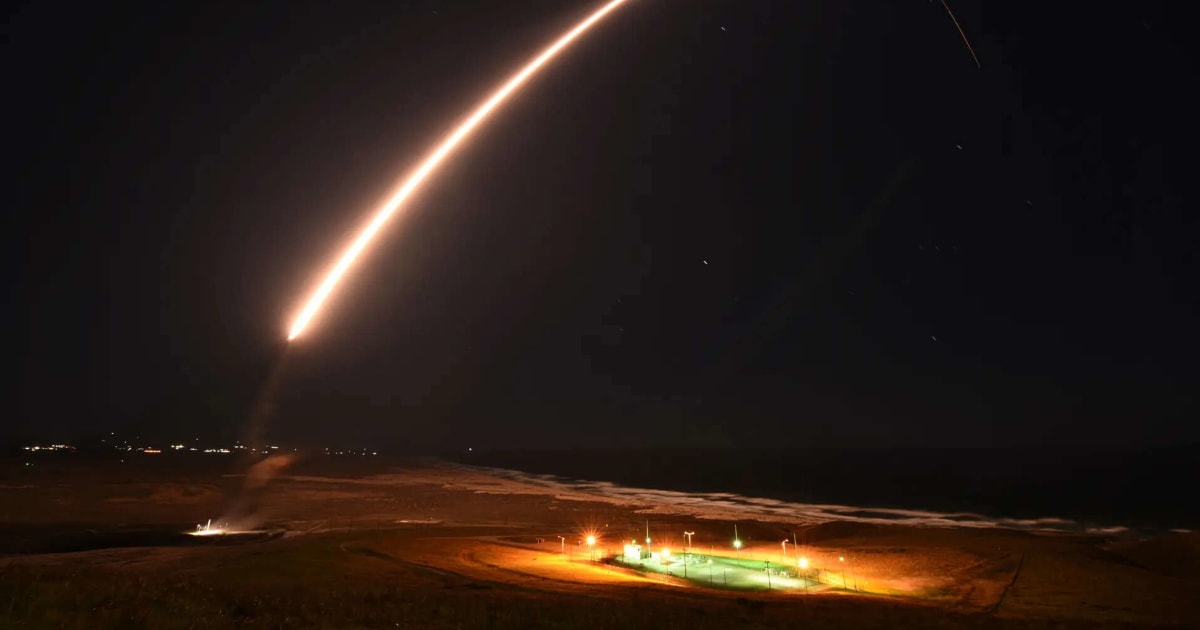
Direct military friction between Washington and Tehran has sent shockwaves through global energy markets, putting India's macro-stability at risk. This investigative report analyzes the vulnerability of the Nifty 50, identifies the 'war-chest' stocks that thrive in chaos, and maps the sectors facing imminent margin collapse.
The Geopolitical Fault Line: Why the US-Iran Escalation Reshapes the Indian Investment Thesis
Geopolitical stability in the Middle East is not a luxury for the Indian economy; it is a fundamental prerequisite. With the recent reports of direct strikes on US bases and the subsequent Iranian retaliation, the 'shadow war' has moved into the blinding light of direct kinetic conflict. For the Indian investor, this is not merely a headline to be skimmed—it is a portfolio-altering event. The primary transmission mechanism is the Strait of Hormuz, a narrow chokepoint through which nearly 21 million barrels of oil flow daily. Any disruption here doesn't just raise prices; it chokes global supply.
India imports approximately 85% of its crude oil requirements. Historically, every $10 increase in the price of a Brent crude barrel widens India's Current Account Deficit (CAD) by roughly 0.5% of GDP and adds 30 basis points to consumer price inflation (CPI). As the Nifty 50 trades at a premium compared to its emerging market peers, the sudden spike in energy costs acts as a valuation gravity, pulling down high-growth sectors that rely on cheap input costs and stable interest rates.
"The market hates uncertainty, but it fears stagflation. A US-Iran conflict provides both in spades, forcing a fundamental repricing of risk across the NSE and BSE."
Deep Market Impact: Connecting Global Tensions to Domestic D-Street Data
When the 2022 Russia-Ukraine conflict broke out, the Nifty 50 corrected by nearly 10% in a month as Brent crude surged toward $130. The current US-Iran scenario is arguably more volatile for India due to geographic proximity and the sheer volume of trade passing through the Persian Gulf. We are looking at a three-pronged assault on Indian equities:
- The Rupee's Vulnerability: As oil prices rise, the demand for Dollars by oil marketing companies (OMCs) intensifies. This puts immense pressure on the INR, which has been hovering near record lows. A weakening Rupee triggers Foreign Institutional Investor (FII) outflows, as their dollar-denominated returns are eroded.
- The Inflationary Spiral: Higher fuel prices lead to higher logistics costs, which eventually bleed into food and manufactured goods. This limits the Reserve Bank of India's (RBI) room to maneuver, potentially delaying much-anticipated rate cuts and keeping the cost of capital high for India Inc.
- The FII 'Flight to Safety': In times of conflict, capital flows out of 'risk-on' assets like Indian mid-caps and into 'safe havens' like US Treasuries and Gold. We are already seeing the 10-year US Treasury yield react to these tensions, which historically precedes a sell-off in emerging market equities.
How will high crude oil prices affect the Indian Rupee and Nifty 50?
The correlation between the USD-INR pair and Nifty is often inverse during energy shocks. If Brent crude sustains above $95 per barrel, we expect the Nifty 50 to test its 200-day moving average (DMA) as earnings estimates for the second half of the fiscal year are revised downward. Sectors like Paints, Tyres, and Aviation, which have high crude-derivative dependencies, could see earnings per share (EPS) downgrades of 10-15% in a single quarter.
Stock-by-Stock Breakdown: The Winners and Losers of the Escalation
1. ONGC (NSE: ONGC) - The Upstream Beneficiary
Sentiment: Bullish
As an upstream producer, ONGC (Oil and Natural Gas Corporation) is the most direct beneficiary of rising crude prices. Every $1 increase in realized oil price adds significantly to their bottom line. With a current P/E ratio of approximately 7.5x, ONGC remains undervalued compared to global peers. While the government might impose a 'windfall tax' to curb excessive profits, the net realization remains high enough to support strong dividend yields and Capex plans. Peer to watch: Oil India (NSE: OIL).
2. Asian Paints (NSE: ASIANPAINT) - The Margin Squeeze Victim
Sentiment: Bearish
Crude oil and its derivatives (like monomers and phthalic anhydride) constitute nearly 40-50% of the cost of goods sold (COGS) for paint companies. Asian Paints, trading at a premium P/E of 55x, is highly sensitive to input cost volatility. If crude remains high, the company faces a choice: hike prices and risk volume growth in a tepid rural market, or absorb the costs and watch margins contract. In previous oil spikes, Asian Paints has seen its operating margins dip by 200-300 basis points. Peer to watch: Berger Paints (NSE: BERGEPAINT).
3. Hindustan Aeronautics Ltd (NSE: HAL) - The Defensive Hedge
Sentiment: Bullish
Geopolitical instability accelerates the 'Indigenization' drive in Indian Defense. HAL, with an order book exceeding ₹80,000 Crore, stands as a structural beneficiary. As the government prioritizes national security amid global tensions, budget allocations for aerospace and defense are likely to remain robust. HAL's monopoly in domestic fighter jet and helicopter manufacturing provides a moat that is decoupled from immediate oil price fluctuations. Peer to watch: Bharat Electronics (NSE: BEL).
4. InterGlobe Aviation / IndiGo (NSE: INDIGO) - The Fuel Burn
Sentiment: Bearish
Aviation Turbine Fuel (ATF) accounts for nearly 40% of an airline's operating expenses. IndiGo, despite its 60%+ market share, has little protection against a sudden spike in ATF prices. Unlike US carriers, Indian airlines have limited hedging strategies in place. A 10% rise in fuel costs can wipe out a quarter’s profits for IndiGo, especially if it cannot pass on the costs to price-sensitive Indian travelers. Peer to watch: SpiceJet (NSE: SPICEJET).
5. Reliance Industries (NSE: RELIANCE) - The Complex Middle Ground
Sentiment: Neutral to Positive
Reliance is a complex play. While its retail and telecom arms are shielded, its O2C (Oil to Chemicals) segment benefits from higher Gross Refining Margins (GRMs) during global supply disruptions. Reliance’s refinery in Jamnagar is one of the most complex in the world, allowing it to process cheaper, heavy crudes even when global benchmarks spike. However, the broader market sell-off often drags the heavyweight stock down due to its high index weightage.
Expert Perspective: The Bull vs. Bear Argument
The Bear Case: Analysts at WelthWest argue that the Indian market is currently priced for perfection. A sustained conflict could lead to 'imported inflation,' forcing the RBI to keep interest rates higher for longer. This would derail the capex cycle and lead to a significant de-rating of mid-cap and small-cap stocks that have seen astronomical gains in the last year.
The Bull Case: Contrarian investors suggest that India’s macro-fundamentals are far stronger than in 2013 or 2022. With record foreign exchange reserves (over $600 billion) and a robust domestic mutual fund inflow (SIPs), the market is better equipped to handle temporary shocks. They view any 5-7% correction as a 'generational buying opportunity' in high-quality blue chips.
Actionable Investor Playbook: How to Navigate the Chaos
- The Defensive Move: Increase allocation to Gold and Gold ETFs. Gold has a historical correlation of nearly 0.8 with geopolitical risk indices. It acts as a hedge against both Rupee depreciation and global uncertainty.
- The Tactical Trade: Look at Upstream Energy (ONGC, Oil India) as a short-to-medium term hedge against fuel price hikes. These stocks act as a natural portfolio balancer when the rest of the Nifty is bleeding.
- The 'Wait and Watch' Sector: Avoid Automobiles and Consumer Durables for the next 4-8 weeks. Rising fuel costs and potential interest rate hikes will likely dampen festive season demand and increase ownership costs.
- Entry Points: For long-term investors, the 19,800 - 20,200 zone on the Nifty 50 represents a strong psychological and technical support level to start accumulating quality names in the Banking and IT sectors.
Risk Matrix: Assessing the Probability of Escalation
| Risk Factor | Probability | Impact on Indian Market |
|---|---|---|
| Blockade of Strait of Hormuz | Low (15%) | Catastrophic: Oil $150+, Nifty could drop 15-20% |
| Sustained Missile Exchanges | Medium (40%) | High: Oil stays at $90-100, persistent volatility |
| US Sanctions on Iranian Oil | High (70%) | Moderate: Already partially priced in, but tightens supply |
| Domestic Inflation Spike (>6%) | Medium (50%) | Negative: Delays RBI rate cuts, hurts consumption |
Which sectors are safest during a US-Iran war?
Historically, Information Technology (IT) and Pharmaceuticals act as defensives. IT companies earn in Dollars, so a weakening Rupee actually helps their margins (a 1% INR depreciation typically adds 30-50 bps to IT margins). Pharma companies, being essential services, are less sensitive to the discretionary spending slowdown caused by inflation.
What to Watch Next: The 3 Critical Catalysts
- OPEC+ Emergency Meeting: Watch for any announcements regarding the release of spare capacity. If Saudi Arabia agrees to pump more to stabilize prices, the market will rally.
- US Dollar Index (DXY): A surge above 107 would signal a massive move toward safety, which is a sell signal for Indian equities.
- Weekly EIA Inventory Data: US crude inventory levels will determine if the market has enough cushion to absorb a Middle Eastern supply shock.
As we monitor the situation from the WelthWest Research Desk, the message is clear: Volatility is the new baseline. Investors should pivot from a 'growth at any price' mindset to a 'resilience and valuation' framework. The coming weeks will separate the speculative froth from the structural winners in the Indian story.
Disclaimer: This content is generated by WelthWest Research Desk based on publicly available reports and is for informational purposes only. It does not constitute financial advice, investment recommendations, or an offer to buy or sell securities. Always consult a qualified financial advisor before making investment decisions.


