Key Takeaway
The sudden collapse of the US-Iran ceasefire transforms the Persian Gulf into a volatility epicenter, threatening a structural spike in Brent crude that could derail India's disinflation trajectory and squeeze the margins of oil-dependent sectors like OMCs, paints, and aviation.
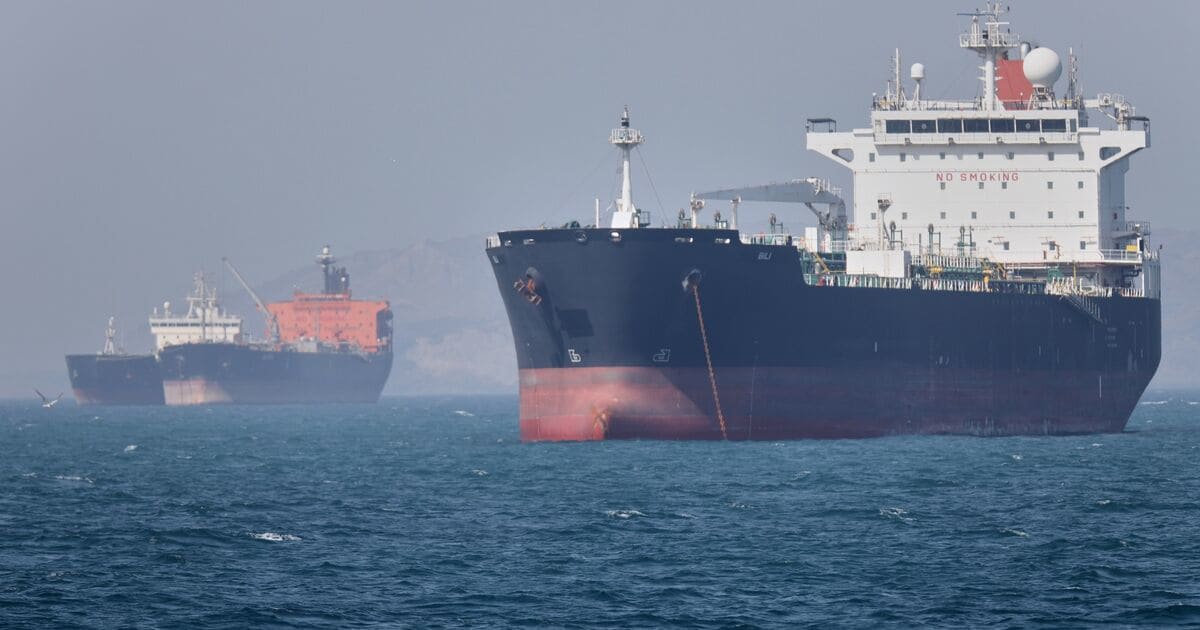
As the US and Iran trade fire in the strategically vital Strait of Hormuz, global energy markets are bracing for a supply-side shock. For the Indian equity market, this geopolitical escalation signals a shift from growth-oriented sentiment to defensive positioning, with upstream energy players and defense contractors emerging as tactical winners while consumer-facing sectors face significant headwinds.
The Persian Gulf Powder Keg: Why the US-Iran Fire Exchange Changes Everything
The geopolitical landscape of the Middle East has shifted overnight from a fragile truce to active hostility. The exchange of fire between US forces and Iranian assets in the Persian Gulf has effectively shattered a four-week-old ceasefire, reintroducing a 'war premium' to global crude oil prices. For the uninitiated, the Persian Gulf is not just a body of water; it is the central nervous system of the global energy trade. At its narrowest point lies the Strait of Hormuz, a chokepoint through which approximately 21 million barrels of oil pass daily—roughly 21% of global petroleum liquids consumption.
For India, this isn't just a headline in a foreign newspaper; it is a direct threat to the nation's macroeconomic stability. India imports over 80% of its crude oil requirements. When the 'Hormuz Risk' rises, the cost of every liter of petrol and diesel sold in Mumbai or Delhi is at stake. The timing is particularly sensitive as the Indian economy navigates a delicate path toward a 7% GDP growth target amidst global tightening cycles. A sustained disruption in the Gulf could trigger a 'twin deficit' problem—widening both the Current Account Deficit (CAD) and the Fiscal Deficit—while forcing the Reserve Bank of India (RBI) to maintain a hawkish stance for longer than the markets have priced in.
How will rising oil prices affect the Indian stock market?
Historically, the Nifty 50 has shown a strong inverse correlation with Brent crude prices during periods of supply-side shocks. When oil prices spiked following the Russia-Ukraine conflict in early 2022, the Nifty witnessed a correction of nearly 10% in a matter of weeks. The current escalation poses three primary risks to the Indian equity ecosystem:
- Currency Depreciation: Higher oil prices increase the demand for Dollars to settle import bills, putting the Indian Rupee (INR) under pressure. A weaker Rupee makes foreign portfolio investors (FPIs) nervous, often leading to capital outflows from the NSE and BSE.
- Input Cost Inflation: From specialty chemicals to plastic packaging and aviation turbine fuel (ATF), crude oil derivatives are foundational to Indian manufacturing. A $10 increase in Brent crude typically shaves 50-100 basis points off the EBITDA margins of consumer-facing sectors.
- Fiscal Strain: If the government chooses to shield consumers from high fuel prices at the pump, it must either cut excise duties (reducing revenue) or ask State-Owned Enterprises (OMCs) to absorb the losses, both of which are bearish for the energy sector's valuation.
The Macro Connection: Inflation and the RBI
The 'pass-through' effect of oil is the biggest concern for the RBI. While the direct weight of petrol and diesel in the Consumer Price Index (CPI) is roughly 2.3%, the indirect impact—via increased transportation costs for food and manufactured goods—is far more pervasive. If Brent crude stabilizes above $95 per barrel, the probability of an RBI rate cut in the next two quarters drops to near zero, negatively impacting high-growth sectors like Banking and Real Estate.
Sector-Level Breakdown: Winners and Losers
The Beneficiaries: Upstream and Defense
Upstream Oil Exploration (ONGC & OIL): Companies involved in the exploration and production (E&P) of oil are the most direct beneficiaries of rising prices. Oil and Natural Gas Corporation (NSE: ONGC), with a market capitalization of approximately ₹3.5 lakh crore, sees a direct boost to its bottom line for every dollar increase in realized oil prices. While the government's 'Windfall Tax' (Special Additional Excise Duty) acts as a cap on excessive profits, the floor for these companies remains significantly higher in a high-oil environment. Oil India Limited (NSE: OIL), a smaller but more nimble peer, often shows higher price sensitivity to Brent movements due to its concentrated asset base in the Northeast.
Defense and Strategic Assets: Geopolitical instability in the Gulf often leads to increased regional defense spending and a focus on domestic energy security. Companies like Hindustan Aeronautics Limited (NSE: HAL) and Mazagon Dock Shipbuilders (NSE: MAZDOCK) are likely to see sustained interest as the narrative shifts toward national security and self-reliance. Furthermore, safe-haven assets like Gold (tracked by various Gold ETFs on the NSE) typically rally as investors flee equity volatility.
The Victims: OMCs, Paints, and Aviation
Oil Marketing Companies (BPCL, HPCL, IOC): The downstream sector is the 'whipping boy' of oil price spikes. Bharat Petroleum (NSE: BPCL), Hindustan Petroleum (NSE: HPCL), and Indian Oil (NSE: IOC) operate on thin marketing margins. When international prices rise, these companies are often unable to pass the full cost to consumers due to political pressure, leading to 'under-recoveries.' This margin squeeze can turn profitable quarters into losses almost overnight.
Paints and Specialty Chemicals: For Asian Paints (NSE: ASIANPAINT) and Berger Paints (NSE: BERGEPAINT), crude oil and its derivatives (like monomers and phthalic anhydride) account for nearly 40-50% of their raw material costs. With Asian Paints trading at a premium P/E ratio (often exceeding 55x), any threat to its margin profile leads to immediate de-rating by institutional investors.
Aviation: InterGlobe Aviation (NSE: INDIGO) operates in a sector where Aviation Turbine Fuel (ATF) constitutes nearly 40% of total operating expenses. Unlike US carriers, Indian airlines have limited hedging capabilities, making their quarterly earnings extremely sensitive to Gulf tensions.
Stock-by-Stock Analysis: Navigating the Volatility
"In a geopolitical crisis, price discovery is often replaced by panic. The key for the intelligent investor is to separate temporary margin pressure from structural business decay."
- ONGC (NSE: ONGC): Currently trading at a P/E of roughly 7.5x, ONGC remains a value play. Its dividend yield (often above 5%) provides a safety net. If Brent stays above $90, expect a 10-15% upside in the short term, offset only by potential increases in the windfall tax.
- BPCL (NSE: BPCL): BPCL is particularly vulnerable because of its high exposure to the retail marketing segment. With a massive market cap of ₹1.4 lakh crore, even a 100-basis point drop in marketing margins can wipe out billions in projected profit. Investors should watch the 'Gross Refining Margin' (GRM) as a potential offset.
- Asian Paints (NSE: ASIANPAINT): This stock is a classic 'defensive' that turns 'fragile' during oil spikes. If the conflict escalates, look for a re-entry point near the 200-day Moving Average, as the company has historically demonstrated the pricing power to eventually pass on costs—though with a lag of 2-3 quarters.
- Indigo (NSE: INDIGO): Despite its dominant market share (60%+), the stock is a high-beta play on oil. A $10 move in oil can swing Indigo’s annual profit projections by ₹1,000-1,500 crore. Tactical exits are advised if Brent crosses the $100 threshold.
Expert Perspective: The Bull vs. Bear Argument
The Bear Case: Bears argue that this is the 'black swan' event that will finally pop the valuation bubble in Indian mid-caps. They point to the fact that India's trade deficit is already widening and that the RBI has very little room to maneuver. A Persian Gulf blockade would not just raise prices; it would create physical shortages, leading to industrial slowdowns. In this scenario, the Nifty could test its major support levels at 22,500 or lower.
The Bull Case: Bulls contend that India is better prepared today than in 2013 or 2018. Foreign exchange reserves remain robust at over $640 billion, providing a buffer against Rupee volatility. Furthermore, the shift toward Russian oil (often bought at a discount) has partially decoupled India from the Brent benchmark. They see any dip in high-quality stocks like Asian Paints or HDFC Bank as a 'generational buying opportunity' driven by temporary geopolitical noise.
Actionable Investor Playbook
How should you position your portfolio for the coming weeks? Follow this three-step strategy:
- The Tactical Hedge: Allocate 5-10% of the portfolio to Upstream Energy (ONGC) and Gold ETFs. This acts as a natural insurance policy against rising fuel costs and a falling Rupee.
- The 'Wait and Watch' List: Avoid catching the falling knife in OMCs (BPCL, HPCL). Wait for clarity from the Ministry of Petroleum regarding fuel price revisions. The best time to buy OMCs is usually when the news is at its worst and oil prices show signs of peaking.
- The Quality Rotation: If the broader market corrects, rotate capital from high-beta, oil-sensitive mid-caps into 'Large-cap IT' (which benefits from a weaker Rupee) and 'Domestic Pharma,' which are relatively immune to crude price fluctuations.
Risk Matrix: Assessing the Escalation
| Risk Scenario | Probability | Market Impact |
|---|---|---|
| Temporary Skirmish (Current) | High (60%) | Moderate volatility; Nifty stays range-bound. |
| Strait of Hormuz Blockade | Low (15%) | Severe; Brent hits $120+; Global recession risk. |
| OPEC+ Supply Increase | Medium (25%) | Positive; Cools prices; Relief rally in OMCs/Paints. |
What to watch next: The Catalyst Calendar
Investors should keep a close eye on three specific data points over the next 14 days:
- Weekly US Crude Inventory Reports: Any unexpected drawdowns will add fuel to the price rally.
- Statements from the Iranian Revolutionary Guard (IRGC): Any threat to commercial shipping in the Strait of Hormuz will trigger an immediate 3-5% jump in oil.
- India's Monthly Trade Deficit Data: This will reveal the actual 'damage' high oil prices are doing to the national balance sheet.
The Persian Gulf conflict is a reminder that in the world of investing, the most significant risks are often those that cannot be modeled in a spreadsheet. By staying informed and maintaining a diversified, hedged portfolio, Indian investors can navigate this period of heightened geopolitical tension without losing sight of their long-term wealth creation goals.
Disclaimer: This content is generated by WelthWest Research Desk based on publicly available reports and is for informational purposes only. It does not constitute financial advice, investment recommendations, or an offer to buy or sell securities. Always consult a qualified financial advisor before making investment decisions.


