Key Takeaway
The US labor market’s defiance of high interest rates is slamming the door on imminent Fed pivots. For Indian investors, this signals a shift from growth-at-any-price to defensive positioning as capital flees to the dollar.
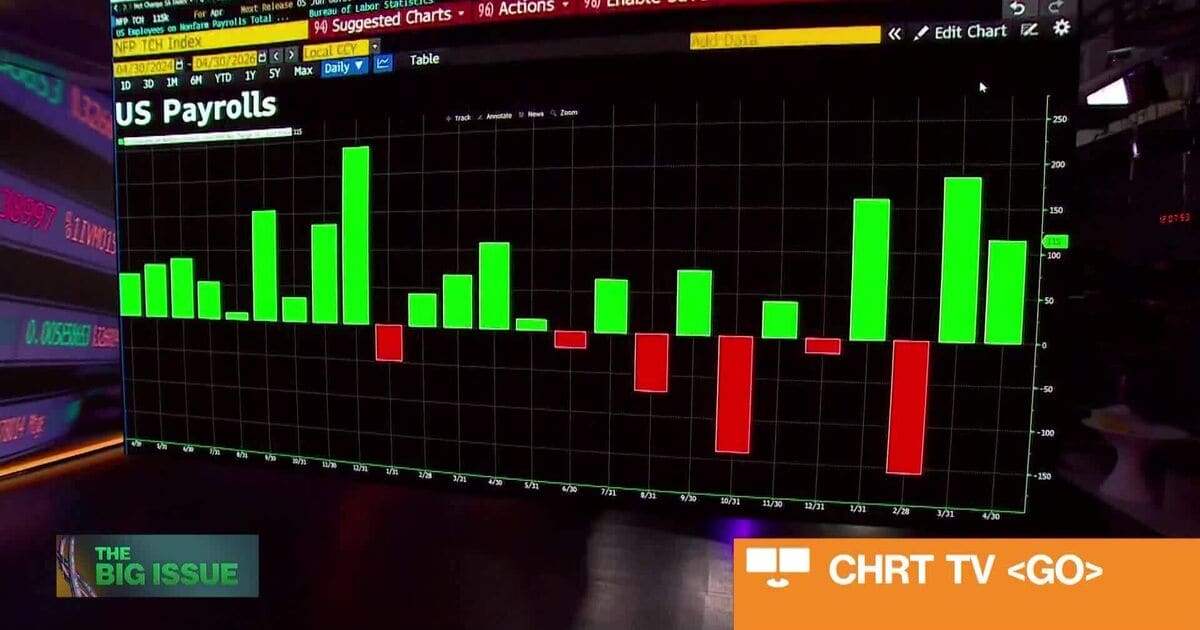
Robust US job data is recalibrating global interest rate expectations, putting the Indian Rupee under duress and forcing a re-evaluation of emerging market equities. We break down the winners and losers in the NSE as the 'higher-for-longer' narrative takes hold.
The Fed's Dilemma: Why US Jobs Data is the New Market Anchor
The latest US non-farm payroll data has sent a clear, albeit unsettling, signal to global markets: the American economy is not cooling, and by extension, the Federal Reserve’s pivot to dovish monetary policy is being indefinitely postponed. For the Indian investor, this is not merely a US-centric data point; it is a tectonic shift in global liquidity.
When the US labor market remains this tight, wage inflation risks become entrenched. The Fed is now trapped in a 'higher-for-longer' cycle, which effectively acts as a gravitational pull, dragging capital away from emerging markets and back toward the safe haven of the US Dollar. As the Dollar Index (DXY) strengthens, the Indian Rupee (INR) faces depreciation pressure, forcing the Reserve Bank of India (RBI) into a corner—do they defend the currency, or do they prioritize domestic growth?
How Will the 'Higher-for-Longer' Fed Policy Affect Indian Bank Stocks?
The correlation between US Treasury yields and Indian financial stocks is often misunderstood. When the 10-year US Treasury yield spikes, it creates a benchmark for global risk-free returns. As these yields rise, the valuation gap for Indian stocks narrows, forcing a compression in P/E ratios.
For Indian banks and NBFCs, particularly those with high exposure to retail credit, the risk is twofold: a higher cost of funding and a potential slowdown in credit expansion if the RBI is forced to hold rates elevated to match the Fed’s hawkishness. Historically, during the 2022 tightening cycle, we saw the Nifty Financial Services index undergo a 12% correction as foreign institutional investors (FIIs) liquidated positions to repatriate dollars.
Sectoral Impact: The Great Divergence
The market is currently bifurcating into two distinct camps: the export-oriented beneficiaries and the interest-rate-sensitive casualties.
- Export-Oriented Sectors (IT & Pharma): Companies earning revenue in USD but reporting in INR gain a natural hedge. A weakening Rupee acts as an immediate margin expansion lever.
- Interest-Rate Sensitive Sectors: Real Estate and NBFCs thrive on cheap liquidity. When the cost of capital rises, the debt-servicing burden for developers like DLF increases, while demand for mortgages cools.
- Import-Heavy Industries: Oil Marketing Companies (OMCs) are at the mercy of the DXY. As oil is priced in dollars, a weak Rupee inflates the import bill, squeezing gross marketing margins.
Stock-by-Stock Breakdown: Navigating the Volatility
1. Tata Consultancy Services (TCS) & Infosys (INFY)
With revenue bases predominantly in North America, TCS and INFY are the primary beneficiaries of a strong USD. As the Rupee depreciates, the translation gain on balance sheets is significant. With P/E ratios hovering in the 25x-30x range, these stocks provide stability during periods of global macro uncertainty.
2. DLF Ltd
As a bellwether for the real estate sector, DLF is highly sensitive to interest rate cycles. A 'higher-for-longer' environment increases the cost of debt for land acquisition and project development. Investors should watch for a contraction in their order book growth as home loan rates remain elevated.
3. Bajaj Finance (BAJFINANCE)
As the leader in consumer durables financing, Bajaj Finance is the ultimate proxy for domestic consumption. However, its margins are highly dependent on the net interest margin (NIM) spread. Elevated cost of funds in the system puts pressure on their ability to offer competitive EMI products without sacrificing profitability.
4. Indian Oil Corporation (IOC)
IOC faces a 'double whammy.' Not only does a weak Rupee make crude imports more expensive, but the volatility in global oil prices—driven by US economic resilience—makes inventory management and retail pricing extremely complex.
The Contrarian View: Is the Bear Case Overdone?
Bulls argue that India’s domestic consumption story is decoupling from US monetary policy. They point to robust GST collections and strong corporate balance sheets that have deleveraged significantly since 2020. They contend that even if the Fed keeps rates high, India’s GDP growth premium (estimated at 6.5-7%) makes it an essential destination for global capital, regardless of the DXY. Bears, however, emphasize the 'liquidity trap'—arguing that even if the story is strong, the withdrawal of FII liquidity will inevitably lead to a valuation reset.
Actionable Investor Playbook
Defensive Moves: Increase allocation to high-cash-flow IT exporters with strong dividend yields. These act as a buffer against currency depreciation.
Watchlist: Monitor the USD/INR pair closely. A breach of 84.00 could trigger a sell-off in import-heavy sectors.
Entry Points: Look for 'value' entry points in high-quality NBFCs only after a 10-15% correction from their 52-week highs, as the market will eventually price in a pivot, even if it is delayed.
Risk Matrix
| Risk Factor | Probability | Impact |
|---|---|---|
| Aggressive Fed Tightening | Medium | High |
| Sharp Rupee Depreciation | High | High |
| Global Liquidity Crunch | Medium | Very High |
| Domestic Inflation Spike | Low | Medium |
What to Watch Next
Investors should mark their calendars for the next FOMC meeting minutes and the RBI Monetary Policy Committee (MPC) statement. Any divergence in rhetoric between Jerome Powell and Shaktikanta Das will provide the definitive signal for the next leg of the Nifty 50 movement. Keep a close eye on the US 10-year Treasury yield; if it sustains above 4.5%, the pressure on emerging market equities will be relentless.
Disclaimer: This content is generated by WelthWest Research Desk based on publicly available reports and is for informational purposes only. It does not constitute financial advice, investment recommendations, or an offer to buy or sell securities. Always consult a qualified financial advisor before making investment decisions.