Key Takeaway
The dramatic depletion of the US Strategic Petroleum Reserve (SPR) to a 43-year nadir, driven by geopolitical demand and price management, signals a significant tightening of global oil markets. This portends sustained higher crude prices, posing substantial risks to India's import bill, inflationary pressures, and the profitability of energy-dependent sectors, necessitating a strategic reassessment of investment portfolios.
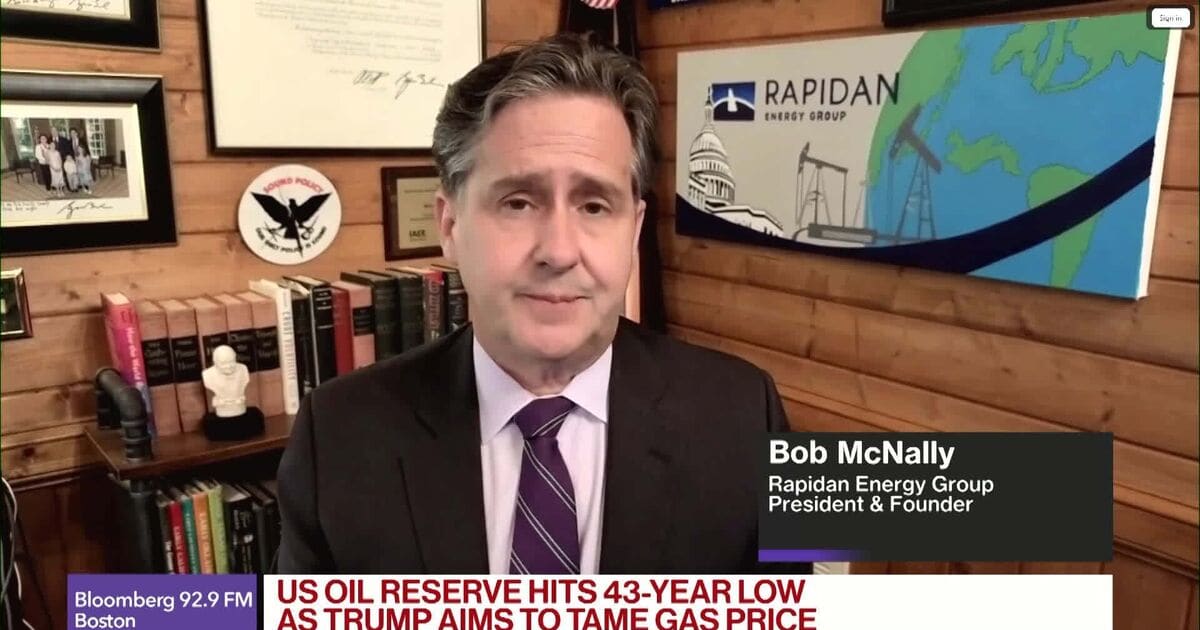
The US Strategic Petroleum Reserve is at its lowest in over four decades, a critical development with far-reaching consequences for global energy markets. This analysis unpacks how this depletion, exacerbated by geopolitical tensions and demand from Asian nations, will likely drive sustained high oil prices, impacting India's economy and stock market.
US SPR at 43-Year Low: A Geopolitical Tremor for Global Oil Markets
The United States Strategic Petroleum Reserve (SPR), a critical bulwark against energy supply shocks, has receded to its lowest inventory levels in 43 years. This unprecedented drawdown, significantly influenced by efforts to manage global oil prices amidst escalating geopolitical tensions, particularly concerning Iran, and robust demand from Asian economies seeking to replenish their own strategic holdings, is not merely a headline; it represents a profound shift in global oil market dynamics. The implications for energy security, inflation, and consequently, the Indian equity market, are substantial and warrant immediate investor attention.
Why is the Depletion of the US SPR Such a Critical Development NOW?
The SPR, established in the wake of the 1973 oil crisis, serves as a vital buffer to mitigate the impact of severe supply disruptions. Its current state of depletion, a consequence of strategic releases aimed at curbing price volatility and responding to evolving global energy needs, leaves the world's largest economy with diminished capacity to absorb future shocks. This drawdown has coincided with a resurgence in demand from major Asian consumers, notably China, which has been actively restocking its strategic reserves. This dual pressure – reduced strategic supply from the US and increased restocking demand from key consumers – creates a potent recipe for sustained upward pressure on crude oil prices. The intricate interplay of geopolitical risk, strategic reserve management, and emergent demand patterns is now actively reshaping the global energy landscape, with ripple effects extending far beyond the oil fields.
The Deep Market Impact: How India's Stock Market Faces a Tightening Oil Grip
The sustained elevated crude oil prices, a direct consequence of the SPR's diminished capacity and robust demand, translate into a higher import bill for India, a nation heavily reliant on crude imports for over 80% of its energy needs. This increased expenditure directly impacts the country's current account deficit, potentially weakening the rupee and fueling imported inflation. For the Indian equity market, this translates into a broadly bearish sentiment, particularly for sectors with significant energy cost exposure. The last comparable period of sustained high oil prices, observed in mid-2022, saw the Nifty 50 experience considerable volatility, with energy-intensive sectors underperforming as input costs surged and consumer demand softened.
The benchmark Brent crude oil price, which has been trading in a higher band, is now poised for further gains if geopolitical instability in the Middle East intensifies. Historical data suggests that for every $10 increase in crude oil prices, India's current account deficit widens by approximately 0.4-0.5% of GDP, and inflation can see an upward nudge of 20-30 basis points. This scenario directly impacts corporate profitability. Companies with high energy consumption will see their operating margins squeezed, while those that can pass on increased costs will face demand destruction. The ripple effect extends to the broader economy, influencing consumer spending power and the overall investment climate.
Sector-Level Breakdown: Winners and Losers in the New Energy Paradigm
The current energy market recalibration creates distinct winners and losers across the Indian corporate landscape. Energy producers, both globally and domestically, stand to benefit from higher crude prices, assuming they can maintain production levels and manage operational costs effectively. Oil marketing companies (OMCs) in India, while exposed to the volatility of crude prices, have a degree of pricing power, allowing them to pass on a portion of the increased costs to consumers, thereby protecting their margins, albeit with potential volume impacts. Conversely, energy-intensive industries face significant headwinds.
Winners:
- Global Oil Producers: Companies involved in exploration and extraction will see enhanced revenues and potentially higher profit margins.
- Domestic Oil & Gas Exploration Companies (e.g., ONGC, Oil India): These entities benefit directly from higher crude prices, boosting their revenue and profitability. Their exploration success rates and production costs become critical differentiators.
- Oil Marketing Companies (e.g., IOCL, BPCL, HPCL): While facing price volatility, their ability to adjust retail fuel prices offers a degree of margin protection. Their refining margins and inventory management become key performance indicators.
Losers:
- Airlines (e.g., IndiGo, SpiceJet): Aviation turbine fuel (ATF) is a significant operating cost for airlines. Sustained high jet fuel prices directly erode profitability, potentially leading to fare hikes and reduced passenger traffic.
- Logistics and Transportation Companies: Increased diesel prices, a primary fuel for road freight, will escalate operating costs, impacting margins and potentially leading to higher freight charges.
- Petrochemical Industries: Many petrochemical feedstocks are derived from crude oil. Higher crude prices translate directly into increased input costs, impacting competitiveness and profit margins.
- Consumers: Higher fuel prices at the pump translate into reduced disposable income, impacting consumer spending on non-essential goods and services.
- Companies with High Energy Consumption: Sectors like cement, steel, and manufacturing, which are heavily reliant on energy for their operations, will face pressure on their profit margins.
Stock-by-Stock Breakdown: Navigating the Turbulence in Indian Equities
The impact of sustained higher oil prices is not uniform across the Indian stock market. Certain companies are directly exposed to the volatility, while others are more insulated or even stand to benefit. Understanding these nuances is crucial for a strategic investment approach.
- Oil and Natural Gas Corporation (ONGC) (NSE: ONGC): As India's largest crude oil producer, ONGC is a direct beneficiary of rising oil prices. Its revenue and profitability are closely correlated with global crude benchmarks. With a current market capitalization of approximately INR 2.7 lakh crore and a trailing P/E ratio around 8x, the stock offers exposure to upstream oil exploration and production. Increased exploration success and cost efficiencies will be key drivers for further upside.
- Oil India Limited (OIL) (NSE: OIL): Similar to ONGC, OIL's financial performance is intrinsically linked to crude oil prices. With a market cap of around INR 40,000 crore and a P/E ratio of approximately 7x, it represents another direct play on higher oil prices. Its production growth and cost management will be critical.
- Indian Oil Corporation Limited (IOCL) (NSE: IOC): As a dominant player in refining and marketing, IOCL's fortunes are tied to refining margins and the ability to pass on costs. Its market cap stands at approximately INR 1.3 lakh crore, with a P/E ratio around 9x. While refinery margins can fluctuate, its vast distribution network provides resilience.
- Bharat Petroleum Corporation Limited (BPCL) (NSE: BPCL): BPCL, another major OMC, faces similar dynamics to IOCL. Its market cap is around INR 1.1 lakh crore, with a P/E of roughly 10x. Its retail fuel pricing strategy and refining operations are key determinants of its performance.
- Hindustan Petroleum Corporation Limited (HPCL) (NSE: HPCL): The third of the major OMCs, HPCL (market cap ~ INR 42,000 crore, P/E ~ 11x) operates within the same market structure, influenced by refining margins and the ability to manage fuel prices.
- InterGlobe Aviation (IndiGo) (NSE: INDIGO): As India's largest airline, IndiGo's profitability is highly sensitive to ATF prices. With a market cap of around INR 85,000 crore and a P/E of approximately 25x, rising fuel costs are a significant drag. Any inability to fully pass on these costs will severely impact its bottom line, potentially leading to a decline in its stock price.
- SpiceJet (NSE: SPICEJET): The budget airline, with a much smaller market cap and typically higher operational leverage, is even more vulnerable to escalating ATF costs. Its financial health is precarious, and sustained high fuel prices could exacerbate its challenges.
Expert Perspective: Bulls vs. Bears on the Oil Outlook
The current market narrative surrounding oil prices and the SPR drawdown is subject to differing interpretations among market participants. Bulls argue that the SPR's low levels, combined with ongoing geopolitical risks and robust demand, create a structural deficit that will inevitably lead to higher prices for an extended period. They point to the increasing difficulty of bringing new supply online due to capital constraints and regulatory hurdles, suggesting that the market will remain tight. Bulls also highlight that Asian demand, particularly from China and India, will continue to be a strong underpinning for prices.
Conversely, bears contend that the SPR drawdown is a temporary phenomenon and that the US can strategically replenish its reserves when conditions permit. They also emphasize the potential for increased production from non-OPEC+ nations and the possibility of demand destruction if prices rise too high, leading to a significant global economic slowdown. Bears would argue that the market is overreacting to geopolitical headlines and that underlying economic fundamentals will eventually rein in oil prices. They might also point to the rapid development of alternative energy sources as a long-term dampener on oil demand, though this is a more distant factor.
Actionable Investor Playbook: Navigating the Energy Headwinds
Given the prevailing market conditions, a strategic approach is paramount for investors. The sentiment is decidedly bearish for sectors heavily reliant on energy, while bullish for upstream oil and gas producers.
- Buy: Companies in the upstream oil and gas sector, such as ONGC and Oil India, are attractive. Look for entry points during any temporary dips in their stock prices, ideally targeting levels that reflect a conservative valuation relative to projected crude prices. A long-term horizon (12-18 months) is recommended to ride out potential volatility.
- Sell/Avoid: Airlines like IndiGo and SpiceJet should be approached with extreme caution, potentially warranting a short position if the market sentiment continues to sour. Their current valuations may not adequately price in the sustained impact of high ATF prices. Companies in the petrochemical and highly energy-intensive manufacturing sectors also present significant downside risk.
- Watch: Oil Marketing Companies like IOCL, BPCL, and HPCL present a mixed picture. While they benefit from higher crude, their profitability is a delicate balance. Monitor their refining margins, inventory management, and their ability to pass on costs without significant demand erosion. Their stock performance will likely be more range-bound, offering trading opportunities rather than significant long-term growth.
Investors should consider diversifying their portfolios to mitigate sector-specific risks. A balanced approach, incorporating defensive sectors and companies with strong pricing power and low energy intensity, is advisable.
Risk Matrix: Probability and Impact Assessment
The trajectory of oil prices and their impact on the Indian market is contingent on several dynamic factors. Understanding these risks is crucial for informed decision-making.
- Geopolitical Escalation in the Middle East (Probability: High): Further escalation of conflicts involving major oil-producing nations or key transit routes could lead to immediate and severe supply disruptions, triggering sharp price spikes and exacerbating inflationary pressures. This is the most significant immediate risk.
- Global Economic Slowdown (Probability: Medium): A significant downturn in the global economy could temper oil demand, thereby offsetting some of the upward price pressure stemming from supply constraints. However, a severe slowdown could also negatively impact corporate earnings across the board, including energy producers.
- Strategic SPR Replenishment by the US (Probability: Low-Medium): While the SPR is at a low, the US government has the option to strategically replenish reserves when prices are favorable. Such an action, though unlikely in the immediate term given current price levels, could theoretically ease market tightness over the longer term.
- Unforeseen Supply Discoveries/Technological Breakthroughs (Probability: Low): While unlikely to offset the current geopolitical tightness, significant new oil discoveries or a rapid, widespread adoption of advanced extraction technologies could theoretically increase supply over a multi-year horizon.
What to Watch Next: Catalysts Shaping the Energy Narrative
Investors should closely monitor several key indicators and upcoming events that will shape the future direction of oil prices and their impact on the Indian market:
- Middle East Geopolitical Developments: Any news regarding diplomatic progress or further escalation of tensions in the Middle East will be a primary driver of oil price volatility.
- OPEC+ Meeting Outcomes: Decisions by the Organization of the Petroleum Exporting Countries and its allies (OPEC+) regarding production quotas will significantly influence global supply. Future meeting dates should be noted.
- US Inflation Data (CPI/PPI): Higher-than-expected inflation figures could prompt the US Federal Reserve to maintain or even increase interest rates, potentially slowing global economic growth and dampening oil demand.
- India's Crude Oil Import Data: Tracking India's monthly crude oil import volumes and the average price paid will provide direct insight into the impact on the country's trade balance.
- Corporate Earnings Reports: The upcoming earnings season for Indian companies, particularly those in the energy, aviation, and manufacturing sectors, will reveal the extent to which higher energy costs are impacting profitability.
The current state of the US SPR is a stark reminder of the interconnectedness of global energy markets and geopolitical stability. For Indian investors, this period demands vigilance, strategic portfolio adjustments, and a keen eye on the evolving energy landscape.
Disclaimer: This content is generated by WelthWest Research Desk based on publicly available reports and is for informational purposes only. It does not constitute financial advice, investment recommendations, or an offer to buy or sell securities. Always consult a qualified financial advisor before making investment decisions.


