Key Takeaway
The US SEC’s pivot toward aggressive private fund oversight threatens the 'shadow liquidity' supporting emerging markets. For India, this signals a transition from FPI-driven momentum to a domestic-led valuation regime, necessitating a portfolio shift toward transparent, high-governance assets.
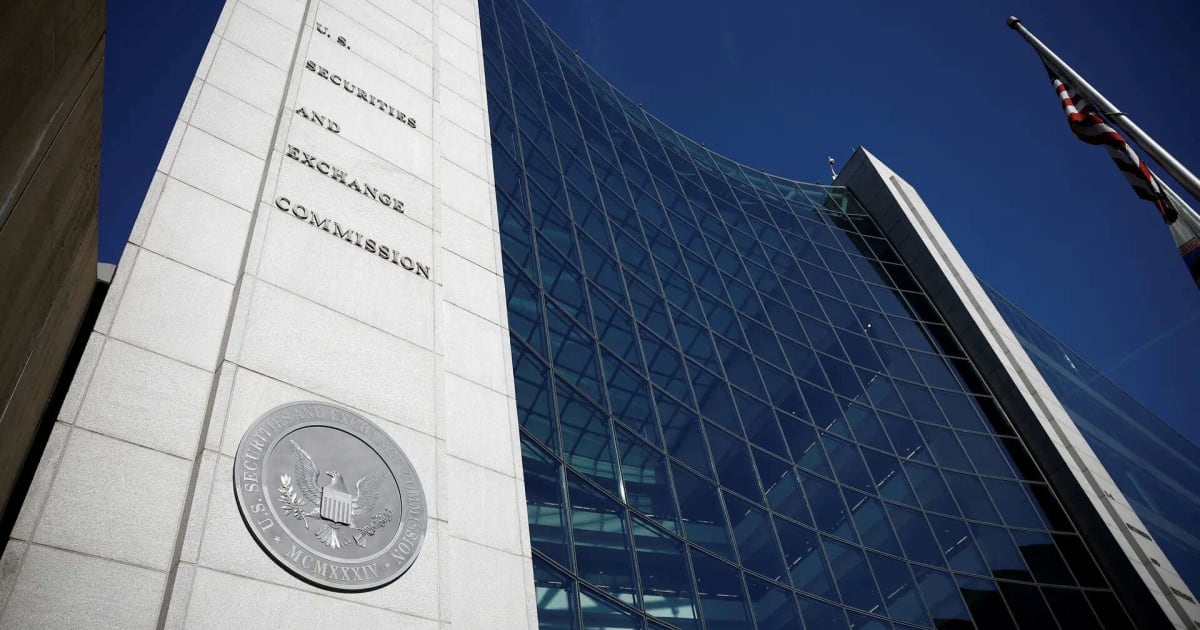
As the US SEC intensifies its gaze on the $25 trillion private fund industry, global hedge funds and PE firms face a compliance reckoning. This investigative report explores how these regulatory ripples will cross the Atlantic, potentially triggering a massive deleveraging event in Indian equities where FPIs hold significant sway. We break down the winners and losers in the NSE and BSE landscape as the era of 'opaque' capital comes to an end.
The Regulatory Hammer: Why the SEC’s Private Fund Pivot Changes Everything
The US Securities and Exchange Commission (SEC) has officially signaled the end of the 'Wild West' era for private funds. Gurbir Grewal, the SEC’s Director of Enforcement, recently articulated a heightened focus on the potential systemic risks lurking within hedge funds and private equity firms. The core of the issue? A lack of transparency regarding liquidity, fee structures, and inherent conflicts of interest. For the uninitiated, this might seem like a domestic US administrative shift. For the global financial ecosystem—and specifically for the Indian equity markets—it is a seismic event.
Private funds manage approximately $25 trillion in assets globally. Unlike mutual funds, which operate under strict disclosure mandates, private funds have historically enjoyed a veil of secrecy. The SEC is now 'attuned' to the risk that these funds could hide leverage or engage in preferential treatment of certain investors. When the world’s most powerful regulator demands transparency, the immediate reaction from fund managers is often de-risking. In the world of institutional finance, de-risking is a polite term for selling off liquid assets in emerging markets (EMs) to shore up balance sheets at home.
How will the SEC crackdown affect FPI flows into India?
To understand the impact on India, one must look at the plumbing of Foreign Portfolio Investment (FPI). A significant portion of the capital flowing into the National Stock Exchange (NSE) and Bombay Stock Exchange (BSE) originates from offshore funds structured as private partnerships in jurisdictions like the Cayman Islands or Delaware. These funds are now caught in the SEC’s crosshairs.
Historically, when US regulators tighten the screws on private fund compliance, operational costs skyrocket. This leads to a consolidation phase where smaller, more speculative funds are forced to liquidate positions. In 2022, during the initial phases of the Fed's quantitative tightening and increased regulatory talk, India saw record FPI outflows of nearly ₹1.2 lakh crore. We are currently staring at a similar 'liquidity vacuum' scenario. If the SEC mandates stricter redemption reserves for these funds, the 'ATM' for that liquidity will likely be high-valuation Indian large-cap stocks.
Deep Market Impact: Connecting Wall Street Scrutiny to Dalal Street Reality
India’s market capitalization currently hovers around $4.5 trillion, with FPIs owning roughly 16-18% of the total float. However, their influence is disproportionately concentrated in the Nifty 50. The SEC’s focus on liquidity mandates is the most dangerous component for Indian investors. If a US hedge fund is forced to prove it can meet redemptions within a shorter window, it cannot rely on illiquid private equity holdings; it must sell its most liquid, profitable assets. For most global funds, that means trimming positions in Indian banking and IT giants.
"The SEC isn't just looking at the books; they are looking at the exits. If the exit door is too narrow, they will force funds to sell now rather than later. India, being the most liquid emerging market with high valuations, is the first place they will look to raise cash." — Senior Strategy Note, WelthWest Research.
We anticipate a 'valuation compression' in sectors where FPI ownership exceeds 30%. The banking sector, particularly private lenders, remains the most vulnerable. Furthermore, the SEC’s scrutiny of conflicts of interest means funds may have to disclose side-letter agreements. This could lead to a mass exodus of 'hidden' capital that has bypassed standard disclosure norms, potentially leading to sudden, unexplained volatility in mid-cap growth stocks.
Sector-Level Breakdown: The Banking Fragility
The Indian banking sector (Bank Nifty) has a high sensitivity to global liquidity. With the SEC targeting the 'shadow banking' aspects of private funds, the cost of leverage for these funds will increase. As leverage becomes expensive, the 'carry trade'—where funds borrow in low-interest environments to invest in high-yield markets like India—unwinds. This puts immediate pressure on the heavyweights of the Nifty 50.
Stock-by-Stock Breakdown: Who Wins and Who Loses?
1. HDFC Bank (NSE: HDFCBANK | BSE: 500180)
Impact: High Negative. HDFC Bank is the quintessential 'FPI Stock.' With foreign institutional ownership frequently hovering near the 50-55% mark, any global deleveraging event hits HDFCBANK first. If US funds face redemption pressures, this is the most liquid counter to exit. Currently trading at a P/B ratio that has already seen some compression, further selling could push the stock toward its multi-year support levels, regardless of its strong fundamental credit growth of 15-18%.
2. Reliance Industries (NSE: RELIANCE | BSE: 500325)
Impact: Moderate Negative. As India's largest market-cap company, Reliance is a proxy for the India MSCI Index. When global funds rebalance due to regulatory shifts, RELIANCE is a mandatory sell to maintain index weightage. However, its diversified revenue streams in retail and O2C provide a cushion that pure-play financials lack. Watch for the ₹2,800-₹2,900 levels as a litmus test for institutional sentiment.
3. HDFC AMC (NSE: HDFCAMC | BSE: 541729)
Impact: Positive. Here is the contrarian play. As FPIs retreat, the vacuum is being filled by Domestic Institutional Investors (DIIs). HDFC AMC, with its massive AUM and growing SIP (Systematic Investment Plan) inflows, stands to benefit. As retail investors move away from 'global' uncertainty and double down on domestic mutual funds, asset management companies see increased fee income and higher AUM stability. With a P/E ratio around 35x, it remains a 'transparency winner.'
4. ICICI Bank (NSE: ICICIBANK | BSE: 532174)
Impact: Moderate Negative. Similar to HDFC Bank, ICICI is an institutional favorite. However, its superior NIMs (Net Interest Margins) and better-than-expected ROA (Return on Assets) of 2.3% might make it a 'hold' for funds that are forced to choose which Indian bank to keep. Expect high volatility in the ₹1,000-₹1,100 range as 'Fast Money' exits and 'Long-Only' funds attempt to defend the position.
5. Nippon Life India Asset Management (NSE: NAM-INDIA | BSE: 540767)
Impact: Positive. As the SEC makes it harder for opaque private funds to operate, the shift toward transparent, publicly-traded asset managers accelerates. NAM-INDIA has shown robust growth in the ETF and passive fund space. If global capital seeks 'cleaner' routes into India, domestic AMCs with international partnerships (like Nippon) are the primary beneficiaries.
Expert Perspective: The Bull vs. Bear Debate
The Bear Case: Analysts at global macro desks argue that we are entering a 'liquidity desert.' The combination of high US interest rates and an SEC-led crackdown on private fund leverage will suck the air out of EM valuations. They point to the fact that Nifty's P/E of ~22x is still at a premium compared to its long-term average, making it an easy target for profit-taking.
The Bull Case: Contrarians argue that the 'India Story' is now decoupled from FPI whims. With domestic SIP inflows crossing ₹20,000 crore monthly, the Indian market has its own internal combustion engine. They argue that any SEC-induced dip is a generational buying opportunity in high-quality stocks like ICICI Bank and Reliance, as the long-term structural growth of India remains intact.
Actionable Investor Playbook: Navigating the SEC Ripple Effect
- The 'Wait and Watch' Zone: Avoid aggressive buying in high-FPI-concentration stocks for the next 45 days. Let the SEC's enforcement actions clarify the extent of fund deleveraging.
- The Buy List: Focus on 'Domestic Champions'—stocks with low FPI ownership but high DII interest. Look at the PSU Banking space or domestic consumption plays where foreign selling has less impact.
- Exit Strategy: If you are holding speculative mid-caps that rose on the back of 'offshore' capital, now is the time to trim positions. The SEC’s focus on 'conflicts of interest' often exposes the 'pump and dump' schemes orchestrated via offshore P-Notes.
- Time Horizon: This is a 6-12 month transition. The initial shock will be liquidity-driven, but the recovery will be fundamental-driven.
Risk Matrix: Assessing the Fallout
| Risk Factor | Probability | Impact on NSE |
|---|---|---|
| Mass FPI Redemption | High | Nifty 50 could see a 5-7% correction |
| Increased Compliance Costs | Certain | Lower EM allocations by mid-sized US funds |
| Systemic PE Deleveraging | Medium | Valuation cooling in 'Unicorn' and Tech stocks |
| Domestic SIP Slowdown | Low | Loss of the 'safety net' for Indian equities |
What to Watch Next: The Catalysts
- SEC Enforcement Actions: Any specific fines or 'Cease and Desist' orders against major hedge funds will trigger immediate volatility.
- FPI Flow Data: Monitor the NSDL daily FPI data. Three consecutive days of ₹3,000cr+ selling will confirm the deleveraging thesis.
- RBI Stance: If the RBI remains hawkish while the US pulls back liquidity, the 'INR Carry Trade' will collapse, further accelerating outflows.
- US 10-Year Treasury Yield: If yields cross 4.5% alongside SEC pressure, the flight to safety will be unstoppable.
Disclaimer: This content is generated by WelthWest Research Desk based on publicly available reports and is for informational purposes only. It does not constitute financial advice, investment recommendations, or an offer to buy or sell securities. Always consult a qualified financial advisor before making investment decisions.