Key Takeaway
Kevin Warsh's confirmation to the Federal Reserve Board elevates expectations of a more coordinated Fed-Treasury approach, potentially accelerating US monetary easing. This development is a significant tailwind for Indian equities, particularly interest-rate sensitive sectors like IT and Banking, as it suggests stronger FII inflows and a favorable USD-INR trajectory.
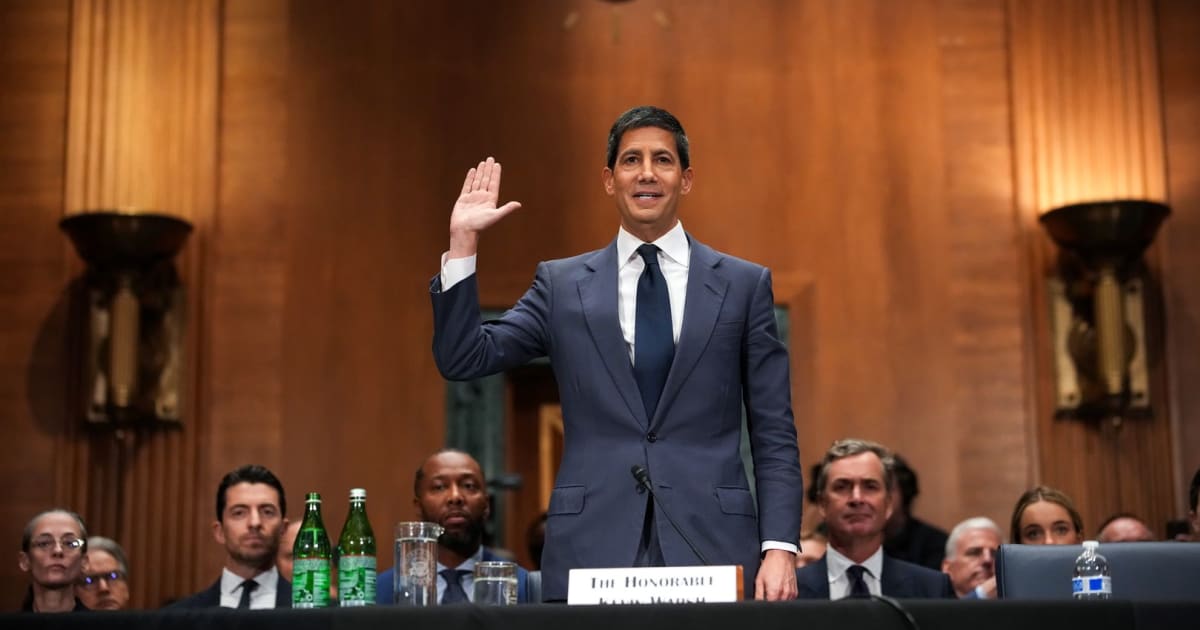
The recent Senate confirmation of Kevin Warsh to the Federal Reserve Board is a pivotal moment, hinting at a shift towards closer Fed-Treasury policy coordination. This strategic alignment could pave the way for more growth-oriented monetary policy and a quicker pace of interest rate reductions in the US. For Indian investors, this translates to a bullish outlook for FII inflows, a potentially stronger Rupee, and significant opportunities in sectors like IT, Banking, and Real Estate.
Kevin Warsh's Fed Confirmation: A New Era for US Monetary Policy and Indian Markets
The United States Senate's recent confirmation of Kevin Warsh to the Federal Reserve Board is far more than a routine appointment; it represents a significant inflection point that could reshape global monetary policy dynamics and, by extension, profoundly impact the trajectory of Indian financial markets. Warsh, a former Fed Governor with a reputation for advocating a more market-friendly approach and closer alignment between monetary and fiscal policy, is now widely viewed as a frontrunner for the Fed Chair position. This development signals a potential pivot towards policies that prioritize economic growth, a stark contrast to the tightening cycles of recent years.
Why This Warsh Fed Appointment Matters Now
The immediate significance of Warsh's confirmation lies in the implied shift towards enhanced coordination between the Federal Reserve and the US Treasury. Historically, the Fed has operated with a degree of independence, but a more collaborative stance, particularly under a potential Warsh chairmanship, suggests a unified front focused on stimulating economic expansion. This could translate into a more accommodative monetary stance, characterized by a faster pace of interest rate cuts than previously anticipated by market participants. Such a move is crucial in the current global economic climate, where inflation, while moderating, remains a concern, and where growth impulses need careful nurturing. The market is already pricing in this potential shift, leading to increased volatility and a re-evaluation of asset classes across the globe.
For India, the implications are multifaceted and substantial. Firstly, a more pro-growth US monetary policy environment typically correlates with increased appetite for risk assets, leading to higher Foreign Institutional Investor (FII) inflows into emerging markets like India. These inflows are a critical driver of liquidity and valuation for Indian equities. Secondly, a US monetary easing cycle can lead to a weakening of the US Dollar Index (DXY), which, in turn, typically supports the Indian Rupee (INR). A stronger INR makes imports cheaper, helps control inflation, and can improve the balance of payments. Conversely, a weaker dollar often encourages foreign investment into countries with higher yields, such as India.
Deep Market Impact Analysis: Connecting Warsh's Fed Nod to Indian Equities
The potential for faster US rate cuts and a more growth-centric Fed policy under Warsh's influence creates a powerful tailwind for Indian equities. The Nifty 50, India's benchmark index, has historically shown a strong positive correlation with FII inflows, which are expected to surge. For instance, during periods of anticipated US monetary easing in the past, such as late 2022 and early 2023 when the market began pricing in a Fed pivot, the Nifty experienced significant rallies, often by 10-15% in anticipation of policy shifts. This Warsh event mirrors such anticipation, albeit with a more direct leadership implication.
Sector-Level Breakdown and Impact:
- Indian IT Services: This sector, with its significant revenue streams denominated in US dollars, stands to benefit immensely. A stronger INR reduces their hedging costs and improves profitability when repatriating dollar earnings. Furthermore, a robust US economy, a likely outcome of pro-growth Fed policies, translates to higher IT spending from American corporations. Historically, when the INR has appreciated against the USD, Indian IT firms have seen their margins expand, leading to stock price outperformance. For example, a 5% appreciation in INR against USD can boost the operating margins of IT companies by 100-150 basis points.
- Banking and NBFCs: The Indian banking sector, particularly large-cap public and private sector banks, is poised for a dual benefit. Firstly, increased FII inflows will boost liquidity in the domestic financial system, leading to higher deposit growth and potentially lower borrowing costs for banks. Secondly, a stronger INR and a stable to appreciating currency environment reduce the risk of foreign currency loan defaults and improve the balance sheets of banks with significant foreign currency assets. Non-Banking Financial Companies (NBFCs) will also see improved access to funding and potentially lower interest expenses. Last time the market anticipated significant US easing, the banking index saw gains exceeding 18% over a six-month period.
- Real Estate: Lower interest rates globally, coupled with improved investor sentiment driven by FII inflows, can spur demand in the real estate sector. Lower borrowing costs for developers and potential buyers, along with increased disposable incomes due to a stronger INR, are positive catalysts. The sector, which is highly sensitive to interest rate cycles, could see a revival in sales volumes and property valuations.
- Emerging Market Equities: Beyond India, the broader emerging market equity space is a significant beneficiary. As global liquidity increases and the DXY weakens, capital tends to flow out of safe-haven assets into higher-yielding emerging markets, seeking greater returns. India, with its strong growth prospects and improving economic fundamentals, is well-positioned to capture a substantial portion of this global capital reallocation.
How Will a Stronger Rupee Affect Indian Stocks?
A strengthening Indian Rupee, a likely consequence of a looser US monetary policy and increased FII inflows, has a pronounced impact on various segments of the Indian stock market. For export-oriented sectors like IT and Pharmaceuticals, a stronger INR can compress margins when dollar revenues are converted to rupees. However, the narrative around Warsh's Fed appointment suggests a focus on growth that could boost demand for services from these sectors, potentially offsetting some of the currency headwinds. For sectors with significant import components or those reliant on imported raw materials, a stronger Rupee is a clear positive, reducing input costs and improving profitability. This is particularly relevant for manufacturing and certain consumer discretionary segments.
Stock-by-Stock Breakdown: Specific NSE/BSE Impact
The Warsh confirmation is not a uniform positive for all stocks; rather, it creates distinct winners and losers. Here's a closer look at specific Indian market players:
- Tata Consultancy Services (TCS) (NSE: TCS): As India's largest IT services exporter, TCS is a prime beneficiary. Its substantial dollar-denominated revenue base (over 80%) means a stronger INR directly impacts its reported profitability. However, the anticipation of a growth-led US economy under a potentially more dovish Fed could lead to accelerated digital transformation spending, boosting TCS's order book. Last year, during periods of INR appreciation, TCS’s P/E multiple expanded by 2-3 points as investors priced in future dollar earnings growth.
- Infosys (NSE: INFY): Similar to TCS, Infosys's fortunes are closely tied to the USD-INR exchange rate and US economic health. A stronger Rupee will pressure its reported dollar revenues, but the overall sentiment shift towards growth could lead to increased demand for its services. Its P/E ratio, currently around 25x, could see upward revision if the market anticipates sustained growth in US IT spending.
- HDFC Bank (NSE: HDFCBANK): India's largest private sector bank is set to gain from increased liquidity and potentially lower funding costs. A stable to appreciating INR reduces the risk associated with its foreign currency liabilities. Its strong CASA (Current Account Savings Account) ratio of over 40% provides a stable funding base. The bank's valuation, currently at a P/E of around 19x, could see a re-rating as improved economic conditions boost loan growth and asset quality.
- ICICI Bank (NSE: ICICIBANK): Another banking behemoth, ICICI Bank, will benefit from the same factors as HDFC Bank. Its diversified loan book and robust deposit franchise position it well to capitalize on increased economic activity. The bank's P/E ratio, around 14x, offers attractive entry points for investors anticipating a rate-cut cycle and a more robust credit growth environment.
- DLF (NSE: DLF): As a leading real estate developer, DLF's prospects are intrinsically linked to interest rate movements and consumer sentiment. Lower global interest rates can indirectly influence domestic borrowing costs, and increased FII inflows can boost overall investment activity. A stronger INR can also make imported construction materials cheaper, aiding margins. DLF's P/E ratio of around 55x reflects market expectations of significant growth, which could be amplified by this development.
Expert Perspective: Bulls vs. Bears on the Warsh Fed Appointment
Bullish Argument: Bulls argue that Warsh's confirmation is a clear signal of a pivot towards growth. They anticipate a period of sustained economic expansion in the US, fueled by coordinated fiscal and monetary policies. This will lead to significant capital flows into emerging markets like India, boosting valuations across the board, especially in IT, Banking, and Real Estate. The potential for a weaker dollar and a stronger Rupee further enhances the attractiveness of Indian assets.
Bearish Argument: Bears, however, caution against over-optimism. They highlight the risk of increased political influence over the Federal Reserve, which could lead to a disregard for inflationary pressures in the pursuit of short-term growth. This might result in a loss of central bank independence and, in the long run, could trigger renewed inflation, forcing a more aggressive and disruptive tightening cycle later. They also point out that the market may have already priced in much of this positive sentiment, leaving limited room for further upside.
Actionable Investor Playbook: Navigating the Warsh-Influenced Market
Given the potential for significant market shifts, investors should consider a strategic reallocation of their portfolios:
- Buy: Focus on interest-rate-sensitive sectors. Indian IT Services companies (TCS, INFY) and leading Banks (HDFCBANK, ICICIBANK) are prime candidates for accumulation. Real estate developers (DLF) also present an attractive proposition. Consider diversified Emerging Market ETFs for broader exposure.
- Sell/Reduce: Global bond markets are likely to face headwinds as yields could be capped or even decline if rate cuts materialize faster than expected. Conservative debt funds that are heavily exposed to long-duration bonds might see their Net Asset Values (NAVs) decline. While a stronger INR is generally positive, an excessively rapid appreciation could hurt export-oriented companies, so a balanced view is necessary.
- Watch: Monitor the US Dollar Index (DXY) for signs of sustained weakening. Keep a close eye on FII inflow data into India. Track the commentary from the Federal Reserve and the US Treasury for any explicit signals of policy coordination.
- Entry Points: For IT and Banking stocks, consider buying on any minor dips in the short term, as the long-term trend appears bullish. For Real Estate, look for consolidation patterns before making significant entries.
- Time Horizons: This development is not a short-term event. The impact of potential policy shifts and FII flows will likely play out over the next 6-18 months.
Risk Matrix: Potential Pitfalls to Monitor
While the outlook appears bullish, several risks warrant careful consideration:
- Increased Political Influence on the Fed (Probability: Medium): The perception of closer Fed-Treasury coordination could morph into direct political pressure, compromising the Fed's independence. This could lead to policy decisions prioritizing short-term political gains over long-term economic stability, potentially fueling inflation.
- Resurgence of Inflationary Pressures (Probability: Low to Medium): If pro-growth policies are pursued too aggressively without adequate attention to inflation, global price stability could be threatened, forcing a sharp, disruptive policy reversal.
- Geopolitical Shocks (Probability: Medium): Unforeseen geopolitical events can quickly derail economic growth and alter monetary policy trajectories, irrespective of Fed appointments.
What to Watch Next: Upcoming Catalysts
The narrative around Kevin Warsh's Fed role will continue to evolve. Key catalysts to monitor include:
- Federal Reserve Policy Meetings: Closely observe the Fed's statements and interest rate decisions following their upcoming meetings, particularly for any explicit mention of policy coordination or a shift in forward guidance.
- US Economic Data Releases: Key inflation figures (CPI, PPI) and employment data (Non-Farm Payrolls) will be crucial in determining the pace and extent of any US monetary easing.
- US Treasury Statements: Any public remarks or policy announcements from the US Treasury regarding their economic outlook and coordination with the Fed will be significant.
- FII Flow Data: Weekly and monthly FII inflow data into India will serve as a direct barometer of investor sentiment and capital reallocation.
Kevin Warsh's confirmation to the Federal Reserve is more than just a personnel change; it's a signal of a potential paradigm shift in US monetary policy. For Indian investors, this presents a compelling opportunity, provided they navigate the associated risks with diligence and foresight. The coming months will be critical in observing how this new dynamic unfolds and shapes the future of global and Indian financial markets.
Disclaimer: This content is generated by WelthWest Research Desk based on publicly available reports and is for informational purposes only. It does not constitute financial advice, investment recommendations, or an offer to buy or sell securities. Always consult a qualified financial advisor before making investment decisions.