Key Takeaway
The global luxury divergence confirms that 'hard luxury' (jewelry/watches) is the ultimate hedge against a slowdown, positioning Indian giants like Titan and Kalyan Jewellers for significant valuation re-rating as the 'premiumization' trend accelerates.
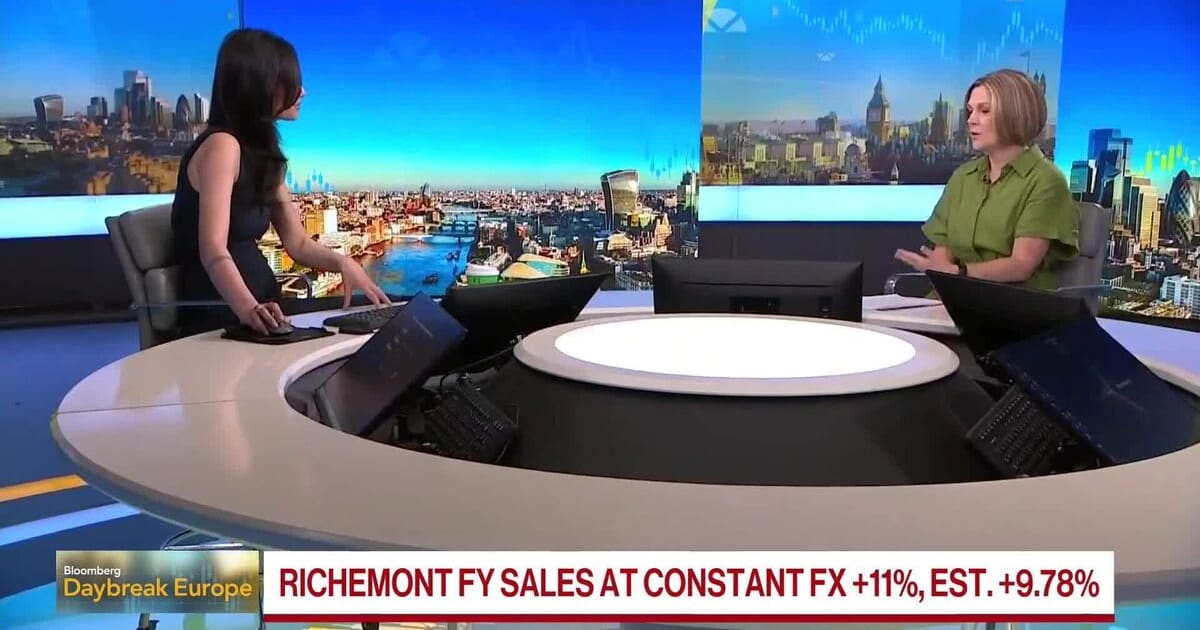
Richemont's recent earnings beat, powered by Cartier's resilience, highlights a critical shift: high-end jewelry is outperforming fashion. This article explores why this global trend is a massive tailwind for India's consumer discretionary sector and which NSE stocks are poised to benefit.
The Great Luxury Divergence: Why Cartier Succeeded Where Gucci Failed
In the high-stakes world of global luxury, a profound decoupling is underway. While the broader sector has been haunted by a 'luxury recession'—evidenced by LVMH’s tepid growth and Kering’s (Gucci) alarming double-digit declines—Richemont, the Swiss powerhouse behind Cartier and Van Cleef & Arpels, has just shattered the glass ceiling. Richemont’s recent financial results didn't just beat analyst estimates; they provided a roadmap for the next decade of discretionary investing.
The core of this outperformance lies in the distinction between 'Hard Luxury' (jewelry and precision timepieces) and 'Soft Luxury' (apparel and leather goods). In an era of persistent inflation and economic uncertainty, the ultra-wealthy are pivoting. They are no longer buying 'disposable' status symbols; they are acquiring 'investment-grade' assets. Cartier’s jewelry demand remains defiant because a gold Panthère bracelet is perceived as a store of value, whereas a seasonal handbag is a depreciating fashion statement.
For the Indian investor, this isn't just a story about European conglomerates. It is the definitive validation of the 'India Premiumization Thesis.' As the Nifty 50 navigates global volatility, the resilience of hard luxury provides a high-conviction signal for domestic jewelry and watch retailers. We are witnessing a structural shift where the Indian consumer is mimicking the global elite—moving away from mass-market unbranded goods toward organized, high-trust luxury marques.
How Will the Global Luxury Slowdown Affect Indian Jewelry Stocks?
The most frequent question hitting our research desk is whether the cooling Chinese demand—a major drag on Richemont’s peers—will infect the Indian market. Our analysis suggests the opposite. India is currently in a 'sweet spot' of demographic and economic alignment that mirrors China’s luxury explosion in the early 2010s.
Historically, when global luxury conglomerates report strong jewelry sales, it precedes a period of margin expansion for Indian organized players. In 2022, when Richemont reported a similar jewelry-led surge, Titan Company Ltd (TITAN) saw its stock price appreciate by nearly 18% over the following quarter as institutional investors rotated out of FMCG and into high-alpha discretionary stocks. The logic is simple: if the global elite are buying jewelry, the burgeoning Indian upper-middle class—fueled by record-high SIP inflows and a booming real estate market—is close behind.
"Hard luxury is the last bastion of the discretionary sector. It benefits from the 'Veblen effect,' where demand actually increases as prices rise, provided the brand equity is impenetrable."
Deep Market Impact: Connecting the Dots to the NSE
The Richemont data points to a 24% growth in jewelry sales in certain resilient markets, even as watches saw a slight cooling. In India, this translates to a massive tailwind for the organized jewelry sector, which currently accounts for only ~35% of the total market. The shift from unorganized 'family jewelers' to brands like Tanishq and Kalyan is being accelerated by the same trust-deficit that drives Cartier’s global dominance.
Furthermore, the 'Wedding Economy' in India acts as a natural floor for demand. With over 3.5 million weddings expected in the upcoming season, the jewelry component—often 25-30% of total wedding spend—is non-negotiable. Unlike the US or Europe, where jewelry is a gift, in India, it is a mandatory cultural capital. When global sentiment turns bullish on jewelry, it lowers the cost of equity for Indian firms, allowing them to expand their showroom footprints aggressively.
Stock-by-Stock Breakdown: The Winners of the Premiumization Wave
1. Titan Company Ltd (NSE: TITAN)
Titan remains the undisputed proxy for Indian luxury. With a market cap exceeding ₹3.2 lakh crore and a P/E ratio that consistently stays in the 80-90x range, Titan is expensive for a reason. Its jewelry division, Tanishq, is successfully moving up the value chain into high-margin studded jewelry (diamonds and precious stones), directly competing with the likes of Cartier in the Indian suburban landscape. Richemont’s success confirms that Titan’s focus on 'Zoya' (its luxury boutique brand) is the right strategic move.
2. Kalyan Jewellers India Ltd (NSE: KALYANKJIL)
Kalyan is the 'growth play' in this sector. By pivoting to a capital-light 'FOCO' (Franchise Owned, Company Operated) model, Kalyan is expanding its footprint faster than any peer. Their recent revenue growth of 27% YoY outperforms the industry average. As global jewelry demand stays robust, Kalyan’s ability to capture the 'aspirational' segment of the Indian population makes it a prime candidate for a valuation re-rating toward Titan-like multiples.
3. Ethos Ltd (NSE: ETHOS)
If Richemont is the king of watches, Ethos is its Indian gatekeeper. As the largest retailer of luxury watches in India (representing brands like Rolex, Omega, and Richemont’s own IWC), Ethos is the purest play on the 'hard luxury' watch trend. With EBITDA margins hovering around 16-17%, Ethos is benefiting from the scarcity of luxury timepieces. The 'waitlist' culture for high-end watches ensures revenue visibility that mass-market retailers can only dream of.
4. Senco Gold Ltd (NSE: SENCO)
Senco offers a compelling valuation play. Trading at a significantly lower P/E than Titan, Senco is the dominant player in the East, now expanding nationally. Their focus on lightweight jewelry for younger demographics aligns with the Richemont trend of 'daily wear luxury.' If the sector continues to see institutional inflows, Senco is likely to see the most significant 'catch-up' rally.
Expert Perspective: The Bull vs. Bear Case
The Bull Argument: Bulls argue that India is entering a multi-decade cycle of wealth creation. The number of ultra-high-net-worth individuals (UHNWIs) in India is expected to grow by 50% by 2028. This demographic shift makes the demand for hard luxury structural rather than cyclical. They point to the 'Lindy Effect'—the idea that the longer a brand like Tanishq or Cartier stays relevant, the longer it is likely to remain so.
The Bear Argument: Contrarians warn of Gold Price Volatility. Indian demand is historically sensitive to sharp spikes in gold prices. If the RBI maintains high interest rates and the Rupee weakens further, the landed cost of gold could dampen volumes for the middle-class buyer. Furthermore, any regulatory tightening on 'gold schemes' could impact the working capital cycles of these retailers.
Actionable Investor Playbook
- For the Conservative Investor: Accumulate Titan (TITAN) on dips toward the 200-day EMA. The stock has historically provided a 20% CAGR, making it a staple for any long-term wealth creation portfolio.
- For the Growth Seeker: Kalyan Jewellers (KALYANKJIL) offers higher beta. Entry points around ₹600-620 provide a favorable risk-reward ratio as they scale their franchise model.
- For the Niche Specialist: Keep a close eye on Ethos (ETHOS). Watch for quarterly 'Same Store Sales Growth' (SSSG) exceeding 15% as a signal for a breakout.
- Time Horizon: 3-5 years. The premiumization trend is not a one-quarter story; it is a generational shift in Indian consumption patterns.
Risk Matrix: Assessing the Downside
- Gold Price Shock (Probability: High | Impact: Medium): A sudden 10-15% jump in gold prices can lead to short-term volume contraction. Investors should look for companies with high 'studded' (diamond) ratios to mitigate this.
- Regulatory Intervention (Probability: Medium | Impact: High): Any changes in GST on jewelry or stricter KYC norms for high-value transactions can temporarily disrupt sales.
- Economic Deceleration (Probability: Low | Impact: High): While luxury is resilient, a broad systemic collapse in urban discretionary income would eventually hit even the top-tier brands.
What to Watch Next
To stay ahead of the curve, investors must monitor three critical catalysts:
- Akshaya Tritiya Sales Data: This will be the first major litmus test for Indian jewelry demand in the current fiscal year.
- World Gold Council (WGC) Quarterly Reports: Look for trends in Indian 'Investment Demand' vs 'Jewelry Demand.'
- Richemont’s Full-Year Guidance: Any commentary on the Indian market specifically will be a massive sentiment mover for domestic stocks.
The message from the global markets is clear: Luxury is no longer a monolithic sector. By betting on 'hard luxury' and the companies that facilitate it in India, investors are aligning themselves with the most resilient segment of the global economy.
Disclaimer: This content is generated by WelthWest Research Desk based on publicly available reports and is for informational purposes only. It does not constitute financial advice, investment recommendations, or an offer to buy or sell securities. Always consult a qualified financial advisor before making investment decisions.