Key Takeaway
Japan’s intervention to bolster the yen threatens to trigger a global 'carry trade' unwind, potentially forcing FIIs to liquidate Indian equity holdings to cover margin calls. Investors must hedge against volatility in Indo-Japanese auto ventures and yen-denominated debt exposure.
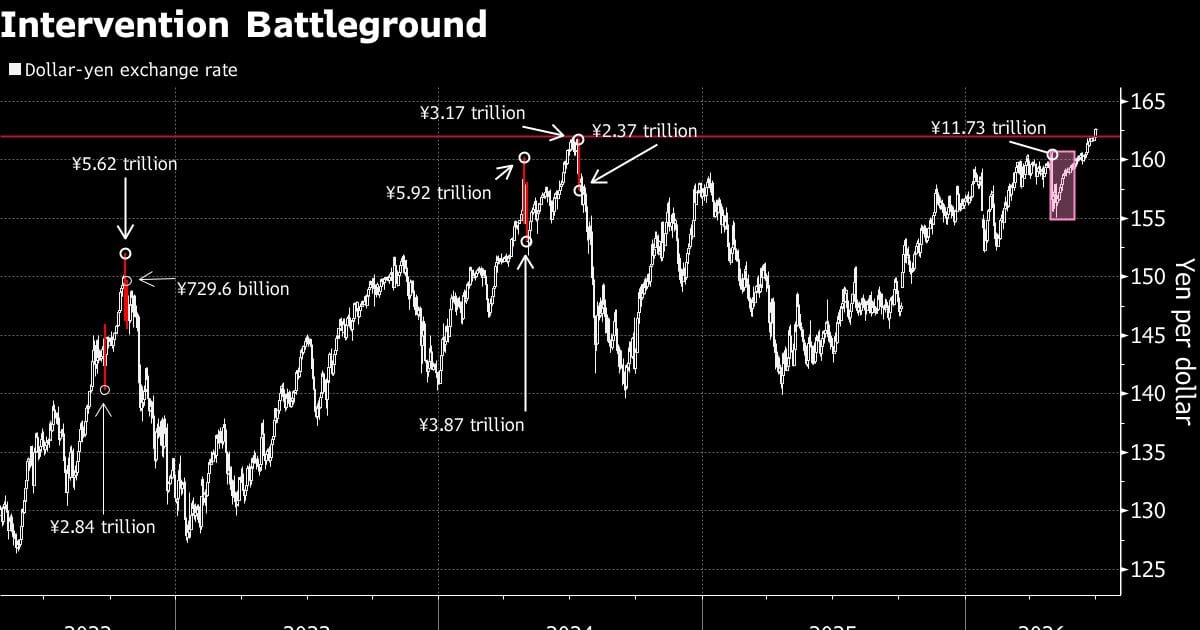
As Tokyo signals intervention to defend a 40-year yen low, the global financial architecture faces a liquidity crunch. We analyze the ripple effects on Nifty 50 constituents, the structural risks for Maruti Suzuki, and why Indian manufacturers could emerge as unexpected victors in this currency reshuffle.
The Yen Pivot: A Silent Threat to Indian Equities
For over a decade, the Japanese Yen has served as the world’s cheapest funding source. By borrowing at near-zero rates in Tokyo and deploying capital into high-growth, high-yield markets like India, global institutional investors have fueled a persistent bull run. Now, with Japan’s Ministry of Finance signaling active intervention to rescue the yen from 40-year lows, that liquidity pipeline is at risk of a sudden, violent reversal.
This isn't merely a currency story; it is a structural liquidity event. When the yen appreciates rapidly, the 'carry trade'—the practice of borrowing yen to fund foreign investments—becomes unprofitable. To mitigate losses, hedge funds and global macro desks are forced to sell their most liquid assets. Historically, India’s Nifty 50 has been a primary target for such liquidations due to its high beta and deep liquidity compared to other emerging markets.
How will a Yen rally impact FII flows into India?
Foreign Institutional Investor (FII) sentiment is tethered to the cost of capital. When the JPY/INR pair shifts, the relative attractiveness of Indian equities changes. In 2022, during the initial phases of yen volatility, we witnessed a correlation spike where Nifty 50 volatility increased by 14% within weeks of yen-intervention rumors. The current scenario is more acute because the yen is trading at levels not seen since the early 1980s.
If the Bank of Japan (BoJ) succeeds in forcing a sharp appreciation of the yen, the 'cost of carry' rises instantly. For India, this translates to a potential net outflow of $2B–$5B in the short term as global players rebalance their books. This creates a supply-demand imbalance in blue-chip stocks, particularly those heavily owned by foreign passive funds.
Sectoral Winners and Losers: A Deep Dive
The impact of this currency shift is asymmetric. While the broader market may face headwinds, specific domestic manufacturing sectors stand to gain from a stronger yen.
The Winners: Domestic Steel and Export Competitors
Indian steel manufacturers like JSW Steel (JSWSTEEL) and Tata Steel (TATASTEEL) are poised for a competitive advantage. Japan is a major global steel exporter; a stronger yen makes Japanese steel significantly more expensive in global markets, allowing Indian players to reclaim market share in Southeast Asian and Middle Eastern corridors.
The Losers: Indo-Japanese Joint Ventures
The primary casualty of a strengthening yen is the royalty-heavy business model. Companies like Maruti Suzuki (MARUTI) pay significant royalties to their Japanese parent, Suzuki Motor Corp. A stronger yen directly inflates these payments, squeezing operating margins. With Maruti currently trading at a P/E of ~30x, any margin compression could lead to a downward revision in earnings per share (EPS) estimates.
Stock-by-Stock Breakdown
- MARUTI SUZUKI (MARUTI): High exposure to yen-denominated royalty payments. A 5% appreciation in the yen can shave 50-80 basis points off the company's EBITDA margins.
- TATA MOTORS (TATAMOTORS): While diversified, the company’s exposure to debt and global supply chains makes it sensitive to currency volatility. However, its JLR division provides a natural hedge against USD/JPY moves.
- JSW STEEL (JSWSTEEL): A tactical beneficiary. As Japanese steel becomes less competitive, JSW gains pricing power in domestic and export markets, potentially boosting its current ~8% EBITDA margin.
- BHARAT FORGE (BHARATFORG): As a global exporter of auto components, the company faces a mixed bag. While it competes with Japanese suppliers, its own yen-denominated debt could see an increase in servicing costs.
Expert Perspective: The Bull vs. Bear Divide
The Bear Case: Analysts at major global desks argue that a carry trade unwind is inevitable. They point to the 'margin call' effect—if the yen spikes, the forced selling of Indian equities will be indiscriminate, hitting high-growth tech and auto stocks regardless of individual fundamentals.
The Bull Case: Contrarians argue that India’s domestic retail participation is now strong enough to absorb FII outflows. They suggest that the 'India Growth Story' is decoupled from yen-based liquidity, and any dip caused by a currency intervention should be treated as a generational entry point for long-term investors.
Actionable Investor Playbook
- Reduce Exposure to Royalty-Heavy Firms: Trim positions in companies where royalty payments to Japanese entities exceed 3% of revenue.
- Increase Weight in Domestic Cyclicals: Shift capital toward domestic-focused steel and manufacturing firms that benefit from import substitution.
- Monitor the JPY/INR Pair: If the pair breaks below the 0.54 level, prepare for a volatility spike in the Nifty 50.
- Hedge with Put Options: For portfolios heavy on Nifty 50, purchase out-of-the-money puts on the Nifty index to protect against a sudden 5-7% drawdown.
Risk Matrix
| Risk Factor | Probability | Impact |
|---|---|---|
| FII Liquidation of Indian Assets | High | High |
| Margin Compression in Auto OEMs | Medium | Medium |
| Global Liquidity Squeeze | Medium | High |
What to Watch Next
Investors should track the BoJ’s policy meeting minutes and the upcoming US CPI data release. The interaction between the Fed’s interest rate trajectory and the BoJ’s intervention will be the ultimate catalyst for the USD/JPY pair. Keep a close watch on the 'Net FII Investment' data published by NSDL; if we see three consecutive days of outflows exceeding ₹2,000 crore, the carry trade unwind is likely in full swing.
See MARUTI's AI Score
Our algorithmic screener scores MARUTI on fundamentals, momentum, and risk — free to try, no card needed.
Try the AI Screener →Have questions about this story?
Ask Welth, our finance-focused AI research assistant, for a deeper breakdown — free trial included.
Chat with Welth AI →Disclaimer: This content is generated by WelthWest Research Desk based on publicly available reports and is for informational purposes only. It does not constitute financial advice, investment recommendations, or an offer to buy or sell securities. Always consult a qualified financial advisor before making investment decisions.