Key Takeaway
The Zcash protocol failure serves as a structural warning that privacy-centric assets carry hidden 'code-debt' risks. While direct Indian equity exposure is nil, the resulting regulatory contagion could dampen sentiment for fintech-heavy portfolios.
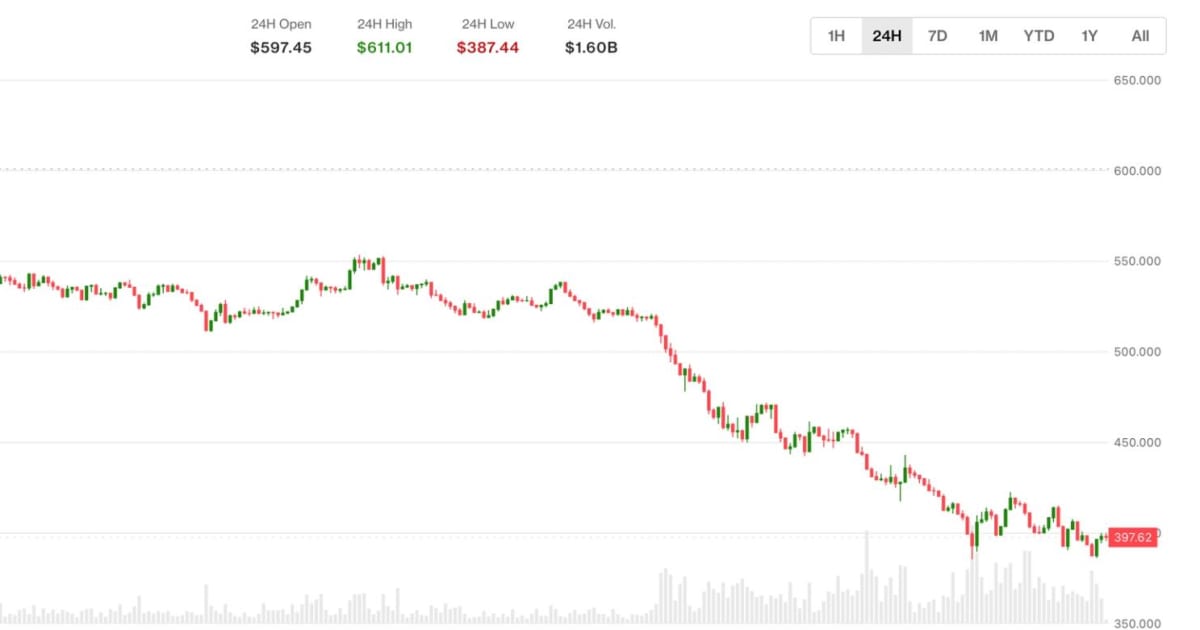
A four-year-old security flaw in Zcash has sent shockwaves through the privacy-coin ecosystem, forcing a re-evaluation of decentralized security. This analysis explores the ripple effects on investor sentiment, the inevitable regulatory response, and the implications for Indian financial markets.
The Zcash Vulnerability: A Wake-Up Call for Decentralized Finance
The discovery of a critical, long-standing security vulnerability within the Zcash (ZEC) protocol—a flaw that persisted undetected for four years—has shattered the illusion of 'perfect' cryptographic security. This is not merely a technical glitch; it is a fundamental stress test for the privacy-coin sector. When a protocol marketed on the bedrock of mathematical anonymity fails, the entire value proposition of the asset class collapses, leading to a liquidity flight that often spills over into broader, speculative digital asset markets.
Why does a Zcash bug matter to Indian investors?
While the Indian equity market (NSE/BSE) maintains a strict stance on direct crypto-asset investment, the correlation between global risk-on sentiment and Indian fintech valuations is undeniable. When crypto markets face a ‘trust shock,’ retail liquidity—often the primary engine for mid-cap momentum—tends to retreat. Historically, when crypto volatility spikes (as seen during the 2022 Terra-Luna collapse), foreign portfolio investors (FPIs) often trim exposure to emerging market tech-proxies as a preemptive risk-management strategy.
How will the Zcash fallout impact RBI's digital asset stance?
The Reserve Bank of India (RBI) has long maintained a hawkish stance on decentralized cryptocurrencies, citing systemic risk and money laundering concerns. A high-profile protocol failure provides the regulatory ammunition needed to justify stricter 'Know Your Customer' (KYC) and Anti-Money Laundering (AML) mandates. We expect the RBI to accelerate the development of the Central Bank Digital Currency (CBDC) to provide a 'safe' alternative to the volatile private crypto market.
Sector-Level Breakdown: Winners and Losers
The market reaction to the Zcash disclosure is binary. Cybersecurity firms and regulated exchange platforms stand to gain as institutional demand for 'audited' and 'compliant' infrastructure surges. Conversely, privacy-focused projects are seeing a mass exodus of capital, as investors pivot toward assets with transparent, battle-tested codebases.
Stock-by-Stock Analysis: NSE/BSE Exposure
While no Indian stock holds Zcash directly, several firms provide the plumbing for digital financial services and cybersecurity that will be impacted by the ripple effects of this event:
- Tata Consultancy Services (TCS): As a leader in enterprise cybersecurity, TCS stands to benefit from increased demand for blockchain auditing services. With a P/E ratio of ~30x, it remains a defensive play for investors hedging against digital infrastructure risks.
- HCL Technologies: Their focus on digital transformation and cloud security makes them a key beneficiary of the industry-wide push for more robust, audited blockchain protocols.
- PB Fintech (PolicyBazaar): As a proxy for digital-first financial services, sentiment-driven sell-offs in the broader 'tech-speculative' bucket often hit this stock. Watch for volatility in the next 30 days as retail sentiment cools.
- Angel One: As a brokerage platform, any regulatory crackdown on the wider digital asset ecosystem can lead to reduced volume in speculative trading segments, impacting bottom-line growth.
Expert Perspective: The Contrarian View
'The Zcash bug is a feature, not a bug, of decentralization. It proves that the community—not a central authority—is responsible for protocol health.' – Bullish Market Analyst
Conversely, bears argue that this event exposes the 'infinite maintenance' trap of decentralized protocols. Unlike a centralized bank that employs thousands to patch vulnerabilities, decentralized projects rely on a fragmented developer base, leaving them inherently more susceptible to long-tail security risks.
Actionable Investor Playbook
Investors should adopt a 'flight-to-quality' strategy. Move capital away from speculative, high-beta digital assets and toward companies providing the infrastructure, security, and compliance layers for the future of finance.
- Watch: Keep a close eye on the 10-year Treasury yield and the Nifty 50; if the crypto contagion leads to a broader risk-off move, look for entry points in large-cap IT stocks.
- Sell: Avoid exposure to speculative digital asset funds that lack clear transparency regarding their underlying protocol audits.
- Buy: Focus on firms with strong cybersecurity revenue streams and high institutional trust ratings.
Risk Matrix
| Risk Factor | Probability | Impact |
|---|---|---|
| Regulatory Crackdown | High | Moderate |
| Retail Sentiment Contagion | Moderate | High |
| Systemic Liquidity Crunch | Low | Very High |
What to Watch Next
The upcoming quarterly results from major Indian IT service providers will be critical. Watch for management commentary regarding 'Blockchain-as-a-Service' (BaaS) and cybersecurity spending. Additionally, any upcoming RBI circular regarding digital assets or virtual digital assets (VDAs) will serve as a definitive catalyst for the sector's performance in Q3 and Q4.
Disclaimer: This content is generated by WelthWest Research Desk based on publicly available reports and is for informational purposes only. It does not constitute financial advice, investment recommendations, or an offer to buy or sell securities. Always consult a qualified financial advisor before making investment decisions.


