Key Takeaway
Amazon’s withdrawal from the Sam Altman biopic signals a strategic retreat from controversial tech narratives to protect ecosystem partnerships, leaving a vacuum for independent distributors while insulating Big Tech valuations from 'narrative risk.'
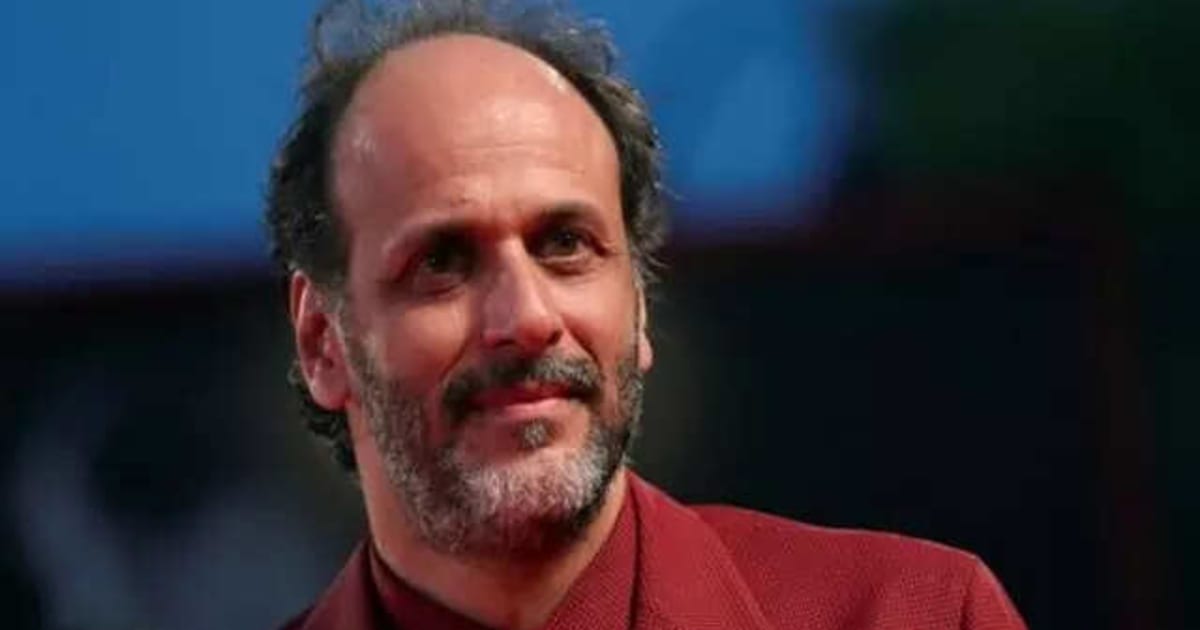
Amazon MGM Studios has officially halted production on 'Artificial,' the highly anticipated biopic of OpenAI CEO Sam Altman. While seemingly a minor Hollywood shuffle, the move highlights the growing friction between Big Tech’s content arms and their AI development partners. For investors, this represents a shift in how narrative risk is managed in the age of generative AI.
The 'Artificial' Withdrawal: Why Amazon MGM Shelved the Sam Altman Narrative
In a move that has sent ripples through the intersection of Silicon Valley and Hollywood, Amazon MGM Studios has officially dropped 'Artificial,' the high-profile biopic centered on the rise of OpenAI CEO Sam Altman. Directed by Luca Guadagnino, the project was intended to be a definitive cinematic exploration of the most influential figure in the current AI revolution. However, the sudden cancellation raises a critical question for institutional investors: Is Big Tech becoming too cautious to critique its own?
The decision comes at a time when Amazon is deepening its own multi-billion dollar commitment to generative AI through its partnership with Anthropic and the expansion of AWS’s Bedrock platform. From a financial perspective, the abandonment of 'Artificial' is less about a failed script and more about strategic alignment. Producing a potentially polarizing film about a contemporary peer—whose technology Amazon integrates into its core cloud offerings—presents a reputational risk that far outweighs the projected box office or streaming revenue of a mid-budget drama.
How does the 'Artificial' cancellation affect the Indian Media & Entertainment sector?
While the immediate impact is felt in the corridors of Culver City, the secondary effects permeate the global content supply chain, including India’s burgeoning Media and Entertainment (M&E) sector. India has become a critical hub for post-production and visual effects (VFX), with firms listed on the National Stock Exchange (NSE) and Bombay Stock Exchange (BSE) increasingly reliant on the steady flow of high-concept Hollywood biopics and tech-thrillers.
Historically, when major studios like Amazon or Netflix (NFLX) pivot their content strategy, it dictates the order books for Indian service providers. For instance, during the 2023 Hollywood strikes, Indian VFX houses saw a 15-20% dip in quarterly revenue. The cancellation of 'Artificial' is a micro-indicator of a larger trend: The tightening of 'Narrative IP' around AI. As Big Tech companies consolidate their power, they are increasingly hesitant to fund content that scrutinizes the ethics of the very industry driving their current stock premiums.
Deep Market Impact: Connecting the Dots to Indian Equities
The global M&E market is projected to reach $3.4 trillion by 2028, and India is the fastest-growing segment within this pie. The cancellation of a high-profile project like 'Artificial' serves as a reminder of the 'Sunk Cost Risk' inherent in the content business. Amazon MGM will likely write off several million dollars in development costs—a drop in the bucket for a company with a market cap exceeding $1.9 trillion, but a cautionary tale for smaller production houses.
In the Indian context, this shift underscores the importance of diversifying away from pure service-based models. Companies that own their Intellectual Property (IP) are better shielded from the whims of US studio executives. We are seeing a structural shift where Indian conglomerates are now competing for the same 'Tech-Narrative' space that Amazon just vacated.
Stock-by-Stock Breakdown: The Indian Angle
1. PVR INOX Ltd (NSE: PVRINOX)
As the largest film exhibition company in India, PVR INOX relies heavily on Hollywood's 'prestige' slate to drive footfalls in premium formats like IMAX and Director’s Cut. The loss of a Luca Guadagnino film—a director known for critical acclaim and awards-season buzz—reduces the inventory of 'high-ARPU' (Average Revenue Per User) content. While one film won't break the balance sheet, a trend of studios playing it safe with 'sanitized' content could impact the long-term premiumization strategy of PVR INOX, which currently trades at a P/E ratio reflecting a recovery phase post-pandemic.
2. Tata Elxsi Ltd (NSE: TATAELXSI)
Tata Elxsi’s Media & Communication division is a global leader in design and technology services. They often provide the backend infrastructure for streaming platforms and digital content creation. The cancellation of 'Artificial' highlights the volatility of the 'Work-for-Hire' model. Investors should monitor Tata Elxsi’s shift toward industrial AI applications, which provides a more stable revenue stream (30%+ EBITDA margins) compared to the cyclical nature of Hollywood production cycles.
3. Reliance Industries (NSE: RELIANCE) - Media Segment
Through its stake in Viacom18 and the recent merger developments with Disney Star, Reliance is positioned as the 'Amazon of India' in terms of content. The decision by Amazon to drop a Sam Altman biopic creates an opening for JioCinema to acquire similar 'tech-disruption' narratives. Reliance’s ability to leverage its 450 million+ subscriber base allows it to take narrative risks that US studios might avoid due to global corporate sensitivities.
4. Prime Focus Ltd (NSE: PRIMEFOCUS)
As the parent company of DNEG, Prime Focus is a powerhouse in global VFX. Projects like 'Artificial' typically require sophisticated digital environments and aging/de-aging tech. The shelving of such projects directly impacts the high-margin 'Creative Services' segment. However, with a global footprint, Prime Focus can pivot to the surging demand for domestic Indian epics, which are increasingly matching Hollywood budgets.
5. Saregama India Ltd (NSE: SAREGAMA)
Saregama is a play on IP ownership. While not directly linked to the Altman film, the broader takeaway is the value of uncontested content. As Amazon retreats from controversial biopics, Saregama’s strategy of monetizing its vast music library and producing 'safe' regional content appears increasingly robust. Their 25% Return on Capital Employed (ROCE) makes them a defensive pick in a volatile media landscape.
Expert Perspective: The Bull vs. Bear Case for Media Tech
"The cancellation of 'Artificial' is a strategic de-risking move. Amazon is essentially choosing to protect its $4 billion investment in Anthropic over a $50 million film. In the new corporate hierarchy, AI partnerships sit far above content distribution." — Senior Media Analyst, WelthWest Research
The Bull View: Optimists argue that this opens the door for independent distributors like A24 or Neon to pick up the project. For the Indian market, this means a more fragmented and competitive bidding environment for international distribution rights, potentially lowering the cost of acquisition for local players like MUBI India or specialized distributors.
The Bear View: Skeptics suggest we are entering an era of 'Corporate Narrative Control.' If Big Tech platforms (Amazon, Apple, Google) refuse to distribute content that critiques the tech elite, the 'Creative Economy' faces a significant bottleneck. This could lead to a stagnation in high-quality, thought-provoking content, eventually depressing the valuation of media-heavy portfolios.
Actionable Investor Playbook: Navigating the Content Shift
- Watch the 'Platform vs. Content' Ratio: Investors should favor companies that own the distribution pipe (Reliance, Bharti Airtel) over those that are purely content creators without a locked-in audience.
- Entry Points for Media Stocks: For PVR INOX, look for entry points near the ₹1,400 support level, contingent on a strong Q3 slate. The 'Artificial' news is a sentiment dampener but not a fundamental breaker.
- The AI Hedge: Rather than betting on 'AI Narratives' (films), bet on 'AI Enablers.' Stocks like Persistent Systems (NSE: PERSISTENT) or LTIMindtree (NSE: LTIM) are better proxies for the Sam Altman/OpenAI boom than any media house.
- Time Horizon: The M&E sector in India is a 3-5 year play. Short-term volatility driven by Hollywood news should be used to accumulate quality IP-owners.
Risk Matrix
| Risk Factor | Probability | Impact | Mitigation |
|---|---|---|---|
| Sunk Cost Write-offs | High | Low | Diversified revenue streams in Big Tech. |
| Narrative Censorship | Medium | Moderate | Rise of independent/decentralized streaming platforms. |
| VFX Order Cancellations | Low | High | Indian firms pivoting to domestic 'Pan-India' films. |
What to Watch Next: Upcoming Catalysts
The story doesn't end with Amazon's exit. Investors should keep a close eye on these upcoming dates and triggers:
- OpenAI's Next Funding Round: Any shift in Sam Altman’s public standing will immediately affect the 'marketability' of the shelved script for other buyers.
- Amazon's Q3 Earnings Call: Listen for commentary on 'Content Spend Optimization.' If Amazon is cutting biopics, they might be redirecting capital toward AI R&D.
- PVR INOX Quarterly Results: Watch for 'Hollywood Contribution' metrics. A decline here would signal that the lack of 'prestige' content is hurting the bottom line.
- The 'Anthropic' Expansion: Any further integration of Anthropic into AWS will confirm the theory that Amazon is prioritizing its AI ecosystem over its studio independence.
In conclusion, while the shelving of 'Artificial' may seem like a footnote in the entertainment trades, it is a loud signal of the strategic realignment of global capital. In the battle between 'The Story' and 'The System,' the system—fueled by trillions in AI valuation—is currently winning.
See None's AI Score
Our algorithmic screener scores None on fundamentals, momentum, and risk — free to try, no card needed.
Try the AI Screener →Have questions about this story?
Ask Welth, our finance-focused AI research assistant, for a deeper breakdown — free trial included.
Chat with Welth AI →Disclaimer: This content is generated by WelthWest Research Desk based on publicly available reports and is for informational purposes only. It does not constitute financial advice, investment recommendations, or an offer to buy or sell securities. Always consult a qualified financial advisor before making investment decisions.