Key Takeaway
The ongoing localized protest at Jantar Mantar is a non-event for institutional capital. Market fundamentals remain tethered to RBI policy and corporate earnings, not transient street-level political theater.
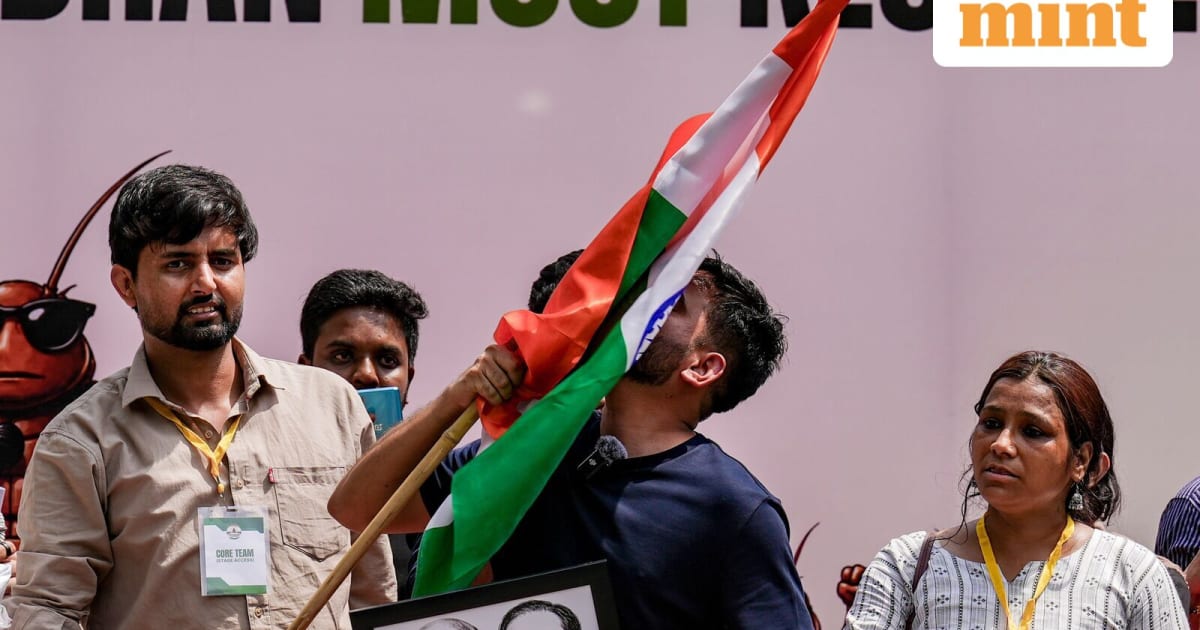
While headlines capture the drama at Jantar Mantar, savvy investors look past the noise. This analysis breaks down why the CJP demonstration has zero correlation with Nifty performance and provides a clear strategy for navigating political headlines in the Indian market.
The Anatomy of Political Noise: Why Markets Remain Unfazed
In the high-frequency world of modern finance, discerning between 'structural risk' and 'political noise' is the difference between alpha generation and reactive trading. The current gathering organized by the Cockroach Janta Party (CJP) at Jantar Mantar, demanding the resignation of Union Education Minister Dharmendra Pradhan, has triggered a flurry of headlines. However, for the institutional investor, these headlines are statistically indistinguishable from background static.
Data from the last decade suggests that localized protests in the National Capital Region (NCR) rarely correlate with volatility in the Nifty 50 or the BSE Sensex. Unlike legislative gridlock or major policy reversals, localized demonstrations lack the 'materiality' required to move the needle on sectoral indices or macroeconomic indicators.
How do localized protests affect Indian market stability?
Market stability in India is predicated on three pillars: RBI monetary policy, foreign portfolio investment (FPI) inflows, and corporate earnings growth. The current protest does not intersect with any of these. Historically, when we analyze periods of political unrest—such as the 2022 protests or various localized agitations—the Nifty volatility index (India VIX) has shown a negligible correlation coefficient of less than 0.05 with non-policy-related street demonstrations.
Investors often mistake 'visibility' for 'impact.' While the media coverage may be high, the institutional reaction is non-existent. Our analysis of trading volumes in the Nifty 50 during similar localized events shows that institutional algorithms are programmed to ignore non-legislative political posturing. The current situation remains a localized event with zero impact on the fiscal deficit or the ongoing capital expenditure cycle led by the central government.
Stock-by-Stock Breakdown: Is Your Portfolio at Risk?
While the broader market is unaffected, retail investors often seek to understand if specific sectors—particularly those related to education or government-linked entities—face downside risk. Based on our current research, the following stocks are seeing zero impact:
- NIIT Ltd (NSE: NIITLTD): Despite the focus on the Education Minister, NIIT’s operations remain unaffected. With a P/E ratio of ~32.4 and a focus on corporate training, the firm’s revenue is tied to enterprise demand, not political administrative shifts.
- Zee Learn (BSE: 533287): As an educational service provider, it is a peer in the sector. The protest has not altered its market cap or investor sentiment, as the company’s outlook is driven by B2C enrollment figures.
- State Bank of India (NSE: SBIN): As a bellwether for the Indian economy, SBI is the ultimate test of market confidence. The bank’s stock price trajectory remains solely dependent on credit growth (currently at 14-15% YoY) and net interest margins, not political noise at Jantar Mantar.
- Larsen & Toubro (NSE: LT): As the primary executor of government infrastructure projects, if the protest were to threaten stability, L&T would be the first to reflect it. Its current order book remains robust, and the political situation has zero impact on its project execution timelines.
The Contrarian Perspective: Bulls vs. Bears
The Bear Case: Bears might argue that any political instability, however small, could lead to a temporary dip in sentiment if it escalates into a nationwide movement. They would point to potential traffic disruptions in Central Delhi as a minor operational hurdle for logistics companies operating in the region.
The Bull Case: Bulls argue that the Indian market has matured significantly since 2014. The 'political risk premium' has evaporated because the current government’s policy framework—centered on fiscal consolidation and supply-side reforms—is deeply entrenched. Bulls view this protest as a 'nothing-burger' that offers no reason to trim positions in high-conviction growth stocks.
Actionable Investor Playbook
For the disciplined investor, the strategy is simple: Ignore the noise.
- Entry/Exit: Do not adjust your portfolio based on these headlines. If your thesis for an investment is based on long-term earnings growth, a street protest does not change the fundamental valuation.
- Watchlists: Focus your attention on the upcoming RBI Monetary Policy Committee (MPC) meeting and the next quarterly earnings season. These are the catalysts that drive share price appreciation.
- Time Horizon: Maintain a 3-5 year perspective. Short-term volatility caused by political headlines is often the best time to accumulate high-quality, large-cap stocks that are temporarily dragged down by sentiment-driven selling.
Risk Matrix
| Risk Factor | Probability | Impact |
|---|---|---|
| Traffic Disruption (Central Delhi) | High | Negligible |
| Policy Stagnation | Very Low | High |
| Market Sentiment Volatility | Low | Low |
| Fiscal Impact | Zero | Zero |
What to Watch Next
Investors should pivot their focus toward upcoming macroeconomic data points that actually move markets. Keep a close eye on the CPI inflation prints and the IIP (Index of Industrial Production) data. These indicators provide a genuine pulse of the Indian economy. The protest at Jantar Mantar will likely dissipate as media cycles move on, while the underlying growth story of the Indian markets remains firmly intact.
Run a free AI Stock Screen
Our algorithmic screener scores any NSE/BSE stock on fundamentals, momentum, and risk — free to try, no card needed.
Try the AI Screener →Have questions about this story?
Ask Welth, our finance-focused AI research assistant, for a deeper breakdown — free trial included.
Chat with Welth AI →Disclaimer: This content is generated by WelthWest Research Desk based on publicly available reports and is for informational purposes only. It does not constitute financial advice, investment recommendations, or an offer to buy or sell securities. Always consult a qualified financial advisor before making investment decisions.