Key Takeaway
The divergence between high-margin semiconductor demand and cooling consumer hardware appetite creates a 'scissors effect' for global tech. For Indian investors, this signals a shift from volume-driven growth to margin-focused selectivity in the IT sector.
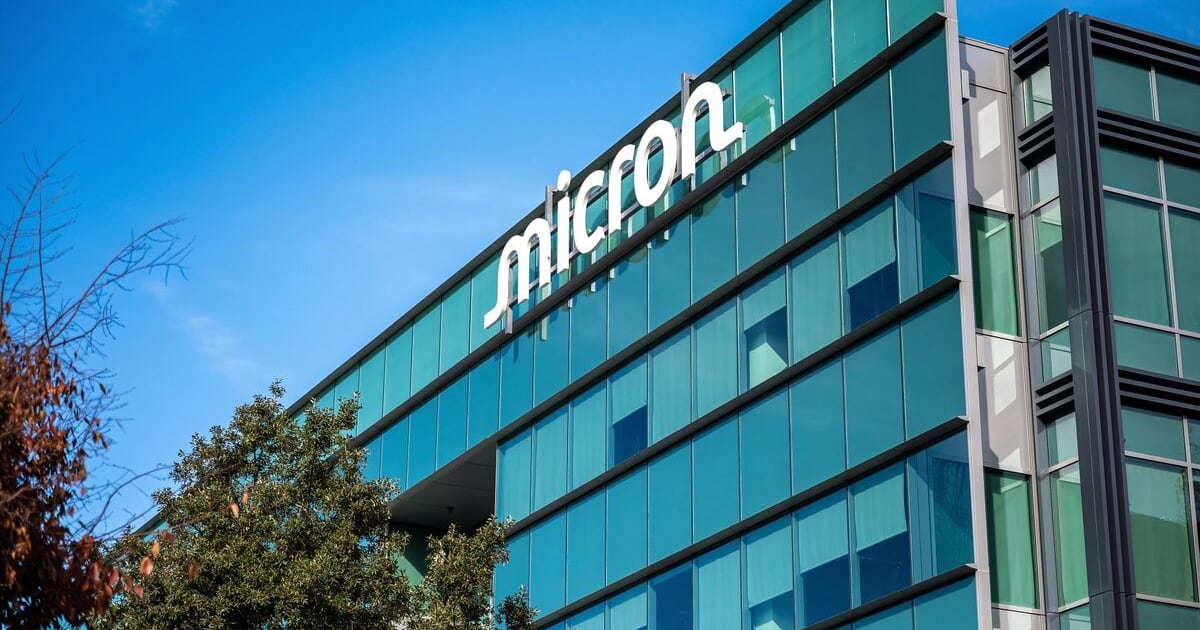
Apple’s recent pricing strategies are testing consumer elasticity while the semiconductor sector remains red-hot. This US tech volatility is rippling through the Nifty IT index, forcing a re-evaluation of FII flows and sector-wide growth projections.
The Great Tech Decoupling: Why Apple’s Pricing Strategy Matters to Mumbai
The global technology landscape is currently witnessing a fascinating tug-of-war. On one side, the relentless enterprise demand for AI-ready semiconductors—led by giants like NVIDIA and TSMC—is sustaining a massive capital expenditure cycle. On the other, Apple’s recent move to hike hardware prices is testing the limits of consumer discretionary spending. This friction is not merely a US phenomenon; it is a critical bellwether for the Indian IT sector, which remains inextricably linked to the spending patterns of Silicon Valley titans.
How does the Nasdaq-to-Nifty IT correlation impact your portfolio?
Historically, the Nifty IT index exhibits a high correlation (often exceeding 0.75) with the Nasdaq 100. When US tech giants face margin compression due to potential consumer resistance, their immediate response is to rationalize IT spending. In 2022, as global interest rates climbed and hardware demand plateaued, the Nifty IT index saw a drawdown of over 20% in a six-month window. We are observing early signs of a similar 'cost-optimization' narrative emerging, where IT services firms may face pressure on discretionary project budgets if Apple-like price hikes lead to a broader slowdown in consumer hardware sales.
The Semiconductor 'Halo Effect'
While consumer hardware faces headwinds, the B2B semiconductor supply chain remains insulated. The shift toward edge computing and AI integration means that even if hardware sales volume dips, the value-per-unit of silicon remains elevated. This provides a floor for firms involved in chip design and specialized manufacturing, creating a bifurcation in the market between companies tied to consumer discretionary spend versus those tethered to the enterprise AI infrastructure boom.
Stock-by-Stock: Navigating the Indian Tech Landscape
- Redington India (REDINGTON): As a major distributor for Apple and other hardware brands, Redington sits at the eye of the storm. If price hikes suppress unit volume, their top-line growth could moderate. With a P/E hovering near 12-14x, the stock is pricing in a slowdown, but watch for margin compression if inventory turnover ratios decline.
- Dixon Technologies (DIXON): Dixon is the poster child for the 'Make in India' theme. However, their reliance on consumer electronics manufacturing makes them sensitive to any global demand slump. Their high valuation (P/E > 100x) leaves little room for error if global consumer demand hits a wall.
- Infosys (INFY) & TCS (TCS): These giants are the 'picks and shovels' of the digital economy. They are currently insulated from direct hardware sales but are highly sensitive to the 'Digital Transformation' budget cycles. A sustained slump in US consumer tech could lead to a 'wait-and-see' approach for enterprise clients, potentially impacting H2 revenue guidance.
- HCLTech (HCLTECH): With a strong focus on engineering and R&D services, HCLTech is better positioned to benefit from the semiconductor boom than pure-play IT services firms. Their exposure to the silicon design lifecycle acts as a hedge against consumer-side weakness.
The Contrarian View: Bulls vs. Bears
The Bear Case: The 'scissors effect' is real. As consumers cut back on high-end gadgets, tech giants will reduce IT outsourcing budgets to protect their bottom lines, leading to a de-rating of Indian IT stocks that are currently trading at premium valuations.
The Bull Case: The hardware price hikes are a tactical move to improve margins rather than a sign of structural demand collapse. Once the AI infrastructure build-out reaches the 'application' phase, Indian IT firms will see a massive surge in demand for implementation and maintenance services, irrespective of consumer hardware cycles.
Actionable Investor Playbook: The Strategy
Investors should adopt a 'Barbell Strategy' to navigate this volatility:
- Defensive Positioning: Maintain exposure to large-cap IT (TCS, Infosys) for their robust cash flows and dividend yields, which provide a cushion during market corrections.
- The 'Chip' Hedge: Increase exposure to firms with exposure to semiconductor design and engineering R&D, as they are less correlated to consumer electronics sentiment.
- Watch the FII Flows: If FIIs continue to withdraw from EM tech, look for entry points in mid-cap IT players with strong balance sheets, typically when the Nifty IT index hits its 200-day moving average.
Risk Matrix
| Risk Factor | Impact | Probability |
|---|---|---|
| Global Consumer Recession | High | Moderate |
| US Tech Spending Freeze | Medium | Low |
| Currency Volatility (INR/USD) | Medium | High |
What to watch next?
Keep a close eye on the upcoming quarterly earnings for US hyper-scalers (Microsoft, AWS, Google). Any mention of 'budget rationalization' or 'cautious spending' will be the primary catalyst for a shift in Indian IT valuations. Additionally, watch for the RBI's stance on interest rates; a softer rate environment would provide a significant tailwind to IT stock valuations by lowering the discount rate applied to future earnings.
Disclaimer: This content is generated by WelthWest Research Desk based on publicly available reports and is for informational purposes only. It does not constitute financial advice, investment recommendations, or an offer to buy or sell securities. Always consult a qualified financial advisor before making investment decisions.