Key Takeaway
The Gates Foundation’s total exit from Microsoft marks a structural pivot toward liquidating core legacy holdings, signaling a broader reallocation of philanthropic capital. While Microsoft faces a technical supply overhang, Indian IT exporters remain insulated, offering a tactical decoupling opportunity for global investors.
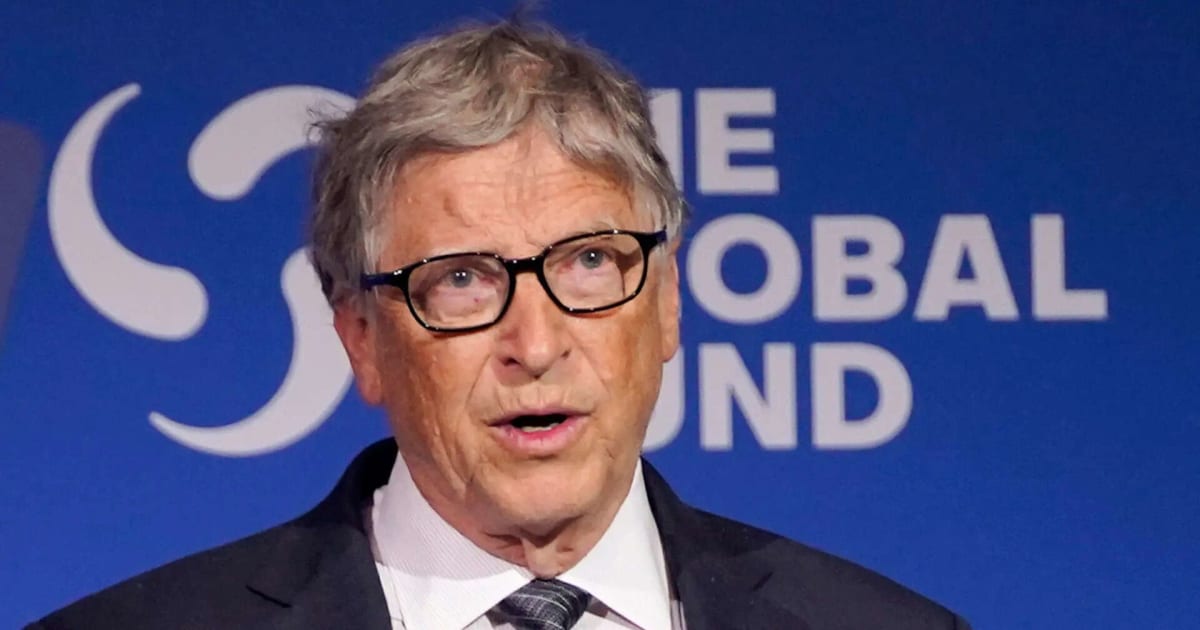
The Gates Foundation has finalized its multi-year divestment from Microsoft, offloading its remaining $3.2 billion stake. This move signifies a strategic shift in endowment management rather than a bearish call on software fundamentals. We examine what this massive capital rotation means for global tech sentiment and the Indian IT services sector.
The End of an Era: Decoding the Gates-Microsoft Divorce
For over three decades, the Bill & Melinda Gates Foundation held a position in Microsoft that was as much symbolic as it was financial. The announcement that the foundation has offloaded its final $3.2 billion stake is not merely a transaction; it is a profound structural shift in how one of the world's largest philanthropic endowments manages liquidity. Unlike a standard institutional sell-off driven by P/E compression or revenue misses, this is a mandate-driven liquidation designed to free up capital for aggressive global health and climate initiatives.
Why does a US tech divestment matter to Indian markets?
While Microsoft (MSFT) is a US-listed entity, its performance acts as a gravitational anchor for the global IT sector. When a massive anchor position is unwound, the resulting volatility ripples through high-beta tech indices. For Indian investors, the concern is sentiment contagion. Historically, when large US tech heavyweights face supply-side pressure, global institutional investors often rebalance their portfolios, leading to temporary outflows from emerging market IT proxies.
How will this divestment impact Indian IT stocks?
The correlation between US Big Tech capital expenditure and Indian IT services revenue is direct. When global giants like Microsoft optimize their balance sheets, they often scrutinize their vendor ecosystems. However, the current divestment is a portfolio-level decision, not an operational one. Consequently, Indian IT stocks are likely to experience a 'decoupling' effect. While global tech sentiment may be jittery, the underlying demand for digital transformation services—the bread and butter of Indian giants—remains robust.
Stock-by-Stock Analysis: Who Gains, Who Watches?
The following stocks on the NSE are positioned to react to the shifting tides of global tech capital:
- Infosys (INFY): As a primary partner for cloud migration, Infosys is sensitive to MSFT's enterprise cloud strategy. Expect short-term volatility as institutional portfolios rotate, but the long-term outlook remains bullish due to cloud-spend resilience.
- TCS (TCS): Being the largest IT services player, TCS often mirrors global sentiment. A dip in MSFT creates an entry point for value investors looking for a high-dividend yield play in a volatile sector.
- HCL Technologies (HCLTECH): HCL’s deep integration with Microsoft's ecosystem makes it the most exposed to any potential change in Microsoft's strategic vendor roadmap. Monitor their next earnings call for any mention of shifted project timelines.
- Wipro (WIPRO): Often a proxy for mid-to-large cap tech sentiment. If the supply overhang on MSFT leads to a broader IT sector pullback, Wipro’s current P/E ratio suggests a potential bottom-fishing opportunity for institutional players.
Expert Perspective: The Contrarian View
Market bears argue that the Gates Foundation’s exit is a signal of 'peak tech,' suggesting that even the most loyal long-term holders are finally cashing out of the AI-fueled valuation frenzy. Conversely, bulls view this as a healthy transition. By removing a 'legacy' anchor, the market allows for new, more aggressive capital to enter Microsoft, potentially clearing the path for the next leg of its growth cycle. At a current P/E of roughly 35x, Microsoft is not cheap, but its cash flow generation remains peerless.
Actionable Investor Playbook
Investors should avoid panic selling Indian IT holdings based on US-specific divestment news. Instead, consider the following strategy:
- Monitor the 'Supply Overhang': Watch MSFT’s price action over the next 30 days. If the market absorbs the $3.2B supply without a sustained drop, it proves the strength of the underlying institutional demand.
- Focus on Fundamentals: Look for Indian IT firms with high exposure to AI-led revenue streams, as they are less likely to be impacted by shifts in traditional legacy contracts.
- Tactical Entry: Use any broad-market panic in the Nifty IT index to accumulate high-quality names like TCS or Infosys, keeping a 12-to-18-month horizon.
Risk Matrix
| Risk | Probability | Impact |
|---|---|---|
| Global Tech Sentiment Contagion | Medium | Moderate |
| Currency Volatility (INR vs USD) | Low | High |
| Institutional Capital Flight from EM IT | Medium | High |
What to watch next: Catalysts for the coming quarter
Investors must keep a close eye on the Q3 earnings guidance from Microsoft and its peer group. The crucial metric to watch is 'Cloud Revenue Growth' and 'AI-as-a-Service' adoption rates. If Microsoft maintains its guidance despite the foundation’s exit, it will confirm that the divestment was purely an endowment-side decision, effectively silencing the bears and providing a green light for sector-wide recovery.
Disclaimer: This content is generated by WelthWest Research Desk based on publicly available reports and is for informational purposes only. It does not constitute financial advice, investment recommendations, or an offer to buy or sell securities. Always consult a qualified financial advisor before making investment decisions.


