Key Takeaway
Qatar’s strategic ramp-up of LNG exports offers a structural tailwind for Indian downstream gas players by compressing input costs and boosting volume growth. Investors should pivot toward margins-sensitive CGD stocks as the global gas glut eases.
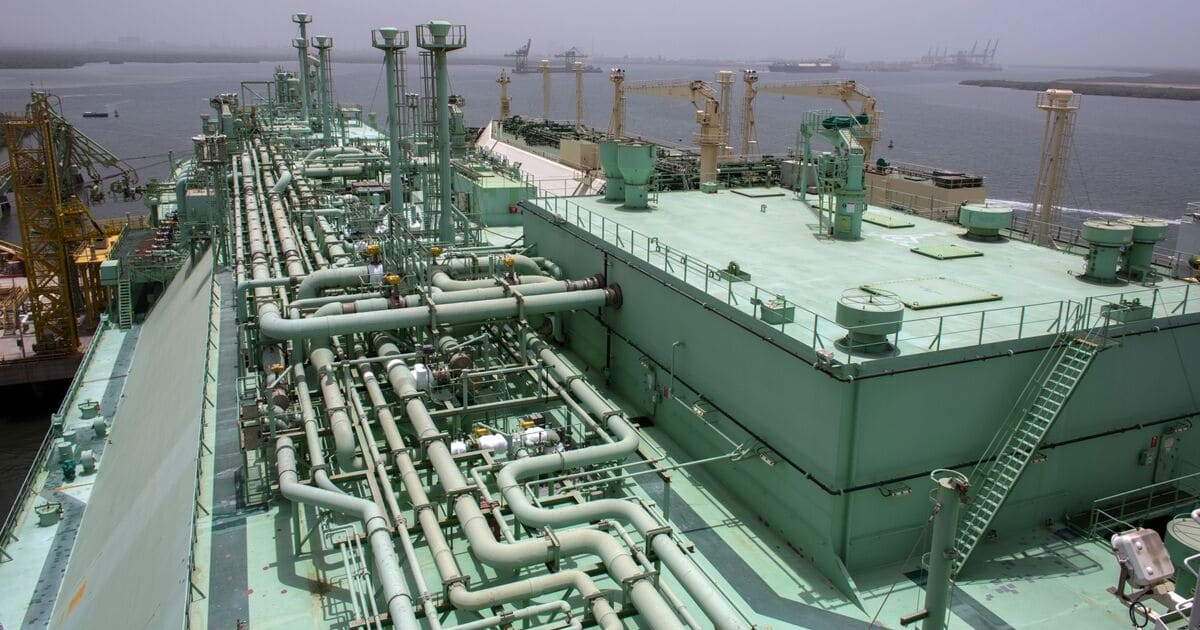
Qatar is scaling its LNG infrastructure to command 20% of global supply, signaling a major shift in energy markets. For India, this translates into lower import bills, margin expansion for CGD players, and a potential tailwind for the Nifty Energy index.
The Qatar Pivot: A New Era of Energy Security
In a move that promises to redefine global energy trade, Qatar is aggressively scaling its liquefied natural gas (LNG) export capacity. By reclaiming its position as the world’s dominant supplier, Doha is effectively acting as the central bank of global gas, providing the liquidity—in the form of thermal units—required to stabilize markets that have been volatile since the 2022 supply shocks. For the Indian markets, this is not merely a geopolitical headline; it is a fundamental shift in the cost structure of domestic industry.
Historically, India’s reliance on spot LNG markets has been a double-edged sword. When prices spiked to $40/MMBtu in 2022, the resulting inflationary pressure crippled margins for fertilizer plants and forced a contraction in demand across the City Gas Distribution (CGD) sector. Qatar’s decision to flood the market with supply provides a floor for stability, allowing Indian energy companies to forecast costs with unprecedented accuracy.
How will Qatar’s LNG surge affect Indian energy stocks?
The primary transmission mechanism for this supply surge into the Indian stock market is through margin expansion. When the landed cost of LNG drops, CGD companies—which are often pegged to expensive imported gas—can either pass on the savings to increase volume consumption or retain the spread to improve their EBITDA per standard cubic meter (SCM).
The Downstream Beneficiaries
For companies like Petronet LNG (NSE: PETRONET), the increase in global supply is a volume play. As a major importer with long-term contracts, Petronet stands to see higher utilization rates at its Dahej and Kochi terminals as Indian industrial demand recovers. We estimate that a 10% reduction in average spot prices could lead to a 5-7% uptick in net margins for downstream users.
Stock-by-Stock Breakdown: Winners and Losers
- Petronet LNG (PETRONET): The primary gateway for Qatari gas. Increased global supply ensures higher throughput at their terminals, supporting a steady dividend yield and stable cash flows.
- GAIL (India) Ltd (GAIL): As the dominant gas pipeline operator, GAIL benefits from the 'volume-first' environment. Lower gas prices stimulate demand from the fertilizer and power sectors, increasing pipeline transmission volumes.
- Indraprastha Gas (IGL) & Mahanagar Gas (MGL): These CGD majors are the biggest winners. Lower input costs allow them to maintain competitive pricing against liquid fuels like petrol and diesel, fueling volume growth in the CNG segment.
- Gujarat Gas (GUJGASLTD): Highly sensitive to industrial demand. Lower gas prices make natural gas a more viable alternative to coal and furnace oil for the ceramic and glass industries in the Morbi cluster.
- Domestic Upstream Producers (ONGC/OIL): These are the contrarian losers. As global gas prices soften, the price realization for domestic producers, which is often linked to global benchmarks, may face downward pressure, potentially compressing their operating margins.
The Bull-Bear Debate: Is the Market Pricing in the Glut?
The Bull Case: Bulls argue that we are entering a 'Golden Age of Gas' for India. With the government pushing to increase the share of natural gas in the energy mix from 6% to 15% by 2030, Qatar’s supply is the 'missing piece' that makes this transition economically viable. Stocks like IGL, trading at a forward P/E of roughly 18-20x, look attractive compared to their 5-year historical averages.
The Bear Case: Skeptics point to the Strait of Hormuz risk. Despite the increased supply, approximately 20% of global LNG traverses this chokepoint. Any geopolitical escalation could instantly negate the supply-side benefits, leading to a 'price spike of 2022' scenario. Furthermore, if European demand remains unexpectedly high, it could absorb the excess Qatari supply, leaving emerging markets like India paying a premium.
Actionable Investor Playbook
Investors should look at a three-pronged approach to navigating this shift:
- The Volume Play: Accumulate GAIL on any dips. As the infrastructure backbone, it is immune to the margin squeeze that affects pure-play retail distributors.
- The Margin Play: Focus on Mahanagar Gas (MGL) and Indraprastha Gas (IGL). Watch for the 'delta' in their quarterly results—if gas costs fall and they do not pass on the full benefit to consumers, the resultant margin expansion will be a massive earnings catalyst.
- The Risk Hedge: Maintain a small allocation to ONGC. While they are a 'loser' in this scenario due to price softening, their dividend yield acts as a defensive buffer against volatility.
Risk Matrix: What Could Derail the Rally?
| Risk Factor | Probability | Impact |
|---|---|---|
| Strait of Hormuz Conflict | Moderate | High (Supply Disruption) |
| Global Demand Spike (Asia/EU) | Moderate | Medium (Price Inflation) |
| Currency Volatility (INR vs USD) | High | Medium (Import Cost Sensitivity) |
What to Watch Next
Keep a close eye on the LNG spot price benchmarks (JKM - Japan Korea Marker). A consistent downward trend in JKM prices over the next two quarters will be the definitive signal that the Qatari expansion is effectively saturating the market. Additionally, monitor the Ministry of Petroleum's monthly data on domestic gas consumption; any acceleration in industrial uptake will confirm that the 'price-sensitive' demand is returning to the market, providing the fundamental support for a sustained bull run in Indian gas stocks.
See GAIL's AI Score
Our algorithmic screener scores GAIL on fundamentals, momentum, and risk — free to try, no card needed.
Try the AI Screener →Have questions about this story?
Ask Welth, our finance-focused AI research assistant, for a deeper breakdown — free trial included.
Chat with Welth AI →Disclaimer: This content is generated by WelthWest Research Desk based on publicly available reports and is for informational purposes only. It does not constitute financial advice, investment recommendations, or an offer to buy or sell securities. Always consult a qualified financial advisor before making investment decisions.