Key Takeaway
The RBI’s official denial of a $12 billion gold liquidation reinforces India's 'Fortress Balance Sheet' narrative, signaling that the central bank has ample non-gold ammunition to defend the Rupee, thereby de-risking the BFSI sector for institutional investors.
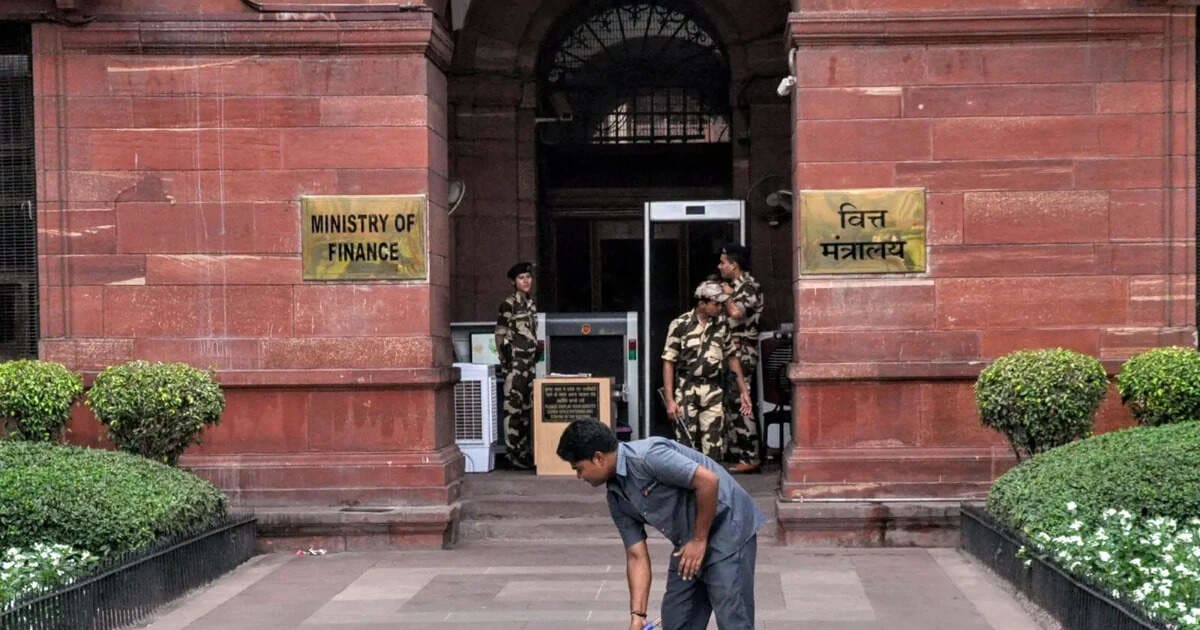
Rumors of a massive gold offloading by the RBI recently rattled currency markets, but the central bank's swift denial has turned a potential crisis into a bullish signal for the Indian economy. By maintaining its strategic bullion reserves, the RBI is projecting confidence in its $648 billion forex kitty, providing a crucial safety net for banking and gold-linked stocks. This deep dive analyzes why this move prevents a speculative spiral and identifies the key stocks set to benefit from restored market stability.
The $12 Billion Question: Why the RBI’s Denial is a Masterstroke for Market Stability
In the high-stakes world of global macroeconomics, perception is often as powerful as reality. When reports surfaced suggesting the Reserve Bank of India (RBI) had liquidated nearly $12 billion in gold reserves to support a flagging Rupee (INR), the tremors were felt from the bullion pits of London to the trading desks of Mumbai. However, the RBI’s unequivocal denial of these reports has done more than just clear the air; it has reaffirmed the structural integrity of India’s foreign exchange management strategy.
For a senior analyst, this isn't just a news correction—it is a signal of strength. Had the RBI actually sold 150-200 tonnes of gold, it would have signaled a 'lender of last resort' desperation, reminiscent of the 1991 balance of payments crisis. By confirming that gold holdings remain unchanged or have actually increased through strategic buying, the RBI has effectively neutralized short-sellers who were betting on a systemic depletion of India's 'hard' assets.
Historical Context: From 1991 Pledges to 2024 Power Plays
To understand why this denial matters, one must look at the scars of 1991. Back then, India was forced to airlift 47 tonnes of gold to the Bank of England to secure a $400 million loan. Today, the situation is diametrically opposite. As of mid-2024, the RBI holds approximately 822 metric tonnes of gold, with a significant portion recently moved back to domestic vaults from the UK. Selling gold now would be a regression that the current administration—and the markets—would find unacceptable.
The current Foreign Exchange Reserves stand at a robust $648.7 billion (as of May 2024 data). Gold accounts for roughly 8-9% of these reserves. The central bank’s preference has been to use its massive USD stockpile and forward-market interventions to manage the USDINR pair, rather than touching its strategic bullion. This discipline is what keeps Foreign Institutional Investors (FIIs) comfortable with Indian sovereign risk.
Deep Market Impact: Connecting the Dots to the NSE/BSE
The denial of a gold sale has immediate and secondary impacts on the Indian equity landscape. When the central bank protects the Rupee without liquidating gold, it stabilizes the Cost of Equity for Indian firms. A volatile Rupee leads to imported inflation and higher hedging costs for Nifty 50 giants.
1. Currency Stability and FII Inflows: Currency speculators often target the 83.50-84.00 range for USDINR. By signaling that gold is 'off the table' for sale, the RBI forces speculators to contend with their massive $600B+ cash pile instead. This stability is a prerequisite for FIIs to remain net buyers in the Indian market. In 2022, when the Rupee faced similar pressure, the Nifty 50 saw a 10% correction before stabilizing once the RBI's resolve became clear.
2. The 'Gold-Positive' Sentiment for NBFCs: If the RBI were selling gold, it would imply a bearish outlook on the metal's long-term value or a desperate need for liquidity, both of which would hurt the collateral value for gold loan companies. The denial ensures that the 'LTV' (Loan-to-Value) ratios for companies like MUTHOOTFIN remain secure.
How will RBI's reserve management affect bank stocks?
The banking sector is the primary beneficiary of a stable currency regime. When the Rupee is under pressure, the RBI often tightens liquidity to prevent capital flight, which can invert the yield curve and squeeze Net Interest Margins (NIMs). By maintaining a 'fortress' reserve of gold and dollars, the RBI can afford to be more surgical with interest rates, benefiting large-cap lenders like SBI and HDFC Bank. Stable reserves lead to stable bond yields, which in turn protects the treasury portfolios of these massive financial institutions.
Stock-by-Stock Breakdown: The Winners of Reserve Resilience
1. State Bank of India (NSE: SBIN)
As the largest public sector lender with a market cap exceeding ₹7.5 Lakh Crore, SBI is the ultimate proxy for the Indian macro-story. SBI holds a massive SLR (Statutory Liquidity Ratio) portfolio. Any panic regarding the RBI’s reserves would lead to a spike in G-Sec yields, causing mark-to-market losses for SBI. The RBI’s denial keeps the 10-year benchmark yield stable around the 7.0-7.1% mark, protecting SBI’s earnings. Currently trading at a P/E of approximately 10.5x, SBI remains an attractive 'Buy' as the macro-uncertainty clears.
2. Muthoot Finance (NSE: MUTHOOTFIN)
With a market cap of ₹70,000 Crore, Muthoot is highly sensitive to gold price stability. Rumors of an RBI gold sale could have triggered a technical sell-off in global gold prices, directly impacting Muthoot's collateral value. The denial reaffirms gold as a strategic asset. Muthoot’s robust AUM (Assets Under Management) growth is predicated on gold prices remaining in a steady upward channel. Any dip in Muthoot below the ₹1,650 level, triggered by such rumors, represents a high-conviction entry point for long-term investors.
3. Titan Company Ltd (NSE: TITAN)
Titan, the jewelry behemoth with a market cap of ₹3 Lakh Crore, thrives on consumer confidence and gold price predictability. An RBI gold sale would have signaled economic distress, potentially dampening discretionary spending. Instead, the status quo allows Titan to manage its gold hedging and inventory costs more effectively. With a P/E ratio often exceeding 80x, Titan requires a stable macro-environment to justify its premium valuation. The RBI’s move provides exactly that.
4. HDFC Bank (NSE: HDFCBANK)
For HDFC Bank, the focus is on Foreign Portfolio Investor (FPI) flows. HDFC Bank has a high FPI ownership (nearly 47%). Any sign that the RBI is 'running out of options' to defend the Rupee would lead to an exodus of foreign funds from HDFC Bank first. The denial of the $12B sale maintains the 'India Premium,' ensuring that HDFC Bank’s valuation doesn't suffer from currency-induced de-rating.
5. Manappuram Finance (NSE: MANAPPURAM)
Similar to Muthoot, Manappuram (Market Cap ~₹16,000 Cr) benefits from the psychological floor that central bank holdings provide to gold. Furthermore, as a diversified NBFC, its borrowing costs are linked to the overall perception of India's financial stability. The RBI’s firm stance keeps credit spreads tight, allowing Manappuram to borrow at competitive rates in the NCD (Non-Convertible Debenture) market.
Expert Perspective: The Bull vs. Bear Argument
"The RBI is not just a central bank; it is a sophisticated sovereign wealth manager. By denying the gold sale, they are telling the world that their $600 billion-plus chest is more than enough to handle the 'higher-for-longer' Fed regime without breaking the glass on their emergency gold reserves."
The Bull Case: Bulls argue that India’s gold reserves are a 'silent pillar.' The fact that the RBI has been a net buyer of gold (adding over 18 tonnes in early 2024) suggests they view gold as a hedge against a depreciating US Dollar. This 'De-dollarization' lite strategy is bullish for Indian equities as it diversifies the risk of the national balance sheet.
The Bear Case: Contrarians argue that the rumor itself suggests underlying pressure. While the RBI denied a $12 billion sale, bears point to the narrowing interest rate differential between the RBI and the US Fed. They argue that if the Rupee breaches 84.50, the RBI might eventually be forced to use more aggressive measures, and the gold 'sanctity' might be tested if FII outflows accelerate during a global recession.
Actionable Investor Playbook
- For Conservative Investors: Accumulate SBI and HDFC Bank on any 3-5% dips. These stocks act as the primary beneficiaries of macro-stability. The time horizon should be 12-18 months to capture the full credit cycle upswing.
- For Growth-Oriented Investors: Titan remains a 'buy-on-dips' candidate. Watch for the ₹3,200 level as a strong support zone. As the wedding season approaches and gold prices stabilize, Titan’s margins are likely to surprise on the upside.
- For Tactical Traders: Monitor the USDINR spot rate. If the Rupee stays below 83.60, it’s a green signal for mid-cap banking and NBFC stocks like Federal Bank (FEDERALBNK) and Manappuram.
- Entry Points: Look for entries in Gold NBFCs when the RSI (Relative Strength Index) on the daily chart dips below 40, as the RBI's denial provides a fundamental floor to these stocks.
Risk Matrix: What Could Go Wrong?
- US Fed Pivot Delay (Probability: High): If the US Federal Reserve keeps rates high throughout 2024, the Dollar Index (DXY) will remain strong, putting relentless pressure on the Rupee regardless of RBI's gold holdings.
- Crude Oil Spike (Probability: Medium): As a net importer, a spike in Brent Crude above $95/barrel would widen India's Current Account Deficit (CAD), forcing the RBI to burn through reserves faster than anticipated.
- Geopolitical Escalation (Probability: Medium): Any expansion of conflict in the Middle East could lead to a 'flight to safety' in USD, causing a sharp sell-off in emerging market equities, including the NSE.
What to Watch Next: The Catalysts
Investors should keep a close eye on the following upcoming data points to validate this bullish thesis:
- Weekly Forex Reserve Data: Released every Friday by the RBI. Watch for the 'Gold' component to see if the RBI continues its trend of being a net buyer.
- US CPI Data: This will dictate the DXY movement and, consequently, the pressure on the Rupee.
- RBI Monetary Policy Committee (MPC) Minutes: Look for commentary regarding 'Exchange Rate Management' and 'Reserve Adequacy.'
- FII Flow Trends: A reversal from net selling to net buying in the cash market will be the ultimate confirmation that the RBI’s denial has restored confidence.
Disclaimer: This content is generated by WelthWest Research Desk based on publicly available reports and is for informational purposes only. It does not constitute financial advice, investment recommendations, or an offer to buy or sell securities. Always consult a qualified financial advisor before making investment decisions.