Key Takeaway
The Samarth Singh arrest represents idiosyncratic social risk with zero systemic impact on the NSE/BSE. Investors should view this as 'headline noise' while maintaining focus on the 'Social' pillar of ESG frameworks which increasingly dictate long-term FII allocations.
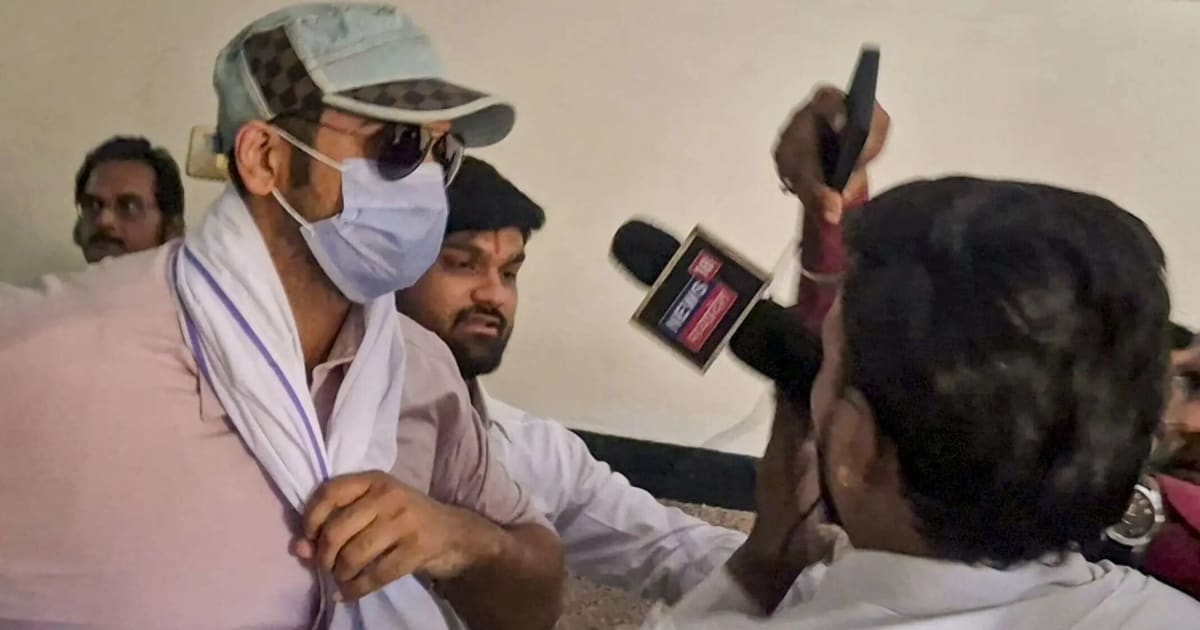
Following the arrest of Samarth Singh in the Twisha Sharma dowry death case, public sentiment has reached a fever pitch. While the legal proceedings involve a second autopsy by AIIMS, the financial implications for the Indian equity market remain non-existent. This report analyzes the decoupling of social tragedies from market indices and explores the evolving 'Social' governance landscape in India.
The Intersection of Social Justice and Market Sentiment: The Samarth Singh Case
The arrest of Samarth Singh in connection with the tragic death of his wife, Twisha Sharma, has dominated national headlines, sparking intense debates regarding dowry laws and social justice in India. As Samarth Singh enters a seven-day police custody and an AIIMS Delhi medical board prepares for a second autopsy, the case has become a focal point of public scrutiny. However, from the perspective of a senior financial analyst at WelthWest Research Desk, the primary objective is to separate emotional narrative from economic reality.
In the world of high-frequency trading and institutional capital allocation, news is categorized into two buckets: Systemic Risk (which moves the Nifty 50) and Idiosyncratic Noise (which does not). The Twisha Sharma case, while a significant legal and social milestone, falls squarely into the latter. There is no evidence suggesting that this case involves any listed corporate entities, high-ranking executives of Nifty 100 firms, or shifts in national economic policy. Consequently, the Nifty 50 and BSE Sensex have shown zero correlation with the developments of this investigation.
Why does this case matter to the 'Social' pillar of ESG now?
While the direct market impact is nil, the broader implications for the ESG (Environmental, Social, and Governance) landscape in India are noteworthy. Institutional investors, particularly Foreign Institutional Investors (FIIs) who currently hold approximately 17-18% of the Indian equity market, are increasingly using 'Social' metrics to evaluate the 'Country Risk Premium.' High-profile criminal cases involving the urban professional class often serve as a barometer for the efficacy of the judicial system and the rule of law.
When we analyze historical parallels, such as the 2012 social unrest or major legislative shifts in 2018, we observe that while the India VIX (Volatility Index) may spike due to political responses, the core earnings per share (EPS) of India Inc. remains insulated. The current legal proceedings against Singh are a reminder that social governance is a lagging indicator for market health, but a leading indicator for societal stability.
How will social legal precedents affect Indian consumer stocks?
One of the most frequent questions we receive at the WelthWest Research Desk is whether high-profile criminal cases affect consumer sentiment in specific sectors. Historically, cases involving domestic disputes or dowry allegations do not lead to a contraction in consumer spending. For instance, the Nifty Consumption Index has historically ignored social litigation, focusing instead on disposable income levels and rural demand recovery.
However, companies that operate in the 'Social Infrastructure' space—such as matrimonial platforms, insurance providers, and luxury goods—monitor these trends for long-term brand positioning. The 'S' in ESG is no longer a footnote; it is a critical component of a company's Social License to Operate. While Samarth Singh’s arrest has no direct ticker symbol attached to it, the case reinforces the push for stricter corporate governance and background verification protocols in the professional sector.
Stock-by-Stock Breakdown: Indirect Sentiment Analysis
While no stocks are directly 'affected' by the arrest of Samarth Singh, we analyze four key stocks that represent the sectors most sensitive to changes in social governance and the 'Social' pillar of ESG.
1. Info Edge (India) Ltd (NSE: NAUKRI)
As the parent company of Jeevansathi.com, Info Edge is at the forefront of India's social fabric. While the Samarth Singh case is a private criminal matter, it highlights the ongoing need for rigorous verification on matrimonial platforms. Info Edge currently trades at a P/E ratio of approximately 45x, with a market cap exceeding ₹1 Lakh Crore. Investors should monitor if increased social litigation leads to stricter (and more costly) regulatory mandates for digital social platforms.
2. Titan Company Ltd (NSE: TITAN)
Titan, a bellwether for the Indian wedding and luxury market through its Tanishq brand, is sensitive to the cultural narratives surrounding marriage and dowry. Historically, Titan has maintained a robust CAGR of 20% in its jewelry segment. While individual cases do not dent sales, any large-scale social shift toward austerity in weddings—driven by legal crackdowns on dowry-related displays of wealth—could theoretically impact long-term growth trajectories. Currently, Titan remains a 'Buy' on dips for most brokerage houses due to its 25%+ ROE.
3. Life Insurance Corporation of India (NSE: LIC)
As the nation's largest institutional investor and insurer, LIC is the ultimate proxy for Indian social stability. The 'Social' aspect of ESG is vital for LIC's valuation. With a market cap of over ₹6 Lakh Crore, LIC’s portfolio is a mirror of the Indian economy. While this case is an isolated incident, LIC’s risk assessment models for life and liability insurance are built on the aggregate data of social safety and legal efficacy.
4. Hindustan Unilever Ltd (NSE: HUL)
HUL is the gold standard for ESG compliance in India. With a high ESG score from global agencies, HUL’s stock price (trading near ₹2,400-₹2,600 levels) is supported by its reputation for social responsibility. Cases that dominate the national psyche often prompt FMCG giants to double down on 'women empowerment' marketing campaigns, which indirectly bolsters brand equity and consumer loyalty in a competitive market.
Expert Perspective: The Bull vs. Bear Case for Social Governance
"The Indian market has developed a 'teflon' coating against non-economic news. Whether it is political theater or individual criminal cases, the Nifty's trajectory is determined by the RBI's monetary policy and corporate earnings growth. We see the Samarth Singh case as a tragic social event, but a financial non-event."
— Chief Investment Strategist, WelthWest Research
The Bull Case: Bulls argue that India’s judicial speed in high-profile cases (like the AIIMS autopsy involvement) demonstrates a maturing legal system. This increases FII confidence in the 'Rule of Law,' which is a prerequisite for long-term capital commitment. They point to the Nifty’s resilience during various social movements as proof of market maturity.
The Bear Case: Bears suggest that the accumulation of high-profile social tragedies could eventually lead to 'Social Fatigue,' potentially impacting discretionary spending in the premium urban segment. They argue that if the 'S' in ESG is ignored, it creates a 'Governance Vacuum' that could lead to sudden regulatory shocks for corporations.
Actionable Investor Playbook: Navigating Headline Noise
For the disciplined investor, the Samarth Singh arrest serves as a masterclass in Filter Theory. Here is how to handle such news cycles:
- Step 1: Identify the Entity: Always check if the individual involved is a 'Key Managerial Personnel' (KMP) of a listed company. In this case, the answer is no.
- Step 2: Assess Systemic Risk: Does this event change interest rates, GDP growth, or sector regulations? No.
- Step 3: Ignore Volatility: Do not sell consumer or banking stocks based on social media sentiment surrounding criminal cases. These are 'noise' events that often provide entry points if the market overreacts.
- Step 4: Focus on ESG Leaders: Allocate capital to companies with high Crisil ESG scores. These firms are better equipped to handle the indirect fallout of social shifts.
Risk Matrix: Assessing the Fallout
- Regulatory Risk (Low Probability): Increased oversight on matrimonial and social platforms. Impact: Marginal increase in compliance costs for tech firms.
- Reputational Risk (Medium Probability): Companies associated with the parties involved (if any) could face social media boycotts. Impact: Short-term volatility in specific small-cap stocks.
- Social Sentiment Risk (Low Probability): A shift in wedding spending patterns. Impact: Long-term moderation in the growth of luxury jewelry stocks like Titan or Kalyan Jewellers.
What to Watch Next: Upcoming Catalysts
While the market will ignore the police custody details, institutional analysts will be watching for:
- AIIMS Autopsy Report: While a medical document, it will conclude the 'uncertainty' phase of the news cycle.
- Legislative Discussions: Any move by the government to tighten dowry or domestic violence laws could have minor implications for the legal and insurance sectors.
- FII Flows: Monitoring if social stability indices impact the monthly net inflow/outflow of foreign capital, though this is a macro-trend rather than a reaction to a single case.
In conclusion, the arrest of Samarth Singh is a significant development in the Twisha Sharma case, but it remains a social and legal matter. For the Indian stock market, the focus remains on the upcoming RBI MPC meeting, Q3 corporate earnings, and global Fed signals. Investors are advised to remain focused on fundamentals and treat headline social news as a call for societal reflection rather than a reason for portfolio reallocation.
Disclaimer: This content is generated by WelthWest Research Desk based on publicly available reports and is for informational purposes only. It does not constitute financial advice, investment recommendations, or an offer to buy or sell securities. Always consult a qualified financial advisor before making investment decisions.


