Key Takeaway
The Delhi High Court’s ruling on Vinesh Phogat underscores a shift toward institutional accountability in Indian sports, a critical prerequisite for the multi-billion dollar private equity influx into India's sports-industrial complex.
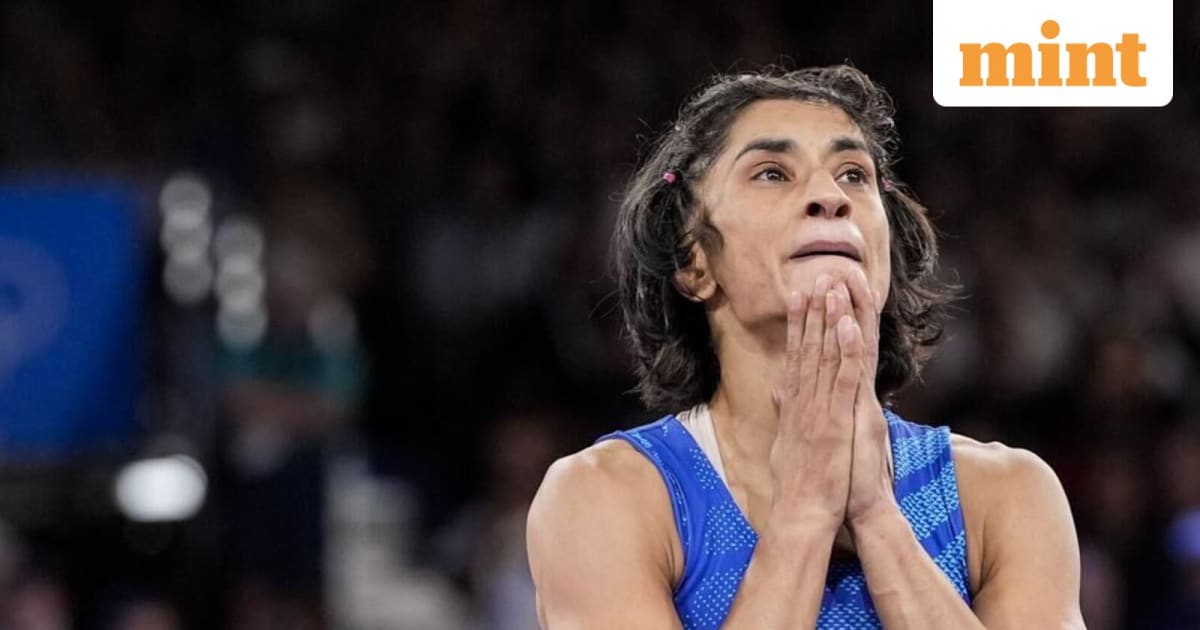
The Delhi High Court has cleared the path for wrestler Vinesh Phogat to participate in the Asian Games selection trials, citing that motherhood and training breaks cannot be grounds for exclusion. While the direct market impact is neutral, this landmark decision highlights the evolving legal framework of India's sports economy, affecting media rights, sponsorships, and the valuation of sports-adjacent NSE stocks.
The Institutional Pivot: Why the Delhi HC Ruling is a Litmus Test for Indian Sports Capital
In a landmark judgment that resonates far beyond the wrestling mat, the Delhi High Court has permitted Vinesh Phogat to participate in the selection trials for the upcoming Asian Games. The court’s assertion that motherhood and temporary absences do not disqualify an elite athlete from competition is a significant legal precedent. For the casual observer, this is a victory for individual rights; for the senior financial analyst at WelthWest Research Desk, it is a signal of the maturing 'Institutional Framework' required to sustain India's burgeoning sports economy.
India’s sports sector is no longer a peripheral hobbyist market. It is a rapidly financializing ecosystem projected to reach a valuation of $100 billion by 2027. When legal systems intervene to ensure meritocracy and protect 'human capital'—the athletes—they inadvertently lower the 'Governance Risk Premium' for private equity and corporate sponsors. As we have seen with the IPL’s valuation skyrocketing to over $10 billion, the stability of athlete participation and the transparency of selection processes are the bedrock of media rights valuations and brand sponsorship longevity.
What Happened: Setting the Scene for a Legal Precedent
The core of the dispute involved the criteria for selection trials for the Asian Games. Vinesh Phogat, a decorated wrestler and a symbol of resilience in Indian sports, faced administrative hurdles that threatened her participation. The Delhi High Court’s intervention serves as a corrective measure against arbitrary sports governance. This matters now because India is currently bidding for the 2036 Olympic Games. For such a bid to be successful and for the associated infrastructure stocks to rally, the global community must see a robust, legally-backed sports administration system in India.
Historically, when sports governance in India has faced scrutiny—such as the 2013 IPL spot-fixing scandal or the various suspensions of the Indian Olympic Association (IOA)—the market impact was felt in the discount applied to media companies and consumer brands. For instance, during periods of administrative uncertainty, stocks like Network18 Media (NETWORK18) and TV18 Broadcast (TV18BRDCST) have seen increased volatility in their ad-revenue projections. This ruling, by contrast, provides a stabilizer, ensuring that the 'product' (the elite athlete) remains available for the 'market' (the international tournament).
Deep Market Impact Analysis: Connecting the Mat to the Market
While the Nifty 50 did not move on the news of a wrestling trial, the underlying Sports-Industrial Complex in India is highly sensitive to these developments. We categorize the impact into three distinct tiers: Media & Broadcasting, Consumer Discretionary (Apparel & Footwear), and Infrastructure/Sponsorship.
How does sports governance affect Indian sports stocks?
Investors often overlook the 'Key Person Risk' in sports. In the corporate world, if a CEO of a Nifty 50 company is unfairly removed, the stock plunges. In the sports world, if elite athletes like Phogat are excluded through non-meritocratic means, the 'viewership equity' of the event diminishes. Lower viewership leads to lower TRPs (Television Rating Points), which directly impacts the quarterly earnings of media giants holding the broadcasting rights.
Data from the 2022 Commonwealth Games showed that wrestling and athletics accounted for a significant 25% surge in daytime viewership for sports channels. Any administrative action that sidelines top-tier talent creates a 'Revenue Leakage' for broadcasters. Furthermore, the Sports Apparel market in India, currently growing at a CAGR of 16%, relies heavily on 'Icon Equity.' When an athlete wins on the global stage, brands like Campus Activewear and Metro Brands see a measurable uptick in 'top-of-mind' awareness and subsequent retail sales.
Stock-by-Stock Breakdown: The Beneficiaries of a Stable Sports Ecosystem
1. Reliance Industries Ltd (RELIANCE)
Through its subsidiary Reliance Sports and its ownership of multiple franchises and JioCinema, RIL is the largest corporate stakeholder in Indian sports. JioCinema’s strategy revolves around aggregating high-value sporting events to drive data consumption. A stable, high-performing athletic contingent at the Asian Games ensures that their streaming numbers remain robust. With a market cap exceeding ₹19 Lakh Crore, RIL uses sports as a customer acquisition tool for its broader ecosystem.
2. Adani Enterprises (ADANIENT)
Adani Sportsline, the sports arm of the Adani Group, has been aggressively investing in athlete development through initiatives like 'Garv Hai.' They support several elite athletes. The inclusion of top talent like Phogat validates the 'Social Capital' investment of the Adani Group. From a valuation perspective, Adani Enterprises trades at a P/E that reflects its role as an incubator; successful sports ventures add to the 'intangible assets' of the conglomerate.
3. Campus Activewear Ltd (CAMPUS)
As a pure-play footwear brand with a significant market share in the value-plus segment, Campus is a direct beneficiary of the 'Sports Fever' that follows major international games. When Indian athletes succeed, the 'Fitness Economy' expands. Campus, trading at a P/E ratio of approximately 85x, requires high growth to justify its valuation. A successful Asian Games campaign, bolstered by the presence of stars like Phogat, acts as a macro-catalyst for footwear consumption.
4. Metro Brands Ltd (METROBRAND)
Following its acquisition of Fila’s India rights, Metro Brands is positioned as a premium athleisure play. The company has shown strong financial discipline with a Net Profit Margin of around 15%. The visibility of Indian wrestlers and athletes in global competitions drives the 'aspirational value' of brands like Fila, directly impacting the same-store sales growth (SSSG) for Metro’s physical outlets.
5. Network18 Media & Investments (NETWORK18)
The broadcasting rights for major multi-sport events are often fragmented, but Network18 (via Viacom18) is a dominant force. The 'Phogat Factor' is essential for ad-slot pricing. Historical data suggests that ad rates for 'Gold Medal' matches can be 300% higher than standard programming. The legal certainty of her participation secures a portion of this premium revenue.
Expert Perspective: The Bull vs. Bear Case for Sports Investing
"The Indian sports market is currently where the Indian tech market was in 2010—undervalued, fragmented, but on the cusp of an institutional explosion. Court rulings that protect athlete rights are essentially protecting the 'IP' of the sports industry." — Senior Analyst, WelthWest Research
The Bull View: Bulls argue that the 'IPL-ification' of wrestling, kabaddi, and athletics will turn these sports into year-round cash cows. They see the HC ruling as a sign that the 'Old Guard' of sports federations is being replaced by a 'Rule of Law' that favors commercial and meritocratic interests. This reduces the 'Country Risk' for global brands like Nike or Adidas looking to deepen their India footprint.
The Bear View: Bears contend that the frequent need for judicial intervention in sports selection indicates a deep-seated systemic fragility. They argue that as long as sports remains dependent on court orders rather than professional management, it remains a 'High Beta' investment. They point to the volatility in stocks like Celebrity Fashions or Puma distributors as evidence that the market is too fickle.
Actionable Investor Playbook: How to Position Your Portfolio
- The Core Play: Accumulate Reliance Industries (RELIANCE) on dips. Their control over the 'Screen' (JioCinema) and the 'Field' (Sportsline) makes them the ultimate proxy for the Indian sports boom.
- The Consumption Play: Watch Campus Activewear (CAMPUS). The stock has faced headwinds, but a strong showing at the Asian Games could trigger a trend reversal. Entry point: Look for consolidation around the ₹240-₹260 levels.
- The Media Play: Monitor Network18. As the Asian Games approach, news and sports segments will see higher engagement. This is a tactical play with a 3-6 month time horizon.
- The Long-Shot: Keep an eye on Adani Enterprises for news regarding their sports academy expansions. This is a play on India's 'Soft Power' and infrastructure growth.
Risk Matrix: Assessing the Downside
Investing in the sports-adjacent sector carries unique risks that are often non-financial in nature:
- Governance Risk (High Probability): Further disputes between athletes and federations could lead to international bans by global bodies (like United World Wrestling), rendering domestic legal wins moot.
- Execution Risk (Medium Probability): While the court allows participation, the athlete’s performance after a training hiatus may not meet the 'Gold Medal' expectations that drive brand value.
- Regulatory Risk (Low Probability): Changes in government GST on sports equipment or broadcasting rights could squeeze margins for companies like Saregama (which handles sports content) or apparel makers.
What to Watch Next: Upcoming Catalysts
The story doesn't end with the court ruling. Investors should mark their calendars for these critical data points:
- The Selection Trial Results: Phogat's actual performance will determine the immediate sponsorship trajectory for her personal brand and associated partners.
- Asian Games Broadcasting Rights Tenders: Look for which NSE-listed media entity bags the majority share; this will be a lead indicator for Q3 and Q4 earnings.
- The 2036 Olympic Bid Progress: Any official movement here will rerate the entire 'Sports Infrastructure' basket of stocks.
In conclusion, while the Delhi HC ruling on Vinesh Phogat may seem like a human-interest story, it is a vital piece of the puzzle for the financialization of Indian sports. By ensuring that talent is not sidelined by bureaucracy, the judiciary is helping build a more predictable, investable, and ultimately more profitable sports ecosystem for the Indian market.
Disclaimer: This content is generated by WelthWest Research Desk based on publicly available reports and is for informational purposes only. It does not constitute financial advice, investment recommendations, or an offer to buy or sell securities. Always consult a qualified financial advisor before making investment decisions.


