Key Takeaway
The US decision to pause naval escort operations in the Strait of Hormuz signals a cooling of geopolitical risk premiums, offering a direct margin tailwind for Indian oil marketing and transport-heavy sectors. Investors should pivot toward input-cost-sensitive equities as crude volatility subsides.
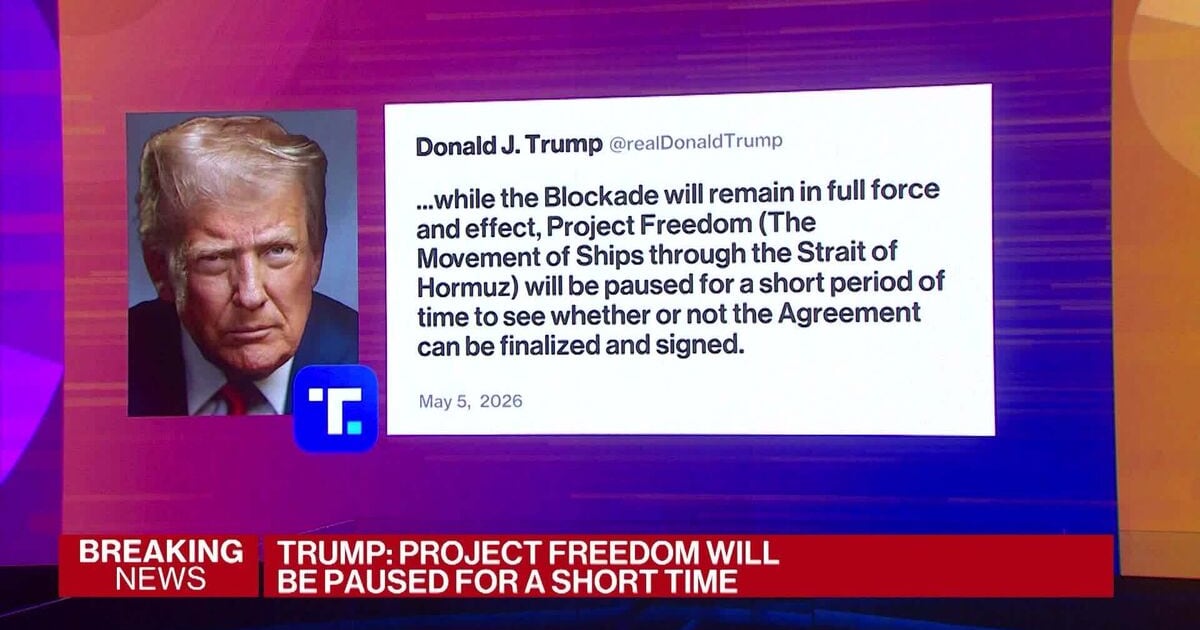
As Washington pivots toward diplomacy with Tehran, the global energy markets face a potential shift in supply risk. For India, the world's third-largest oil importer, this development serves as a critical catalyst for margin expansion across the aviation, logistics, and manufacturing sectors.
The Geopolitical Pivot: Why the Strait of Hormuz Matters Now
For global energy traders, the Strait of Hormuz is the world’s most critical chokepoint, with over 20 million barrels of oil passing through its narrow channels daily. The US decision to pause 'Project Freedom'—a naval escort initiative—represents a seismic shift in maritime security policy. By signaling a preference for diplomatic engagement over kinetic deterrence, the administration has effectively signaled to the market that the 'war risk premium' on Brent crude is ripe for downward revision.
Historically, when tensions flare in this region, the Nifty Energy index experiences heightened volatility, often decoupling from broader market trends. For instance, during the 2022 supply shocks, we observed a 15-20% spike in oil prices that forced Indian OMCs to absorb massive under-recoveries. The current pause suggests a return to supply-side normalcy, which is structurally bullish for India’s import-heavy economy.
How Does the Strait of Hormuz De-escalation Impact Indian Markets?
India imports over 85% of its crude oil requirements, making the current account deficit (CAD) and retail inflation directly tethered to the price of a barrel. A cooling in crude prices acts as a de facto fiscal stimulus. When oil prices drop by $10 per barrel, India’s annual import bill shrinks by approximately $15 billion, providing the RBI with greater latitude to manage interest rates without the looming threat of imported inflation.
From an equity perspective, this creates a 'Margin Expansion Cycle.' Companies that utilize crude derivatives as raw material—such as paint manufacturers and tyre producers—are the primary beneficiaries of this shift. As raw material costs stabilize, these firms can either improve their EBITDA margins or pass on savings to consumers to capture higher market share.
Which sectors are the primary beneficiaries of lower crude prices?
The beneficiaries fall into two distinct buckets: Direct Margin Expanders (Paint and Tyre) and Operational Efficiency Gainers (Aviation and Logistics). In 2022, when crude surged, the Aviation Turbine Fuel (ATF) costs rose by over 60%, pushing major carriers into deep losses. A reduction in the geopolitical risk premium will directly translate into lower ATF prices, potentially turning operating losses into net profits for airlines like Indigo.
Stock-by-Stock Breakdown: Winners and Losers
- IOCL (Indian Oil Corporation) / BPCL / HPCL: As OMCs, these companies benefit from lower inventory losses and improved marketing margins. With government-controlled retail pricing, a drop in crude prices allows these firms to recoup losses incurred during periods of high volatility.
- Indigo (InterGlobe Aviation): Fuel accounts for roughly 40% of an airline's operating cost. A sustained decline in oil prices is a massive tailwind for Indigo’s P/E ratio, which currently trades at a premium due to its dominant market share.
- Asian Paints: Crude derivatives are a major input cost. Historically, Asian Paints shows a strong inverse correlation with crude prices; as oil drops, their gross margins expand, often leading to a rally in stock price as analysts upgrade earnings expectations.
- MRF: Tyre manufacturing is energy-intensive and heavily reliant on synthetic rubber (a petroleum derivative). Lower oil prices reduce the cost of goods sold (COGS), directly bolstering bottom-line growth.
- Upstream Producers (ONGC/Oil India): These are the tactical losers. Their realizations are often linked to global crude benchmarks. A decline in oil prices directly impacts their revenue per barrel, potentially compressing their operating margins in the short term.
Expert Perspective: Bulls vs. Bears
The Bull Case: Proponents argue that the US-Iran diplomatic breakthrough will lead to a gradual lifting of sanctions, potentially bringing millions of barrels of Iranian oil back into the market. This supply-side injection would create a structural floor for lower energy prices, fueling a multi-year rally in consumption-led Indian equities.
The Bear Case: Skeptics point to the 'Naval Blockade' reality. Even if diplomatic talks succeed, the physical infrastructure of Iranian ports remains under scrutiny. Any hiccup in negotiations or a sudden reversal of US policy could trigger a 'snap-back' rally in oil prices, leaving investors who bought the dip exposed to significant volatility.
Actionable Investor Playbook
- Monitor the Spread: Watch the Brent-Dubai crude spread. A narrowing spread indicates that Asian buyers have easier access to supply, which is a positive signal for Indian OMCs.
- Tactical Rotation: Consider trimming positions in Upstream Oil producers (ONGC) if they have outperformed during the recent oil price spike, and rotating capital into downstream OMCs (BPCL/HPCL) which are currently undervalued relative to their historical 5-year average P/E.
- Time Horizon: This is a medium-term play (6-18 months). Investors should look for entry points during periods of market consolidation, rather than chasing sudden spikes triggered by news headlines.
Risk Matrix
| Risk Factor | Probability | Impact |
|---|---|---|
| Collapse of Diplomatic Talks | Medium | High |
| Continued Naval Blockade Volatility | High | Medium |
| Global Recession Dampening Demand | Low | High |
What to Watch Next
Investors should monitor the upcoming OPEC+ production meeting dates and any official statements from the US State Department regarding the 'Project Freedom' status. Additionally, keep a close watch on the monthly Consumer Price Index (CPI) data from the Ministry of Statistics; if oil-driven inflation begins to decelerate, expect the RBI to signal a more dovish stance, which would be the ultimate catalyst for a broader Nifty breakout.
Disclaimer: This content is generated by WelthWest Research Desk based on publicly available reports and is for informational purposes only. It does not constitute financial advice, investment recommendations, or an offer to buy or sell securities. Always consult a qualified financial advisor before making investment decisions.


